
Cooling is unusual among household expenses in one specific way: almost nobody knows what theirs costs. You know what you pay for fuel, for data, for groceries. But ask most households what it costs to run the air conditioner for an evening, or whether the fan by the bed costs pennies or real money per month, and the answer is a shrug followed by a wince when the seasonal electricity bill arrives.
This is fixable with arithmetic a child could do, and the payoff for doing it is large. Cooling is one of the biggest electricity end-uses in warm-climate homes; the U.S. Energy Information Administration reports that air conditioning alone accounts for a substantial share of residential electricity consumption, and in hot regions it dominates summer bills. Once you can put a number on every cooling device you own, three things follow: you stop fearing the cheap devices, you start respecting the expensive ones, and you discover that the biggest savings come from strategy rather than sacrifice.
This guide gives you the complete toolkit: the one formula that prices any device, real cost profiles for every category of cooling equipment, what efficiency ratings translate to in money, and a ranked list of the strategies that actually move the bill.
The Only Formula You Need
Every electricity cost calculation in existence reduces to this:
Watts ÷ 1,000 × hours used × price per kilowatt-hour = cost
Watts come from the device label or spec sheet. Hours come from your habits. The price per kilowatt-hour (kWh) comes from your electricity bill; find your total charge, divide by the kWh consumed, and you have your true blended rate, which is more accurate than the advertised tariff because it includes fixed charges and taxes.
Worked example: a 70-watt pedestal fan running 10 hours a night for a 30-day month is 70 ÷ 1,000 × 10 × 30 = 21 kWh. At a rate of, say, $0.15 per kWh, that is about $3.15 for a month of cool sleep. A 1,100-watt portable air conditioner on the same schedule is 330 kWh, roughly $49.50. Same month, same bedroom, sixteen times the cost.
Two refinements make the formula honest. First, compressor devices cycle: a thermostat-controlled AC does not draw full power every minute it is “on.” Depending on sizing and weather, actual consumption is often 50 to 80 percent of the nameplate figure over an evening. A cheap plug-in energy meter (widely available and worth its price many times over) measures reality instead of estimating it. Second, some devices have hidden hours: anything with standby electronics sips power around the clock, which is exactly what the CEER rating for air conditioners was designed to capture.
The Cost Hierarchy: Every Cooling Category Priced
Line the technologies up by typical running cost and the spread is enormous. Figures below use representative wattages; plug in your own rate and habits for exact numbers.
Ceiling and pedestal fans: 15 to 75 watts. The efficiency champions. A month of heavy nightly use costs about as much as a snack. This is why fans-first is the universal recommendation of energy authorities; the U.S. Department of Energy’s guidance on fans for cooling notes that a ceiling fan’s wind-chill effect lets you raise a thermostat setting by around 4°F with no comfort loss, converting a few watts of fan into a large reduction in AC runtime.
Evaporative (swamp) coolers: 60 to 250 watts for room units. In dry climates these deliver genuine temperature drops at roughly one-tenth the electricity of equivalent compressor cooling, plus a water cost that is usually trivial. Their catch is climate, not cost; in humid air the watts keep flowing while the cooling stops, as we explain in how evaporative cooling works in dry vs humid climates.
Thermoelectric and small rechargeable devices: 5 to 60 watts. Cheap to run because they are small, not because they are efficient; per unit of cooling delivered, Peltier devices are the least efficient technology in the house. They earn their keep in personal, portable niches, and their battery economics (charging a power bank is itself electricity) are part of our assessment of rechargeable cooling devices.
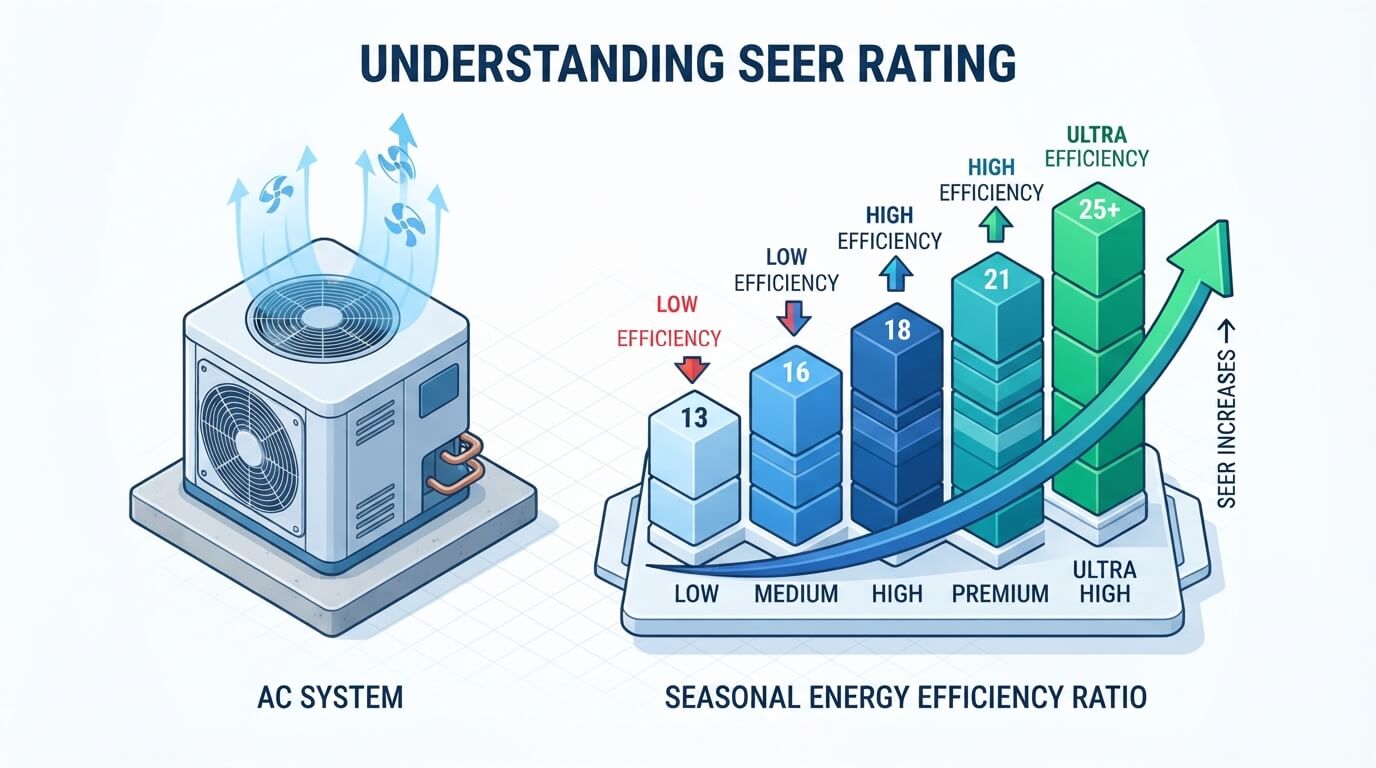
Window and portable air conditioners: 500 to 1,500 watts. The workhorses and the wallet-biters. Between two same-size units, the efficiency rating is money: a 12 CEER window unit delivers the same cooling as a 9 CEER unit for roughly 25 percent less electricity, which over several summers usually exceeds the entire price difference between them. Portable units carry an extra penalty worth knowing: single-hose designs exhaust indoor air outside, pulling warm outdoor air into the house through every gap to replace it, so a portable AC’s effective efficiency is meaningfully below its nameplate.
Central air and mini-splits: 2,000 to 5,000+ watts. The biggest line item, and also where modern efficiency has improved most. Inverter-driven mini-splits that modulate output continuously, rather than slamming on and off, routinely cut consumption 30 to 50 percent versus older fixed-speed systems for the same comfort. SEER ratings translate directly to money here; the Department of Energy’s central air conditioning guidance quantifies typical savings from upgrading old equipment.
Two non-electric cost lines complete the picture. Maintenance is an energy input: a clogged filter or dirty coil forces any AC to work harder for the same cooling, quietly inflating bills by double-digit percentages, which is why the cleaning routine in our step-by-step portable AC maintenance guide is as much an efficiency measure as a hygiene one. And refrigerant issues are cost multipliers: a low-charge system cools poorly while consuming fully, and older R-22 systems add scarce, expensive refrigerant to every service visit, one more reason the refrigerant question we cover in R22 vs R410A belongs in any repair-or-replace decision.
Purchase Price vs. Lifetime Cost: The Calculation Stores Hope You Skip
The sticker price of a cooling device is a down payment. The true price is:
Purchase price + (annual energy cost × years of ownership) + maintenance
Run it on a realistic comparison. Window unit A costs $180 with CEER 9; window unit B costs $260 with CEER 12.4. Both deliver 8,000 BTU. For 8 hours a day across a 5-month cooling season at $0.15/kWh, unit A consumes roughly 1,070 kWh per season (~$160) and unit B roughly 775 kWh (~$116). The $80 price gap is repaid in under two seasons, after which unit B is simply $44 cheaper every year, quietly, for a decade. Efficiency ratings are not green virtue signaling; they are a published discount schedule on your future bills. The same lifetime-cost lens applies to combination devices, where one efficient machine replacing two mediocre ones can win twice, a question at the heart of our guide on whether a combined cooler and heater makes sense.
The lifetime-cost lens also rescues you from the opposite error: over-buying capacity. An oversized AC costs more upfront, cycles on and off rapidly, dehumidifies poorly, and wears its compressor faster. Right-sizing (roughly 20 BTU per square foot, adjusted for sun, occupancy, and kitchens per Energy Star’s sizing guidance) is an efficiency measure that costs nothing.
The Strategy Layer: Cutting the Bill Without Cutting Comfort
Hardware is half the story. The other half is reducing how much cooling you need to buy in the first place, and here the interventions rank very differently than most people assume.
1. Stop heat at the windows. Solar gain through glass is typically the largest single cooling load in a warm-climate room. Exterior shading (awnings, shutters, trees) blocks heat before it enters and can cut window heat gain dramatically; interior curtains and reflective blinds are the renter-friendly second best. This one category of fixes often outperforms any gadget purchase.
2. Use thermostat arithmetic. Each degree of setpoint relaxation saves meaningful percentage points of AC energy; combining a fan’s wind-chill with a few degrees higher setting is the classic high-yield move. Cooling an empty home is pure waste; timers and programmable controls repay themselves in weeks.
3. Cool people and zones, not buildings. A fan at the desk, a right-sized unit in the occupied room, and doors closed to unused spaces routinely halves consumption versus whole-home habits. This zonal thinking is the backbone of our guide to keeping a home office comfortable year-round without fighting the thermostat.
4. Exploit free cooling windows. Anywhere nights run cooler than days, window fans exhausting hot air in the evening and pulling in cool night air, followed by closed windows and drawn blinds in the morning, provides hours of genuinely free conditioning. It also pre-cools the thermal mass of the home, delaying the hour the AC must start.
5. Attack internal heat sources. Ovens, incandescent and halogen lighting, gaming PCs, and inefficient appliances are all heaters running inside your cooled space; every watt they emit is a watt your AC must remove, at additional cost. Cooking outdoors or with small appliances on hot days, switching to LED lighting, and moving heat-generating electronics out of the bedroom are all cooling strategies wearing disguises.
6. Maintain what you own. Clean filters monthly in season, keep condenser coils and outdoor units clear of debris, seal duct leaks, and keep exhaust hoses on portable units short and straight. Maintenance is the only strategy on this list that improves comfort and cost simultaneously with zero purchase.
7. Sleep-specific tactics. Night cooling has outsized bill impact because it runs for long unattended hours. Cooling the sleeper rather than the room, via fans, breathable bedding, and targeted devices, achieves the temperatures sleep science recommends at a fraction of whole-room cost; our article on why you sleep worse when it is hot covers the physiology and the setup.
A safety note belongs alongside the savings talk: in genuine heat waves, economy is not the priority. Public-health guidance such as the CDC’s heat illness prevention recommendations is clear that fans alone are insufficient at extreme temperatures and that vulnerable people need access to genuinely cooled spaces. Efficiency is about eliminating waste, never about enduring dangerous heat.
A Worked Example: One Household’s Cooling Budget
Numbers stick better with a concrete case, so consider a representative three-bedroom household in a hot climate, electricity at $0.15 per kWh, running the following through a five-month cooling season.
The living room window AC (1,100 watts nameplate, cycling to an effective 700 watts) runs 8 hours daily: 700 ÷ 1,000 × 8 × 30 = 168 kWh, about $25 per month. The bedroom portable AC (900 watts effective 650) runs 9 overnight hours: 176 kWh, about $26. Two pedestal fans (60 watts each) run 10 hours daily: 36 kWh combined, about $5.40. A thermoelectric mini fridge in the study draws 50 watts around the clock: 36 kWh, another $5.40. Seasonal total: roughly $310, with the two compressors responsible for over 80 percent of it, exactly the concentration the budgeting exercise predicts.
Now apply the strategy layer to the top of the list only. Exterior shade cloth over the living room’s west window and blinds discipline cut that unit’s runtime by a quarter: save $6 monthly. Raising both AC setpoints two degrees, comfortable because the fans are already running: save roughly 10 to 12 percent of compressor consumption, another $6. A timer ending the living room unit’s day when the room empties at night: $4. Cleaning both filters monthly: conservatively 5 percent, $2.50. Unplugging the mini fridge that holds four drinks nobody chills anywhere else: $5.40, its entire line. Monthly savings: about $24, or nearly 40 percent of the compressor bill, with zero comfort sacrificed and zero equipment purchased. Over the season that is roughly $120, which happens to be about the price gap between a mediocre window unit and an excellent one, meaning next summer’s equipment upgrade is effectively pre-funded by this summer’s arithmetic.
The specific numbers will differ in your home and at your tariff, but the shape of the result will not: a short list of big loads, a strategy layer that attacks the top of the list, and savings that compound quietly for as long as you own the equipment.
Smart Controls, Tariffs, and Timing: The Modern Layer
A newer set of tools sits on top of the hardware and habit layers, and they reward exactly the kind of household that has done the budgeting exercise above.
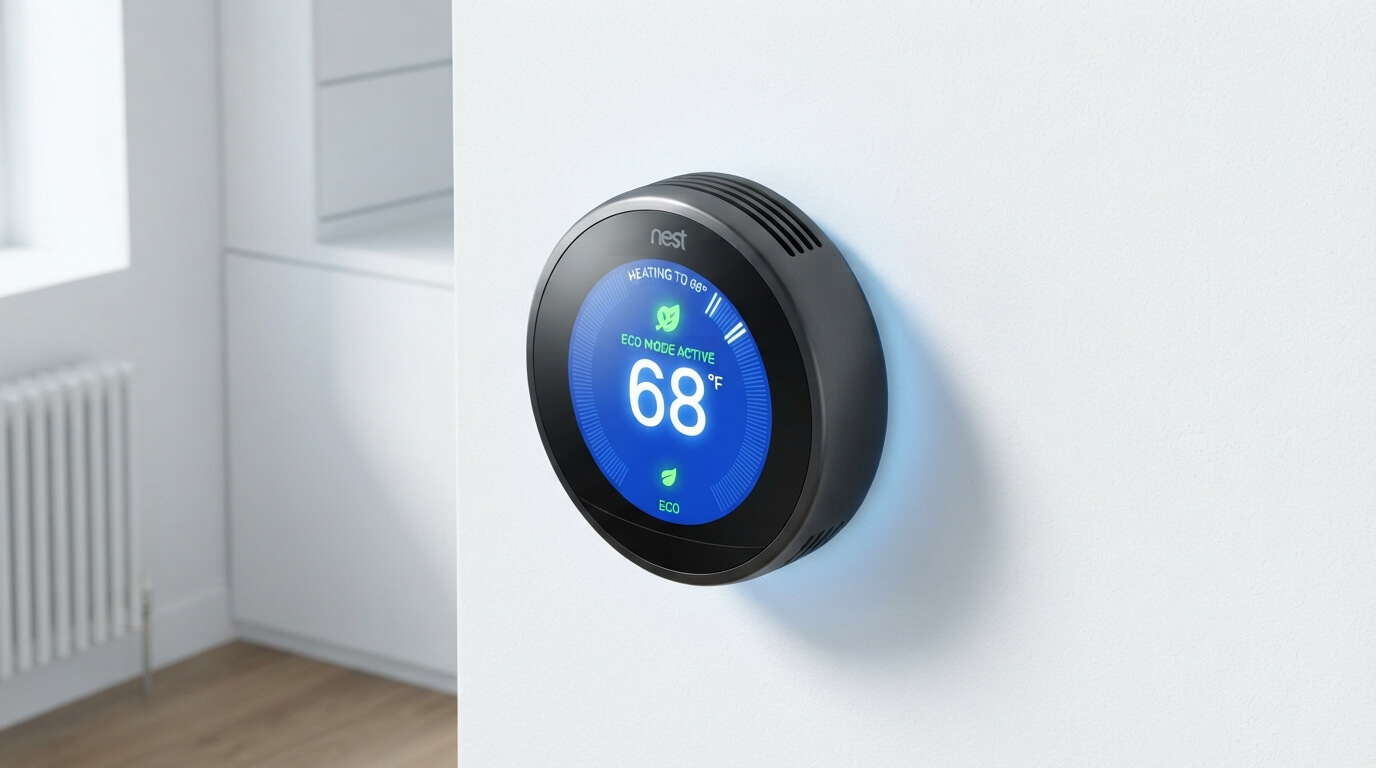
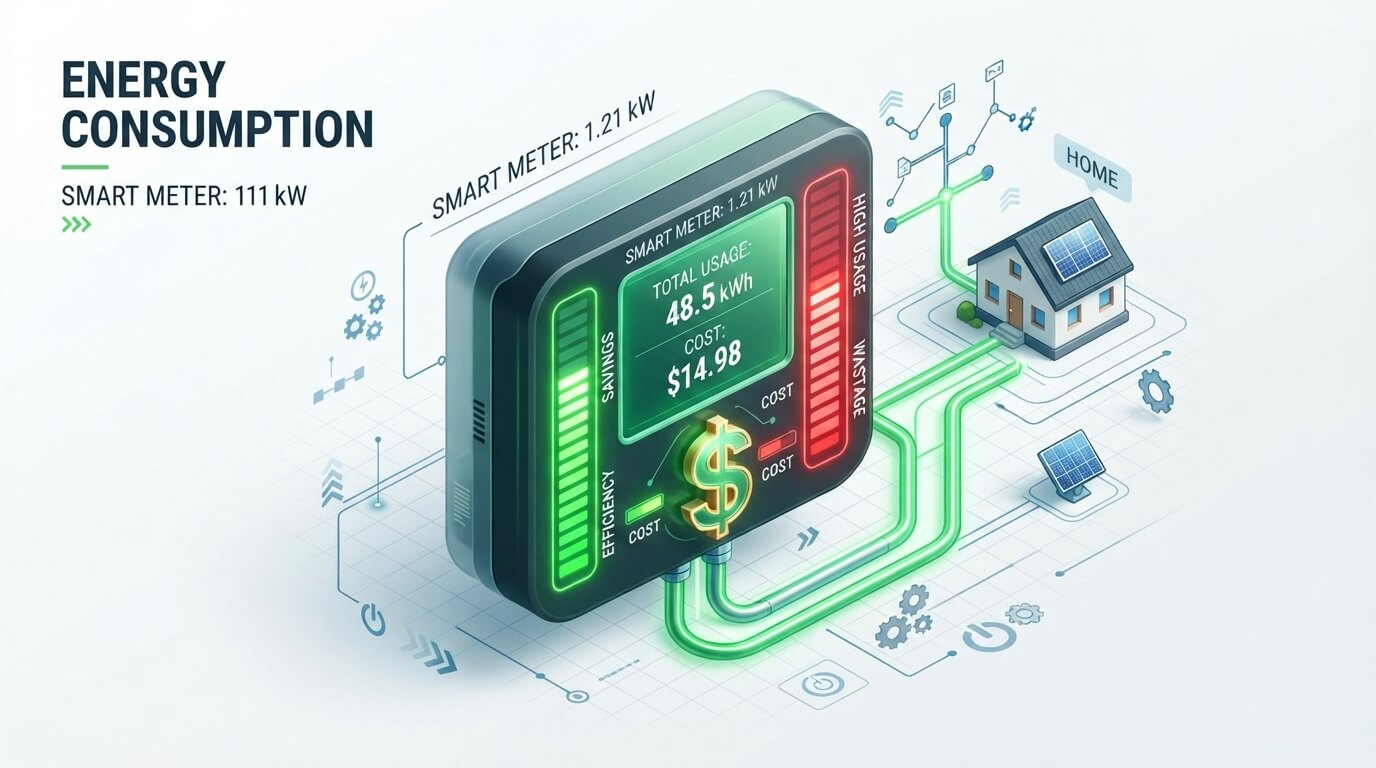
Smart thermostats and plugs. The savings from smart controls come almost entirely from schedule discipline, not intelligence: cooling that switches off when the home empties and pre-cools before arrival instead of blasting on demand. A basic timer captures most of the benefit; a smart thermostat adds occupancy sensing, remote correction of the forgotten AC, and usage reports that function as a free energy meter. For window and portable units without native scheduling, a smart plug rated for the unit’s amperage retrofits the same capability for very little, with one caution: compressor devices should be given a few minutes between off and on to equalize pressure, so use schedules rather than rapid toggling.
Time-of-use tariffs. Many utilities now price electricity by time of day, with late-afternoon peak rates sometimes two to three times the overnight price. Cooling is unusually well suited to exploiting this, because buildings store coolness: pre-cooling the home during cheap morning hours and coasting through the expensive peak with fans and closed blinds shifts the biggest load to the cheapest hours. If your bill shows time-of-use pricing, this single scheduling change can rival an equipment upgrade in savings.
Demand-response and utility programs. Utilities in many regions pay customers, through bill credits or rebates, to allow brief remote adjustments of AC load on peak days, and separately offer purchase rebates for high-efficiency equipment. Ten minutes on your utility’s website is one of the highest hourly wages in home energy.
Solar pairing. Cooling demand and solar generation peak within hours of each other, which makes air conditioning the most solar-friendly major load in a home. For off-grid and outdoor contexts, the same logic at small scale is why panel-plus-cooler combinations have matured into genuinely usable products, a category we test in solar-powered coolers that actually work.
Regional strategy differences. The optimal playbook shifts with climate. Hot-dry regions get outsized returns from evaporative cooling and night ventilation, since large day-night temperature swings make free cooling abundant. Hot-humid regions get little from either, and should weight dehumidification, gasket-tight building envelopes, and compressor efficiency instead; a drier room feels several degrees cooler at the same temperature, so moisture control is cooling by another name. Mild-summer regions often need no compressor at all, just fans and window discipline, and the cheapest kilowatt-hour remains the one never consumed.
Frequently Asked Questions
Does leaving the AC on all day at a higher setpoint save money versus cooling on arrival? For nearly all homes, no. Heat flows into a house in proportion to the indoor-outdoor temperature difference, so a warmer house all day absorbs less total heat, and less heat is what you pay to remove. Let the home warm while empty and cool on a schedule timed to your return. The exception is humid climates with oversized equipment, where continuous moderate operation can win on humidity control; a week of experimenting with your energy meter settles it for your specific house.
Is it cheaper to run one big AC or two small ones? Two right-sized units cooling only occupied rooms usually beat one large unit conditioning everything, purely by cutting the volume served. If both rooms genuinely need cooling simultaneously, a single efficient larger unit (or a mini-split) typically edges out two small ones on efficiency ratings. The principle underneath both answers is the same: pay to cool occupied space only.
Do “energy saver” modes actually save energy? Yes, modestly and honestly: they cycle the fan off along with the compressor instead of running it continuously, saving the fan’s consumption during idle periods. The trade-off is slightly less even temperature and slower response. It is real savings, but thermostat setpoint and scheduling dwarf it.
How much does a dirty filter really cost? Restricted airflow forces longer runtimes for the same cooling and can push consumption up by five to fifteen percent, while also icing evaporator coils in bad cases, which halts cooling entirely while the compressor keeps drawing power. A monthly rinse during cooling season is the highest-return maintenance act in this article, and it takes five minutes with the routine in our portable AC cleaning guide.
Are cheap plug-in “power saver” boxes legitimate? The devices claiming to cut consumption of everything in the home via a small plug-in box are not supported by how residential metering works, and consumer-protection agencies have repeatedly acted against sellers. The legitimate versions of this promise are the boring ones in this guide: efficiency ratings, schedules, shading, and maintenance. Anything promising large savings with zero behavior change and zero equipment change deserves the same spec-sheet skepticism we apply to miracle cooling gadgets.
Does ceiling fan direction really matter? Yes. Counterclockwise (viewed from below) pushes air down for a cooling breeze in summer; clockwise at low speed pulls air up and redistributes warm ceiling air in winter. The summer setting is what enables the raise-the-thermostat strategy, and the winter setting quietly reduces heating costs in rooms with high ceilings, making the humble ceiling fan a rare year-round efficiency device.
Most households that do the arithmetic in this guide find double-digit percentage savings without giving up a single comfortable evening, and they find something else too: the confidence to evaluate every “energy-saving” cooling gadget on the market with a calculator instead of hope. In this niche, the calculator is the most powerful cooling accessory you will ever own.
Build Your Own Cooling Budget: A 30-Minute Exercise
Everything above condenses into an exercise worth doing once each season.
- List every cooling device you own with its wattage from the label or spec sheet.
- Estimate honest daily hours for each, or better, meter the big ones for a week with a plug-in energy monitor.
- Compute monthly kWh and cost with the formula, using your true blended rate from a recent bill.
- Rank the list. In almost every home, one or two compressor devices account for 80+ percent of cooling cost, and everything else is noise. Your attention now has a target.
- Apply the strategy layer to the top of the list: shading and setpoint for the big AC, zoning for the household pattern, maintenance for anything with a filter.
- Re-run the numbers on any planned purchase as lifetime cost, not sticker price, before you buy, and let efficiency ratings cast the deciding vote between finalists.
The result of this exercise is a rare thing in household finance: a large, recurring expense made fully legible. Cooling stops being a seasonal ambush and becomes a set of dials you understand, each labeled with its price.