
The spare room turned home office is, for millions of people, the worst conditioned room in the house. It is often the smallest, the furthest from where the central system was balanced, and the one nobody thought about when the heating and cooling were set up. In summer it bakes, in winter it chills, and the person sitting in it all day spends an oddly large share of their working hours either too hot to focus or too cold to type. Comfort in that room is not a luxury. For anyone who works from home, it is a productivity issue, and the way most people try to solve it quietly makes everything worse.
The instinct is to walk to the thermostat and change the setting for the whole house to fix one room. That single move is the root of most home office discomfort, and it is worth understanding why before reaching for any solution.
Why the Home Office Is So Hard to Get Right
A central heating and cooling system is balanced for the house as a whole, usually with the thermostat placed in a main living area. The system works to keep that area at the set temperature, and every other room rides along as best it can. Rooms close to the thermostat and well served by the ducts stay close to the target. Rooms at the end of a run, above a garage, on a sunny corner, or converted from a space that was never meant to be lived in, drift away from it. The home office is very often one of those drifting rooms.
That is why the same house can feel perfect in the living room and stifling in the office at the same moment. The system is not failing; it is doing exactly what it was set to do, which is to serve the main space. The office is simply not where the system is aiming, and no amount of adjusting the central setting changes that imbalance. It only changes how hard the whole house works to chase a number that was never really about the office in the first place.
The Thermostat Trap
Here is where the common fix backfires. To cool a hot office, you push the whole house thermostat lower, which means the system now overcools every other room to drag the stubborn office down a few degrees. The bill climbs, the rest of the household complains that the living room is freezing, and the office still is not quite right because it was always going to lag behind. In winter the same thing happens in reverse, with the furnace running hard to warm a house that was already comfortable everywhere except the one room that matters to you.
It is a losing game, and it creates friction in shared homes on top of the cost. One person’s workspace should not dictate the temperature of everyone else’s living space, and it does not have to. The smarter approach abandons the idea of fixing the office from the thermostat entirely.
Condition the Room, Not the House
The fix is to treat the office as its own small climate, separate from the central system. Leave the thermostat where it keeps the rest of the house comfortable and affordable, and handle the office with a device that conditions only that room, or really only the area around your desk. Because you are no longer asking the whole house to bend around one room, the waste and the household friction both disappear at once.
A personal cooling and heating device sized for a single room is built for exactly this. It sits near the desk, draws a small amount of power, and conditions the pocket of air you actually occupy for the hours you are working. When the workday ends, it switches off, and you are not paying to condition an empty office overnight the way a central adjustment would have. The math is simple: cooling or warming one occupied room for eight hours costs a fraction of bending an entire house to reach that room.
The Year Round Problem Needs a Year Round Answer
The trap with home office comfort is that it is a two season problem. A fan solves the summer half and does nothing in January. A space heater solves the winter half and sits useless in July. Buying, storing, and swapping two single use devices is its own small annoyance, and it leaves you cold or hot during the weeks when you have the wrong one out.
This is why a single device that both cools and heats fits the home office so neatly, since the room needs help in both directions across the year. If you want to see how one of these dual purpose units performs in a real room, this review of a portable cooler and heater built for a single space walks through what to expect from each function and where the honest limits are, which is worth reading before you commit to any one device.
Whatever you choose, the principle is what matters. A room you occupy all day, every working day, deserves its own climate control rather than a constant tug of war with the household thermostat.
A Few Setup Habits That Help
A personal device does its best work when the room is not fighting it, so a handful of free adjustments make a real difference.
- Tame the window: If the office faces the sun, a blind or shade cuts the afternoon heat that no small device should have to battle alone.
- Aim it at the chair: Position the unit so its output reaches you at the desk rather than the far wall, since the point is to condition you, not the room’s corners.
- Close the door: A closed door keeps your conditioned pocket of air from drifting into the rest of the house and lets the device hold the room more easily.
- Mind the gear: Computers and monitors throw off heat, so in summer give them a little breathing room rather than boxing them into a hot corner of the desk.
The Real Cost of an Office That Fights You
It is tempting to file room comfort under nice to have, but for someone who works from home it is closer to a working condition than a luxury. Thermal discomfort is a steady, low level distraction. A room that is too warm makes you sluggish and irritable; a room that is too cold pulls your attention to your hands and your hunched shoulders instead of the task in front of you. Neither state announces itself loudly, which is part of the problem. You do not notice a hot office ruining your afternoon so much as you notice that the afternoon was somehow unproductive, the focus thin, the patience short.
That is the hidden tax of a badly conditioned workspace. It does not just cost comfort; it costs concentration, mood, and the simple willingness to sit down and put in the hours. For a remote worker, that room is where the income is made, which flips the math on a small comfort device entirely. A unit that keeps the office pleasant is not an indulgence charged against the budget; it is a modest investment that pays itself back in clearer thinking and steadier output, day after day. Seen that way, leaving the one room you work in uncomfortable is the genuinely expensive choice.
Conclusion
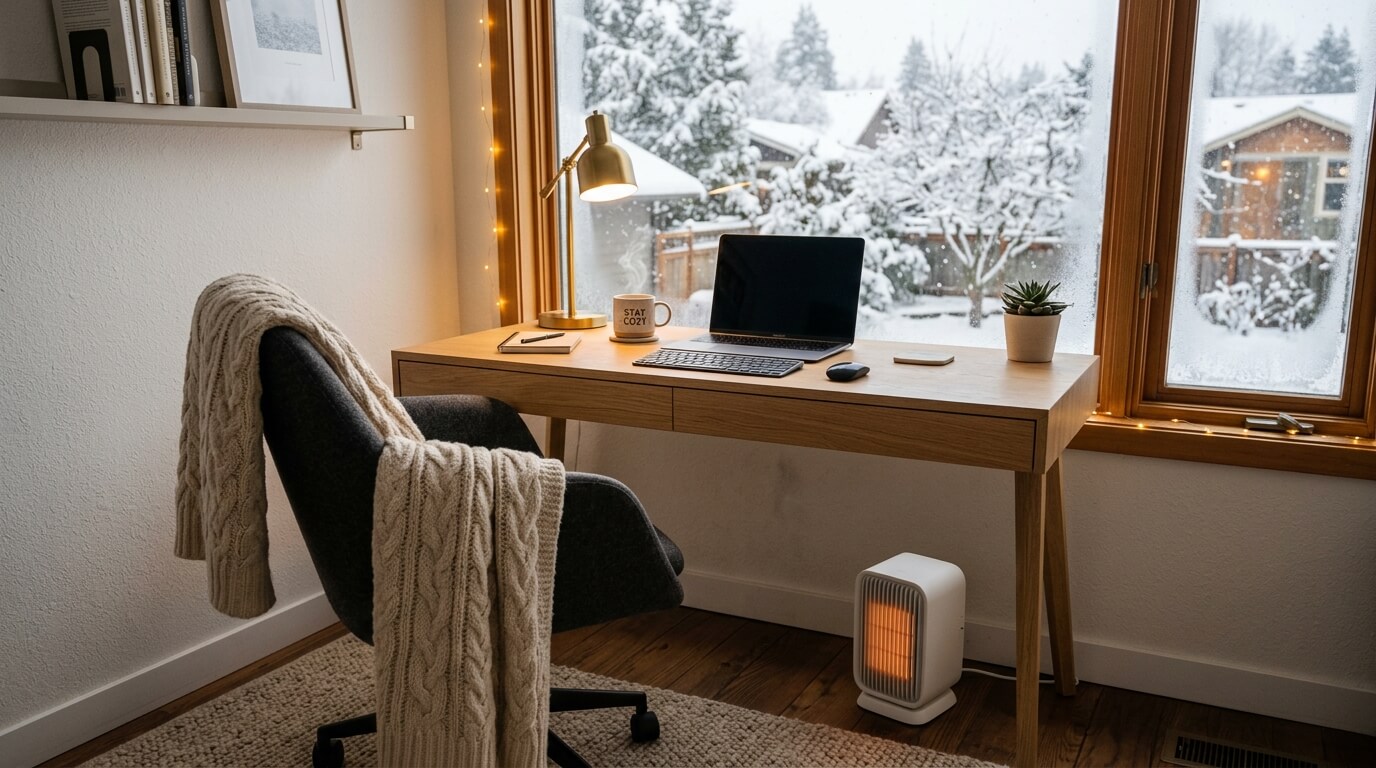
The home office is uncomfortable because it was never the room the central system was built to serve, and trying to fix it from the thermostat only spreads the cost and the friction across the whole house. Step out of that trap, give the room its own small climate with a device that handles both the hot months and the cold ones, and the single space where you spend your working life finally becomes the comfortable one. Your focus improves, your bill stays sane, and the rest of the household stops staging a quiet rebellion over the temperature. For anyone working from home, that is a small change with an outsized payoff.