
Finding a practical method to stay cool becomes crucial when the temperature rises. In order to combat the heat without depending entirely on pricey air conditioning, many individuals search for low-cost, energy-efficient alternatives. Misting fans and air coolers are two common options that are frequently discussed. Though they serve different purposes and operate differently, both gadgets promise to provide comfort from hot temperatures. Making an informed choice that suits your climate and lifestyle requires knowledge of the benefits and drawbacks of misting fans and air coolers.
This article explores the main distinctions between misting fans and air coolers, including how each cools the air, its underlying technology, and the ideal settings for operation. You may save time, money, and stress by knowing which device will work best for cooling an inside space, an outdoor patio, or a big open area.
Warm air is drawn in and passed through pads saturated with water in air coolers, also known as evaporative coolers. Evaporation is used in this technique to cool the air before it circulates around the space. They are perfect for arid locations because of their reputation for being energy-efficient and their ability to somewhat moisten dry air. However, because the air is already saturated with moisture in humid regions, air conditioners are limited.
In contrast, misting fans combine a fine mist of water with the wind of a conventional fan. The rapid evaporation of this mist causes the skin to feel cold. Misting fans are very common for outdoor settings where air circulation facilitates effective mist evaporation, including patios, gardens, or poolside areas. Although misting fans offer instant heat relief, they are typically less efficient in extremely humid weather and can dampen surfaces.
We will examine the characteristics, advantages, and disadvantages of misting fans and air coolers in this post. The intention is to assist you in selecting the solution that best suits your cooling requirements. Knowing these two technologies will help you stay cool and comfortable during the summer, regardless of whether you’re looking for something portable, affordable, or efficient in high humidity.
What is an Air Cooler?
A common cooling tool, an air cooler, uses the natural process of evaporation to reduce the temperature of a room or outdoor area. Air coolers, sometimes referred to as swamp coolers or evaporative coolers, are a popular option for people who want to reduce their electricity costs while maintaining comfort in hot weather because they offer an energy-efficient substitute for conventional air conditioners.
Warm air from the surroundings is drawn in and sent through cooling pads that are wet with water to operate air coolers. The water evaporating as the air passes through these pads absorbs heat from the air and so lowers its temperature. A fan then blows this cooled, moist air out into the surrounding area, producing a cool breeze. Air coolers are easier to maintain and more environmentally friendly than air conditioners because they don’t require complicated compressors or refrigerants.
The ability of air coolers to increase air humidity is one of their primary advantages. This is particularly helpful in arid or dry settings where low humidity can lead to respiratory irritation and dry skin. Air coolers contribute to a more comfortable environment for residents by raising moisture levels. This same characteristic, however, limits the evaporation process in humid areas where the air already contains a lot of moisture, making air coolers less efficient there.
Air coolers are available in a variety of shapes and sizes, from small, portable units that fit in small places to larger models that are meant to chill larger indoor or semi-outdoor areas. Additional features like built-in water tanks, adjustable fan settings, and air filters that capture dust and allergens serve to improve indoor air quality are included in many air coolers.
Air coolers are an affordable option for consumers on a tight budget because they use less electricity than conventional air conditioners. They are a fantastic option for workplaces, bedrooms, and other quiet spaces because they are also quieter. To guarantee optimum performance, routine maintenance usually entails cleaning or replacing the cooling pads and replenishing the water tank.
What is a Misting Fan?
In summary, an air cooler is a practical cooling device that uses evaporative cooling to lower air temperature while delivering moisture to dry settings. For people who live in hot, dry areas and want an economical, energy-efficient method of staying cool at home or outdoors under cover, this is a great option.
A misting fan is a cooling device that combines the airflow of a standard fan with a tiny spray of water mist to reduce ambient temperature. It functions by dispersing a thin mist into the atmosphere, which, when circulated by the fan, rapidly evaporates. Heat from the surrounding air is drawn by this evaporation process, producing a discernible cooling effect that can feel several degrees cooler almost immediately.
Misting fans are especially popular for outdoor use. Misting fans are frequently used to effectively reduce heat in patios, gardens, poolside areas, and outdoor gathering spots. These gadgets are especially helpful in hot, dry locations since the low humidity speeds up the mist’s evaporation, intensifying the cooling effect. In order to better manage the direction and intensity of airflow, some misting fans additionally have oscillating heads and adjustable misting levels.
Misting fans don’t cool the air in a room like air conditioners or air coolers do. Rather, they directly cool the skin through evaporation, which makes them perfect for individual comfort in outdoor settings. The evaporation process slows down in humid conditions, though, which lessens the fan’s efficiency and occasionally leaves surfaces unwelcomely moist.
Misting fans are available in numerous forms, from portable models for personal use to bigger units for business or garden settings. Many types connect straight to a regular garden hose or come with built-in water tanks. They are typically easy to put up, require minimal maintenance, and are energy-efficient.
An inexpensive and adaptable way to cool outdoor areas is with a misting fan. It is ideal for patios, sports sidelines, barbecues, and any other warm-weather outdoor activity since it provides instant heat relief through the use of water spray and fan power.
Key Differences Between Air Coolers and Misting Fans

Knowing the distinctions between a misting fan and an air cooler is crucial to selecting the best cooling option. Both gadgets aid in cooling down, but they work differently and are more appropriate for particular settings. These two differ in a number of ways, from climatic compatibility and maintenance to cooling technique and water use.
- Cooling System: Evaporative cooling is used in air coolers. The machine draws warm air and passes it through pads saturated with water, which cools the air as it evaporates. After cooling, the air is recirculated throughout the space. On the other hand, misting fans provide a direct cooling experience by releasing a thin mist of water into the air, which evaporates as it comes into contact with the skin or surroundings. Although they both use water evaporation, misting fans chill the skin’s surface, whereas air coolers cool the air itself.
- Climate Compatibility: In hot, dry areas with low humidity that promote effective evaporation, air coolers perform best. Additionally, misting fans work best in dry conditions, but they may not be as effective in humid ones. Evaporation is slowed down by high air moisture, which reduces the efficiency of both devices. However, misting fans are particularly vulnerable to decreased performance in humid environments.
- Indoor vs. Outdoor Use: Air coolers are mostly made for semi-enclosed or indoor areas, like garages, living rooms, and bedrooms. However, outside spaces like patios, decks, or garden areas are ideal for misting fans. The problem of damp floors or furnishings within the house is avoided by their open-air architecture, which also prevents excessive humidity buildup.
- Water Use and Moisture Output: Air coolers can assist in alleviating indoor dryness by gently adding moisture to the air. Misting fans emit visible mist, which can dampen clothes or surfaces, particularly in still air. An air cooler can be a preferable option if maintaining dry surfaces is a top concern.
- Portability and Setup: Portable versions of misting fans and air coolers are available. Particularly for outdoor use, misting fans are frequently lighter and simpler to assemble. Depending on the model, air coolers may take up more room and require access to a water reservoir or refill system.
- Maintenance Requirements: Cleaning or replacing the cooling pads and replenishing the water tank are two examples of routine maintenance that air coolers need. Although nozzles may occasionally clog and require cleaning, especially when used with hard water, misting fans usually require minimal maintenance.
- Power Consumption: Compared to air conditioners, both gadgets use less electricity. Misting fans use very little power, especially in basic models; however, air coolers may use a little more because of the fan motor and water pump.
- Price and Affordability: Both choices are reasonably priced. Because of their intricate internal systems, air coolers are typically more expensive up front, whereas misting fans are typically less expensive and easier to use.
Benefits and Drawbacks of Air Coolers
Particularly in hot, arid conditions, air coolers are a common substitute for air conditioning. They are economical and eco-friendly since they naturally cool the air using evaporative technology.
- Pros: Air coolers are an energy-efficient way to cool indoor spaces since they use less electricity than conventional air conditioners. Additionally, they moisten dry air, which can aid in respiratory comfort and skin hydration. By eliminating dust and allergens, the integrated air filters included in many models enhance the quality of the air. Air coolers are perfect for workplaces, bedrooms, and small living areas because they are lightweight, simple to use, and don’t need to be professionally installed.
- Cons: High moisture content lowers the cooling effectiveness of air coolers, making them less effective in humid settings. They require routine upkeep, such as cleaning the cooling pads and refilling the water tank. If ventilation is inadequate, prolonged use might increase interior humidity and cause discomfort.
Additionally, some systems make audible fan noise, which could be annoying in quiet environments. In summary, air coolers are a wonderful low-cost cooling alternative for arid locations, offering comfort and efficiency. They might not, however, function effectively in humid environments or in spaces with inadequate ventilation.
Benefits and Drawbacks of Misting Fans
When it’s sweltering outside, misting fans are a great way to remain cool. They provide immediate relief by cooling the skin through quick evaporation by combining a powerful airflow with a thin water mist.
- Pros: Misting fans are perfect for patios, gardens, and outdoor gatherings since they provide quick and direct cooling. Usually, they are portable, lightweight, and simple to assemble. The majority of versions have a refillable water tank or may be connected to a regular hose. Misting fans are an energy-efficient cooling solution due to their low electricity consumption. Additionally, they perform well in arid regions where the mist evaporates rapidly, intensifying the cooling impact.
- Cons: In humid environments, where slower evaporation might diminish cooling power, misting fans perform less well. The mist may leave surfaces wet, making them unsuitable for wooden furniture or electronics. Because of the possibility of moisture accumulation, indoor use is generally avoided. Certain models, particularly those that use hard water, need their nozzles cleaned on a regular basis to avoid clogging.
Misting fans are excellent for cooling outdoor spaces during dry heat. Although they are portable and provide immediate comfort, they might not be as effective in confined quarters or humid environments.
Which One is Better for Your Needs?
Your surroundings, the purpose, and your own cooling preferences will all play a role in your decision between an air cooler and a misting fan. Although each gadget has advantages of its own, one can be more appropriate for your particular circumstance.
An air cooler is perhaps a better option if you want to cool an interior area, such as a living room, workplace, or bedroom. It helps increase comfort in arid conditions by circulating cool, humid air throughout the space. For people who prefer a more energy-efficient, quieter option to air conditioning, air coolers are perfect for locations with low humidity levels. Because they may somewhat humidify dry air, they are particularly helpful for those who have respiratory problems.
The preferred option for outdoor cooling, however, is a misting fan. It’s ideal for sporting events, backyards, patios, and barbecues. Misting fans are quite useful in hot, dry conditions because they cool the skin directly, providing immediate relief. They are often less expensive, lightweight, and portable. However, because of the additional wetness, they are not appropriate for enclosed areas.
Both options are less effective for people living in humid areas; however, air coolers might provide more reliable cooling, provided ventilation is sufficient. To select the ideal gadget, take into account your environment, the type of area you have, and your tolerance for dampness.
Conclusion
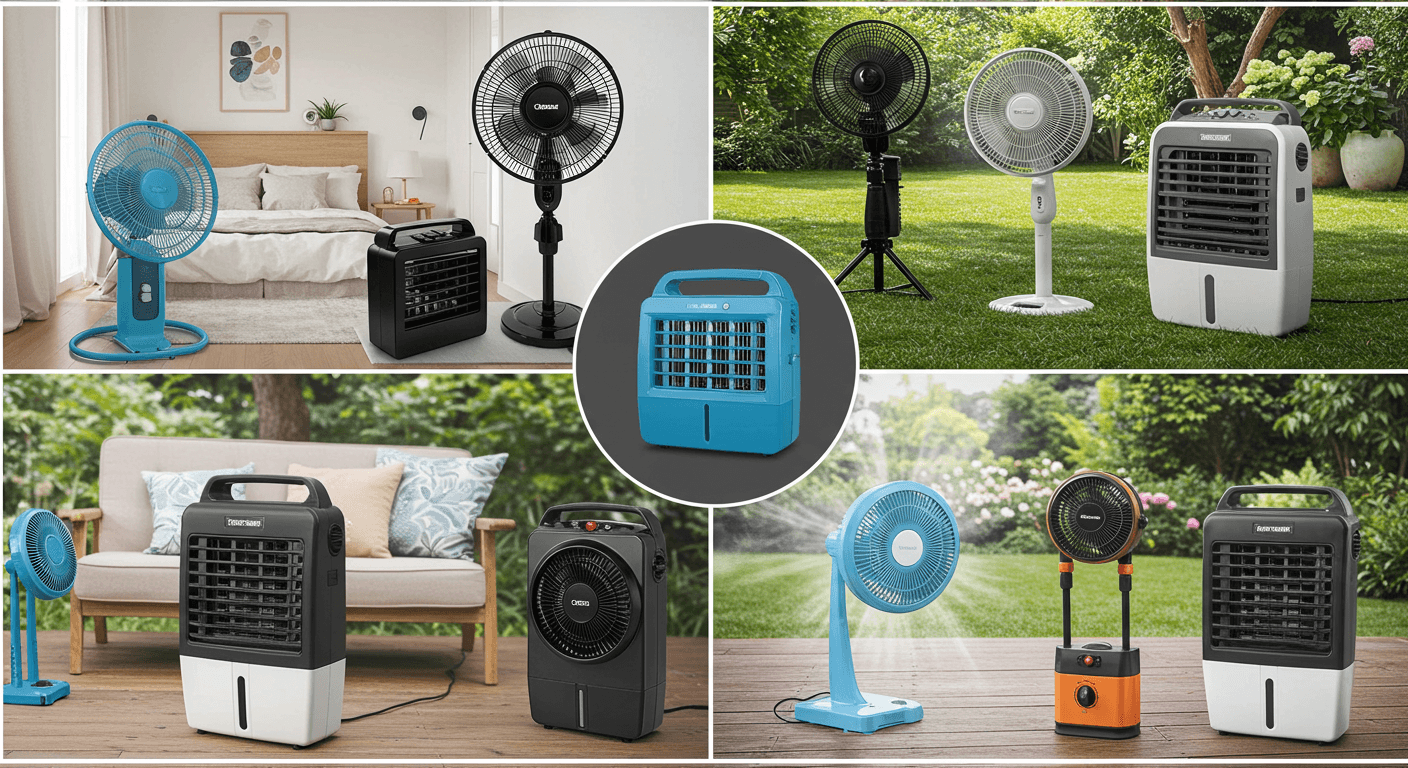
Both misting fans and air coolers provide efficient, cost-effective substitutes for conventional air conditioning when it comes to staying cool during hot weather. Depending on your demands and surroundings, each device has a unique function and delivers cooling in a different way.
Because they provide steady air circulation and extra humidity for increased comfort, air coolers are perfect for interior use in arid areas. They are reasonably priced, environmentally sustainable, and suitable for living areas, offices, and bedrooms. However, misting fans work best in outdoor environments where rapid, individualized cooling is required. They are ideal for patios, decks, and outdoor gatherings in hot, dry climates because they are incredibly portable and simple to operate.
Where you require cooling, your local temperature, and your tolerance for upkeep will all influence your decision. Choose an air cooler for dry indoor spaces. A misting fan is a great choice for outdoor heat relief. Knowing the main distinctions between these two cooling systems enables you to make an informed comfort investment. When the temperature rises, both options provide reasonably priced means of staying cool.