
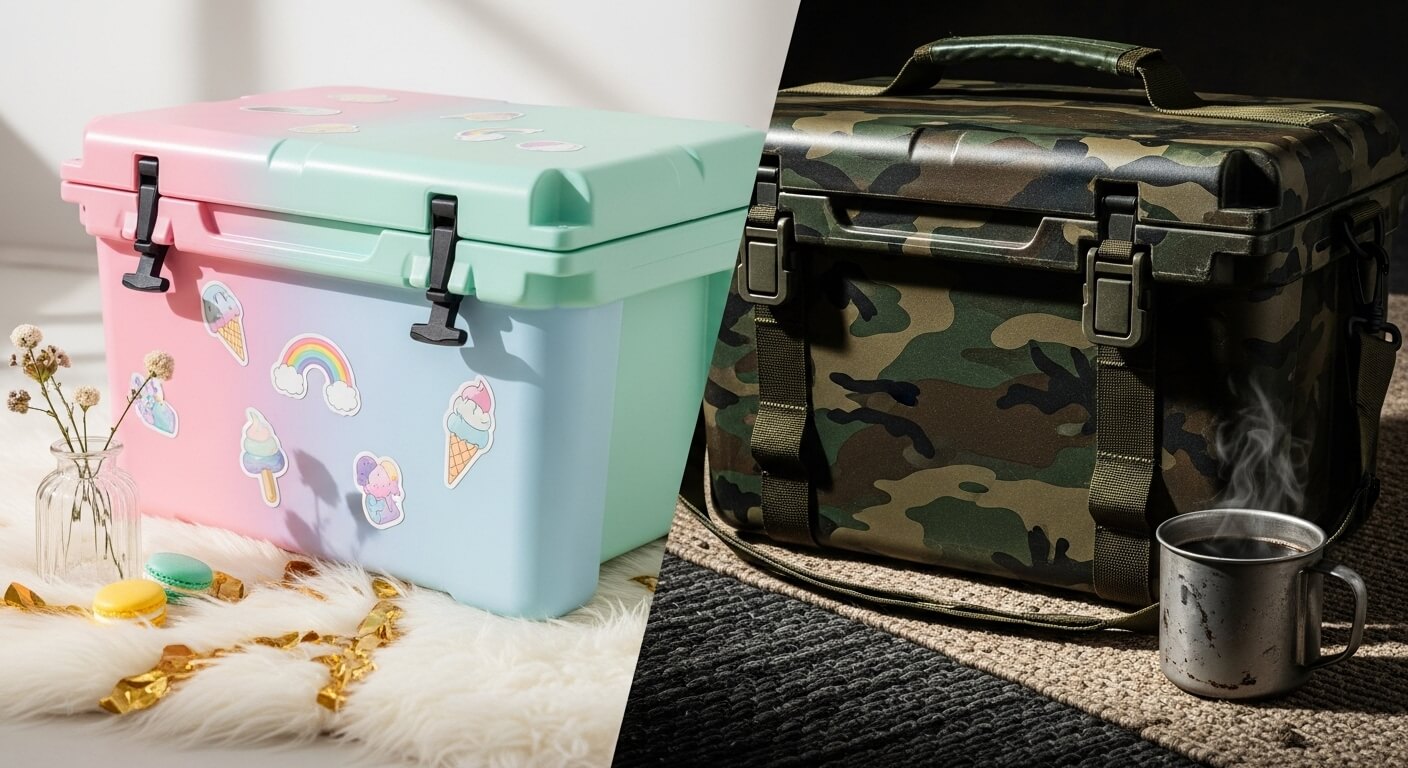
Cooler aesthetics have evolved far beyond utilitarian white plastic boxes. Today’s market offers everything from Instagram-worthy pastels to tactical camouflage patterns, transforming functional cooling equipment into lifestyle statements. Pastel aesthetic coolers appeal to beachgoers, tailgaters, and social media-conscious consumers seeking photogenic outdoor gear.
Rugged camo patterns target hunters, anglers, and traditionalists who value concealment or outdoor heritage. This comprehensive comparison examines how aesthetic choices affect practical performance, durability, pricing, and user satisfaction.
Introduction
The Pastel
The pastel cooler trend emerged from broader lifestyle and social media movements emphasizing aesthetics in all aspects of life. Brands like RTIC, Pelican, ORCA, and even budget manufacturers began offering soft pinks, mint greens, lavenders, seafoam blues, and coral oranges alongside traditional colors.
The movement reflects changing outdoor recreation demographics. Younger consumers, particularly women who historically were underserved by outdoor gear marketed exclusively in earth tones and camo, demanded options reflecting their aesthetic preferences. Brands responded with colors suitable for beach picnics, poolside gatherings, glamping, and Instagram-worthy outdoor moments.
Pastel coolers signal that outdoor recreation encompasses more than hunting and fishing. They legitimize casual outdoor activities—beach days, park picnics, backyard entertaining—as equally valid uses for premium cooling equipment.
The colors appeal to users who view gear as extensions of personal style rather than purely functional tools. A seafoam cooler coordinates with beach towels and swimwear. A blush pink cooler complements boho picnic aesthetics. The coolers become props in carefully curated outdoor experiences.
Major brands now offer 10-20+ color options including multiple pastels. Limited edition collaborations with lifestyle brands and influencers create collectibility and seasonal urgency. Some consumers own multiple coolers in different colors for different occasions or aesthetics.
Camo Coolers
Camouflage patterns on coolers serve dual purposes: practical concealment and cultural signaling. For hunters, camo coolers blend into natural environments, reducing visibility to wildlife. For many users, camo represents outdoor heritage, rural identity, and traditional outdoor pursuits.
Modern camo extends beyond traditional woodland patterns. Brands offer patterns optimized for specific environments: forest, desert, marsh, snow. Some patterns use digital pixelation for enhanced concealment. Others incorporate brand-specific proprietary patterns creating unique visual signatures.
Camo coolers signal authenticity and seriousness about outdoor pursuits. The pattern suggests the owner engages in hunting, fishing, or tactical activities requiring concealment. Even when concealment isn’t necessary, camo communicates outdoor identity.
The aesthetic appeals across demographics but particularly resonates with rural consumers, military veterans, hunters, and those who identify with outdoor heritage. The patterns represent tradition and proven effectiveness rather than trendy fashion.
Premium outdoor brands offer camo as standard options while lifestyle brands add it to appeal to broader audiences. The availability across price points ensures camo accessibility regardless of budget.
Performance and Practical Considerations
Does Color Affect Ice Retention?
The fundamental question: do pastel or camo patterns affect cooling performance? The answer is nuanced.
Light Colors and Heat Absorption: Light pastel colors reflect more solar radiation than dark colors. A white or light pink cooler absorbs less heat than black or dark camo patterns when exposed to direct sunlight. Physics dictates that darker surfaces convert light to heat more efficiently.
In testing, light-colored coolers exposed to direct summer sun maintained internal temperatures 2-5°F cooler than dark-colored identical models. Over 24 hours in intense sun, light coolers retained ice approximately 6-10% longer.
However, this advantage disappears when coolers remain in shade. Interior insulation quality matters far more than exterior color for overall ice retention. A well-insulated camo cooler outperforms a poorly-insulated pastel cooler regardless of color.
Practical Impact: For beach use with unavoidable sun exposure, light pastels provide measurable advantage. For camping in shaded areas, tailgating under canopies, or fishing from covered boats, color becomes irrelevant to performance.
The performance difference matters most in extreme conditions—desert heat, open boat decks, sunny beach days. In moderate conditions or shaded use, insulation quality overwhelms color effects.
Visibility and Practicality
Pastel Advantages: Light colors remain visible in low light, making coolers easier to locate at dusk or dawn. At crowded beaches, parks, or events, unique pastel colors help identify your cooler among dozens of similar-sized containers.
The visibility prevents accidentally leaving coolers behind. Bright colors catch attention during pack-up, reducing the likelihood of forgetting equipment.
Camo Advantages: Camouflage patterns genuinely help concealment in hunting and wildlife photography scenarios. Coolers positioned near hunting blinds or photography hides avoid spooking game.
For truck beds and boats, camo coolers show dirt and wear less obviously than light colors. Scratches, scuffs, and grime blend into the pattern rather than standing out starkly.
Theft Considerations: Visible pastel coolers may attract more attention from thieves at public beaches or campgrounds. The distinctive colors make them obvious targets. However, the same visibility makes stolen coolers harder to resell—a mint green YETI is more identifiable than black or camo.
Camo coolers blend into environments, potentially reducing theft risk through lower visibility. However, camo patterns are popular, making stolen camo coolers easier to blend into secondhand markets.
Durability and Wear Patterns
Pastel Durability Concerns: Light colors show every scratch, scuff, and stain. A mint cooler displays dirt from truck beds prominently. Scratches reveal white or lighter underlayers, creating visible damage.
The powder coat on pastel coolers doesn’t differ chemically from darker colors, but visual degradation appears more obvious. A well-used pastel cooler looks more worn than an equivalently used camo cooler.
Touch-up paint for pastel colors is rarely available. Once the finish is damaged, restoration is impossible. The cosmetic wear may prompt replacement even when insulation remains functional.
Camo Wear Characteristics: Camouflage patterns hide wear effectively. Scratches and scuffs blend into the varied pattern. Dirt accumulation is less visible against earth tones and broken patterns.
Camo coolers maintain newer appearance longer under identical use. The forgiving aesthetic means coolers can serve years longer before cosmetic wear motivates replacement.
However, catastrophic damage; deep gouges, large dents—remains visible regardless of pattern. Camo hides normal wear but cannot conceal serious damage.
Market Availability and Options
Pastel Color Offerings
Premium Brands:
- YETI: Offers seasonal pastels including reef pink, ice pink, aquifer blue, and limited editions
- Pelican: Provides several pastel options including seafoam and light blue
- ORCA: Features expanded color palette with multiple pastel choices
- Hydro Flask: Extensive pastel options in drinkware extending to some coolers
Mid-Range Brands:
- RTIC: Regular pastel offerings at accessible price points
- Coleman: Limited pastel options in specific product lines
- Igloo: Seasonal pastel colors in soft coolers
Budget Options:
- Arctic Zone: Pastel soft coolers at budget pricing
- Walmart/Target house brands: Seasonal pastel options under $50
The pastel availability has expanded dramatically in recent years. What began as limited editions has become standard inventory for most brands.
Camo Pattern Selection
Traditional Patterns:
- Realtree: Licensing to multiple cooler brands, offering various environment-specific patterns
- Mossy Oak: Similar licensing model with patterns optimized for different hunting scenarios
- King’s Camo: Premium patterns with brand partnerships
Modern/Tactical Patterns:
- Digital camo: Pixelated patterns in various color schemes
- MultiCam: Tactical pattern popular in military/outdoor markets
- Brand-specific patterns: Proprietary designs from individual manufacturers
Availability: Camo appears across all price points from budget coolers under $50 to premium rotomolded models over $300. The ubiquity ensures camo accessibility regardless of budget.
Some brands charge premium pricing for licensed camo patterns (Realtree, Mossy Oak) while offering generic camo at standard pricing.
Target Demographics and Use Cases
Pastel Cooler Users
Primary Demographics:
- Women aged 25-45 seeking gear reflecting personal aesthetic
- Social media-conscious consumers who photograph outdoor experiences
- Families wanting cheerful, approachable outdoor equipment
- Beach and pool enthusiasts prioritizing style alongside function
- Glampers and casual campers who view outdoor recreation as lifestyle activity
Typical Use Scenarios:
- Beach trips and pool parties where aesthetics matter
- Picnics and park outings with Instagram-worthy setups
- Tailgating at sporting events with coordinated team colors
- Backyard entertaining where cooler serves as visible element
- Road trips and car camping emphasizing comfort and style
Values and Priorities: These users often prioritize aesthetics equally with function. They’re willing to pay premium prices for attractive designs and view outdoor gear as lifestyle expression. Environmental consciousness and brand values matter. They appreciate companies supporting causes they care about.
Camo Cooler Users
Primary Demographics:
- Hunters and anglers needing functional camouflage
- Rural consumers identifying with outdoor heritage
- Military veterans and tactical enthusiasts
- Traditional outdoor recreationists valuing proven patterns
- Truck and boat owners who prefer rugged, hide-dirt aesthetics
Typical Use Scenarios:
- Hunting trips where concealment provides tactical advantage
- Fishing expeditions in boats or from shore
- Camping in wilderness settings
- Work sites and construction where dirt exposure is constant
- General outdoor use prioritizing durability over appearance
Values and Priorities: These users prioritize function, durability, and outdoor authenticity. They value proven performance and traditional outdoor credibility over trendy aesthetics. Brand heritage and outdoor legitimacy matter. They prefer companies with hunting/fishing roots over lifestyle brands.
Pricing and Value Considerations
Pastel Pricing Trends
Pastel colors generally price identically to standard colors from major brands. YETI charges the same for reef pink as for white or tan. RTIC prices all colors equally.
Exceptions occur with limited editions or brand collaborations. Special pastel releases may command 10-20% premiums over standard offerings due to scarcity and collectibility.
Budget brands sometimes price pastel colors higher than basic options, adding $5-$15 for “fashion colors.” The premium reflects perception that consumers paying for aesthetics will accept slight markups.
Resale value for pastel coolers varies. Neutral pastels (soft blues, greens) retain value well. Highly saturated or unusual colors may reduce resale appeal to narrower audiences.
Camo Pricing Structure
Licensed camo patterns (Realtree, Mossy Oak) typically add $20-$50 to cooler prices. The licensing fees from pattern owners increase manufacturer costs, passed to consumers.
Generic or brand-proprietary camo patterns price at standard rates without premiums. Many manufacturers offer house camo patterns avoiding licensing costs.
The camo premium is most pronounced in mid-range coolers where percentage impact is significant. On $300+ premium coolers, a $30 camo upcharge feels less substantial.
Resale value remains strong for camo coolers, particularly licensed patterns among hunting communities. The patterns maintain appeal to specific demographics willing to pay for them secondhand.
Value Analysis
For pure function, neither aesthetic choice provides value advantage. The colors and patterns don’t improve core cooling performance enough to justify price differences.
The value comes from user satisfaction and alignment with personal values. A pastel cooler bringing joy every time you see it provides intangible value beyond ice retention. Similarly, a camo cooler making you feel connected to outdoor heritage has value beyond function.
For resale considerations, mainstream colors (white, black, gray) typically retain value best. Niche aesthetics—extreme pastels or specific camo patterns—appeal to narrower markets potentially reducing resale prices.
Making Your Decision
Choose Pastel Aesthetic Coolers If:
Aesthetics genuinely matter to you. If seeing a beautiful cooler brings joy and enhances outdoor experiences, pastel options provide real value beyond function.
Your activities emphasize style. Beach trips, pool parties, tailgating, and social gatherings where appearance matters benefit from attractive coolers.
You want lighter colors for heat management. Beach use in intense sun gains measurable benefits from light-colored coolers reflecting solar radiation.
Visibility is important. Easily spotting your cooler in crowds or preventing accidental abandonment favors bright, distinctive colors.
You appreciate inclusive outdoor aesthetics. Supporting brands offering diverse color options beyond traditional outdoor patterns matters to you.
Social media presence matters. If you photograph and share outdoor experiences, photogenic coolers enhance visual content.
Choose Camo Coolers If:
Concealment serves practical purposes. Hunting, wildlife photography, or activities requiring blending into environments benefit from genuine camouflage.
You value outdoor heritage. Traditional patterns represent connection to hunting/fishing culture and rural outdoor identity.
Durability and wear-resistance matter. The forgiving pattern hides scratches, scuffs, and dirt better than solid colors, particularly light shades.
You prefer rugged aesthetics. The tactical, outdoorsy appearance aligns with how you view yourself and want others to perceive you.
You want to support hunting conservation. Licensed camo patterns indirectly support conservation through funding mechanisms connected to hunting communities.
Work/professional use involves dirt exposure. Construction sites, ranches, farms, and marine environments favor colors hiding inevitable grime.
Consider Neutral Options If:
Resale value matters significantly. Mainstream colors (white, black, gray, tan) appeal to broadest audiences, maximizing resale prices.
You’re unsure about aesthetic preferences. Neutral colors avoid aesthetic commitments you might regret later.
Multi-user scenarios exist. Shared family coolers or equipment used across diverse groups benefit from universally acceptable colors.
Minimalist aesthetics appeal. Clean, simple colors suit those preferring understated equipment without bold patterns or bright colors.
Frequently Asked Questions
Do pastel coolers cost more than camo or standard colors?
Major premium brands typically price all colors identically. Budget and mid-range brands occasionally charge $5-$15 more for pastel “fashion colors” but this isn’t universal. Licensed camo patterns (Realtree, Mossy Oak) often add $20-$50 premiums while generic camo prices match standard options. Limited edition colors from any aesthetic category may command premiums due to scarcity.
Will light-colored coolers get dirtier faster?
Yes, light pastels show dirt, stains, and discoloration more visibly than dark camo patterns. However, the dirt doesn’t accumulate faster—it’s simply more obvious. Both aesthetics get equally dirty, but camo hides it better. Light coolers require more frequent cleaning to maintain appearance while camo tolerates visible grime.
Can I get camo patterns in soft coolers or only hard-sided?
Both camo and pastel options exist across soft and hard-sided coolers. Soft coolers actually offer more pastel variety due to fabric printing flexibility. Hard-sided rotomolded coolers offer both aesthetics but with more limited pattern/color options due to manufacturing constraints. Check specific brands for availability in your preferred style and size.
Do these aesthetics affect warranty or durability?
No. The exterior color or pattern doesn’t affect insulation quality, structural integrity, or warranty coverage. A pastel YETI has identical warranty and construction to a camo YETI. The aesthetic choice is purely cosmetic; performance and durability depend on construction method and materials, not exterior finish.
Which aesthetic has better resale value?
Neutral mainstream colors (white, black, gray) typically resale best, appealing to broadest audiences. Among aesthetics, camo maintains strong value within hunting/fishing communities. Pastel resale value varies—subtle pastels (soft blues, greens) perform reasonably while extreme bright colors appeal to narrower markets. Unique limited editions can command premiums if collectible.
Are there “masculine” and “feminine” coolers?
Marketing historically targeted men with camo and earth tones, women with pastels and bright colors. However, this gendering is artificial—cooler function doesn’t vary by gender. Many women prefer camo; many men love pastels. Choose aesthetics matching your personal preference regardless of gendered marketing. The industry slowly recognizes that outdoor gear aesthetics should be personally chosen, not gender-assigned.
Can I customize my own pattern or color?
Some companies offer custom powder coating or hydro-dipping services applying any pattern to coolers for $100-$300. DIY options include vinyl wraps, spray paint, or hydro-dipping kits. Custom work may void warranties and affects resale value. Most users find sufficient options among manufacturers’ standard offerings without customization expense.
Do specific outdoor activities “require” certain aesthetics?
Only hunting genuinely benefits from camo concealment. Otherwise, aesthetic requirements are cultural rather than functional. Beach trips don’t require pastels; camping doesn’t demand camo. Use whatever aesthetic makes you happy. The “requirement” is social pressure, not functional necessity. Quality insulation matters more than exterior pattern for cooling performance.
Conclusion

The choice between pastel aesthetic and rugged camo coolers is fundamentally personal, driven by identity, values, and intended use rather than significant performance differences. Both aesthetics appear on quality coolers with identical insulation and construction; the exterior finish doesn’t determine cooling capability.
Pastel coolers democratize outdoor recreation by offering alternatives to traditional outdoor aesthetics. They signal that beaches, parks, and casual outdoor activities deserve quality equipment reflecting diverse style preferences. The light colors provide marginal heat reflection advantages in sunny conditions and offer high visibility, preventing loss or abandonment.
Camo coolers maintain a connection to outdoor heritage, provide genuine concealment for hunting applications, and hide wear patterns effectively. They appeal to traditional outdoor enthusiasts who value proven patterns and rugged aesthetics resistant to showing dirt and damage.
The “better” choice depends entirely on individual priorities. Neither aesthetic is superior—they serve different users with different values and use cases. A pastel cooler bringing aesthetic joy to beach trips provides as much value as a camo cooler offering concealment during hunts or simply making the owner feel connected to outdoor traditions.
For maximum practicality, divorced from aesthetic preferences, light neutral colors (white, tan, light gray) offer heat reflection benefits without bold aesthetic commitments. These mainstream options maximize resale value and suit diverse social contexts without cultural signalling.
Ultimately, choose aesthetics making you excited to use your cooler. The psychological satisfaction from equipment matching your identity and style provides real value beyond functional specifications. Whether that means mint green, Mossy Oak, or anything in between, pick the option bringing you joy; that’s the one providing the best value for your specific needs and preferences.