
Having a dependable cooler is crucial for anyone who enjoys weekend camping, road excursions, or outdoor activities. The Yeti Roadie and the RTIC 20 are two well-liked choices in the 20-quart cooler market. Both offer to keep your food and drinks cool, but they serve distinct purposes and have different price points. Making the best decision for your outdoor activities requires an understanding of the distinctions between these two models.
The Yeti Roadie is renowned for its strong construction, exceptional ice retention, and tough appearance. Outdoor enthusiasts who value high-performance cooling, dependability, and long-term durability love it. The Roadie can withstand regular usage in a range of settings, including tailgating and camping excursions, thanks to its durable construction and well-thought-out design.
The RTIC 20, on the other hand, prioritizes practical usefulness and affordability. Although it might not have the same high-end reputation as Yeti, it is still affordable and has good cooling performance, making it suitable for casual campers, picnics, or road trips. It is a practical option for people who desire efficiency without making a significant financial commitment because of its lightweight design and user-friendly features.
The main aspects to take into account, such as cooling performance, durability, portability, ease of use, and value for money, will be broken down in our Yeti Roadie vs. RTIC 20 review. After reading this guide, you will know exactly which cooler is best for you, regardless of whether you value cost-effective convenience or high-end performance.
Overview of the Brand
Understanding the brands behind these coolers is crucial before delving into the details of the Yeti Roadie vs. RTIC 20, as their design priorities and philosophies affect value, performance, and durability.
Yeti Roadie
Premium outdoor gear manufacturer Yeti is well-known for its superior drinkware, coolers, and other durable goods. Serious outdoor enthusiasts who appreciate long-lasting performance, excellent ice retention, and sturdy construction are the target market for the Roadie 20. Yeti coolers are reliable even in harsh conditions since they frequently have reinforced hinges, heavy-duty latches, and rotomolded walls. The company is known for making coolers that are resilient to harsh handling, frequent travel, and severe weather.
RTIC 20
RTIC presents itself as an affordable substitute for high-end coolers such as Yeti. Targeting road trippers, casual campers, and consumers on a tight budget, the RTIC 20 provides good cooling performance at a lower cost. RTIC coolers are ideal for quick excursions, picnics, and automobile travel because of their lightweight, convenient, and easy-to-use design. RTIC might not have the same long-term durability or high-grade materials as Yeti, even though the build quality is good for the budget.
Cooling Efficiency
Cooling performance is one of the most crucial aspects to take into account when comparing the Yeti Roadie and RTIC 20. After all, how well your food and beverages stay cold during outings is directly impacted by a cooler’s capacity to keep ice frozen for longer.
Yeti Roadie
Because of its strong rotomolded walls and PermaFrostTM insulation, the Yeti Roadie is renowned for its exceptional ice retention. This high-quality design reduces heat transmission and enables the cooler to sustain lower interior temperatures for longer. Depending on the outside temperature, how frequently the cooler is opened, and how it is filled, the Roadie can typically store ice for two to four days or longer in real-world use. Because of this, it’s perfect for long tailgates, weekend excursions, and multi-day camping where steady cooling is essential.
RTIC 20
Because of its strong insulation and tarp-style outer shell, which prevents heat and moisture entry, the RTIC 20 also provides good cooling performance. The RTIC performs admirably for its price range even though it can’t quite equal the Roadie’s industry-leading ice retention. Under normal circumstances, users can anticipate 1-3 days of ice retention—more than plenty for day trips, beach vacations, or shorter camping expeditions.
Design and Portability
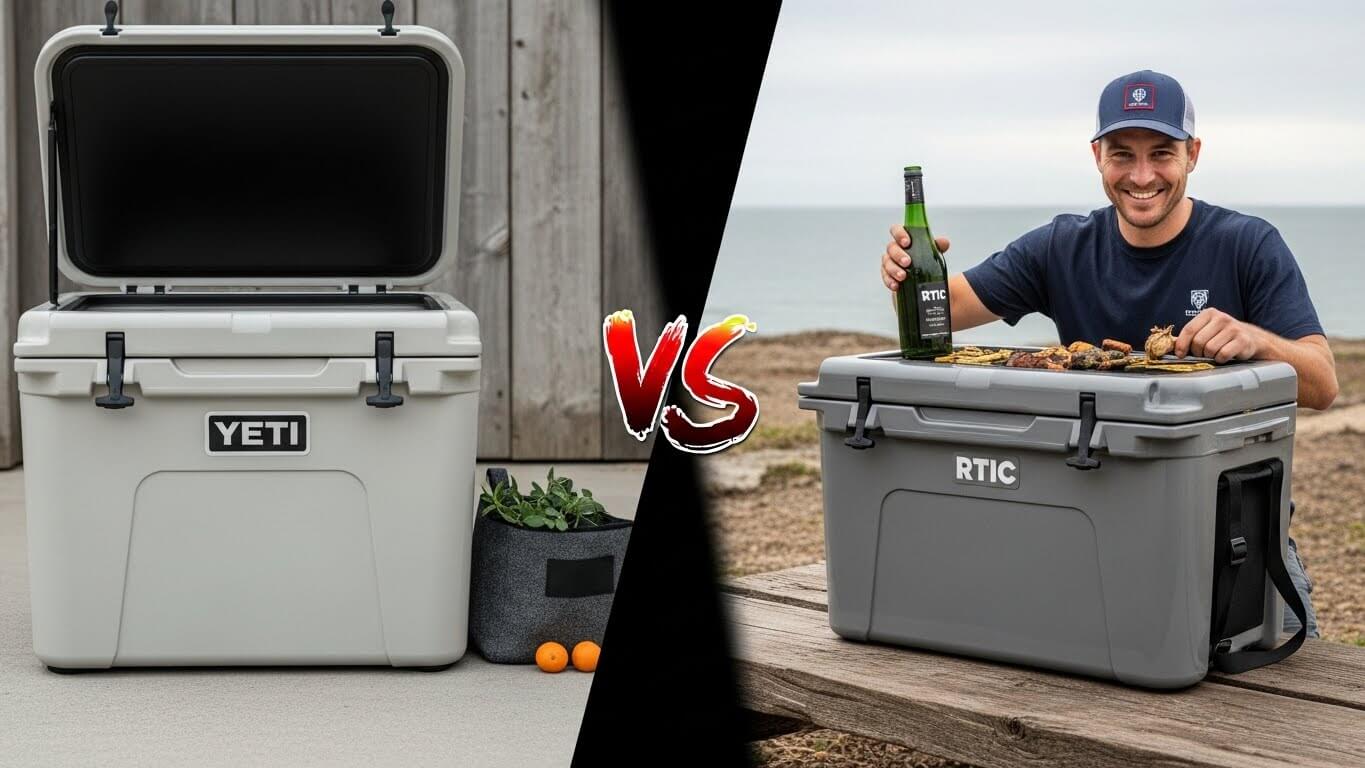
Portability and design are important factors when comparing the Yeti Roadie and RTIC 20, particularly if you intend to move the cooler on vacations where space and simplicity of transportation are important, put it into and out of vehicles, or carry it over uneven terrain.
Yeti Roadie
Compact and durable portability is a key consideration in the intelligent design of the Yeti Roadie. Compared to larger, heavier coolers, it is easy to handle with one hand due to its shape and proportions. In addition to increasing longevity, the bear-resistant rotomolded structure adds a sturdy, high-end feel. The Roadie is outfitted by Yeti with cozy, integrated handles that are strengthened for extended usage. Even while it’s not the lightest option available, its ergonomic form and sturdy construction make it feel simpler to transport than its weight would imply, especially for large, ice-filled loads.
RTIC 20
With a little more straightforward appearance, the RTIC 20 is likewise made to be easily portable. When completely packed, it can be easier to lift because it usually weighs less than many high-end coolers. The robust molded handles of RTIC are comfortable and easy to grasp for the majority of users. With a lightweight shell and small footprint that fit neatly in truck beds, automobile trunks, and tiny storage areas, the outside design is straightforward but practical. The RTIC 20 works well for daily transportation and short journeys even though it lacks the Roadie’s high-end ergonomic features.
Sturdiness and Construction Quality
When deciding which cooler is better for your outdoor activities and long-term use, durability and build quality are important considerations when comparing the Yeti Roadie vs RTIC 20.
Yeti Roadie
With its sturdy build and high-quality materials, the Yeti Roadie is made to endure regular use under difficult circumstances. It is incredibly strong due to its rotomolded shell, which makes it extremely resistant to dents, scratches, and impacts that frequently happen during outdoor activities like camping and road trips. Even when the cooler is completely filled, the walls and lid are strengthened to preserve their shape and insulating integrity. The walls are hermetically sealed with Yeti’s permafrost insulation, which improves strength and cooling efficiency.
Yeti’s hardware is another example of durability. The Roadie has sturdy latches and heavy-duty grips that won’t break or deteriorate over time. In order to withstand years of continuous usage, hardware components are made with reinforcement in mind. Even under challenging conditions, the Roadie frequently outlasts rival coolers due to its superior construction quality.
RTIC 20
With a robust external shell and a practical design intended for frequent outside usage, the RTIC 20 offers good durability for its price. Though it might not be as durable as a high-end rotomolded cooler, its body is sturdy enough to survive shocks and normal travel conditions. Although RTIC has a well-made exterior and high-quality insulation, some parts, such the lid, hinges, or integrated handles, might not be as sturdy as those on the Yeti Roadie.
Although the RTIC 20’s construction quality is still outstanding considering its low cost, frequent intensive use or harsh outdoor environments may cause it to wear down more quickly.
Usability and Upkeep
When contrasting the Yeti Roadie and RTIC 20, two key aspects that influence your daily experience with each cooler are ease of use and upkeep.
Yeti Roadie
Despite its tough construction, the Yeti Roadie was made with user convenience in mind. excellent when fully loaded, it is easier to lift and move thanks to its small size and excellent weight distribution. Strong, long-lasting latches allow the lid to open smoothly and remain firmly closed. Because of its smooth texture, the inside is simple to clean after each usage. There are fewer spaces for dirt, debris, or water to become trapped due to the rotomolded construction and high-quality hardware.
The integrated drain system makes it simple to remove water or melted ice. You don’t need to tip the entire cooler to let the water out; just open the drain plug. Giving the cooler’s exterior a brief wash with mild soap and water after travels helps preserve its beauty and functionality over time, even if the high-quality materials require little extra care.
RTIC 20
Additionally, the RTIC 20 offers user-friendly convenience. For casual users in particular, managing it is made easier by its reduced weight and simpler form. The inside surface is smooth enough for fast wipe-downs, and the lid opens and closes smoothly. Similar to the Roadie, the RTIC 20 usually has a drain plug for easy evacuation of water or melted ice.
Because the RTIC is typically constructed from slightly inferior materials, you may need to monitor handles or seams over time, particularly if you use it frequently or subject it to harsh environments. Its lifespan can be increased with routine cleaning after use, such as wiping out the interior and making sure the drain plug area is free.
Cost and Economic Value
Price and overall value are frequently important variables when comparing the Yeti Roadie and RTIC 20, particularly since these two coolers belong to different cost and user sectors.
Yeti Roadie
The Yeti Roadie’s pricing is commensurate with its positioning as a high-end cooler. It often sits at the upper end of the soft cooler market thanks to its sophisticated insulation, rotomolded structure, and expensive hardware. The value comes from long-lasting performance, outstanding ice retention, and durability that surpasses hard coolers, even though the initial cost is substantially greater than many competitors.
The Roadie offers outstanding long-term value for people that depend on their cooler all year round, use it for intense outdoor activities, or want a device that can withstand harsh conditions. Over time, less replacements and repairs are frequently necessary due to the performance and longevity.
RTIC 20
Generally speaking, the RTIC 20 is more reasonably priced and provides good performance at a reasonable cost. It is a good option for those who want a dependable cooler without spending a lot of money because it provides steady cooling for casual use and has a lightweight, practical design. The RTIC 20 offers excellent value for short outings, picnics, beach days, and occasional camping, even though it does not have all the features of the Yeti Roadie. The RTIC 20 frequently seems like a wise choice for consumers on a tighter budget or those looking for a cooler for regular outdoor activities.
Pros and Cons
Pros of the Yeti Roadie
- Superior performance: PermaFrost insulation and strong rotomolded walls provide outstanding ice retention.
- Rugged durability: Sturdy hardware and premium materials are designed to endure harsh outdoor use.
- Multiple power options: Suitable for DC, AC, and frequently battery/solar configurations.
- Excellent long-term value: Even with continuous use, it is made to last for many years.
- Easy maintenance: Cleaning is made easy with the sturdy drain system and smooth interior.
Cons:
- Heavier: Compared to lighter variants, built-in robustness adds weight.
- Possibly louder: Compared to simpler equipment, compressor cooling systems have the potential to produce more noise.
RTIC 20 Pros:
- Economical: More purchasers can afford it because of the lower upfront cost.
- Lightweight and portable: More convenient for casual use or quick trips.
- Strong performance: Excellent insulation and cooling for daily travel in temperate climes.
- User-friendly: Easy to maintain, with a drain plug.
Cons:
- Lower ice retention: In warmer weather, it might not hold ice as long as premium competition.
- Build quality varies: Some of the reinforced materials included in high-end coolers are absent.
If you want superior cooling performance, tough durability, and long-lasting effects and are prepared to make a larger initial investment, go with the Yeti Roadie. If you’re looking for an affordable, portable cooler that works well for everyday use, short-term excursions, or casual travel, go for the RTIC 20.
Final Verdict
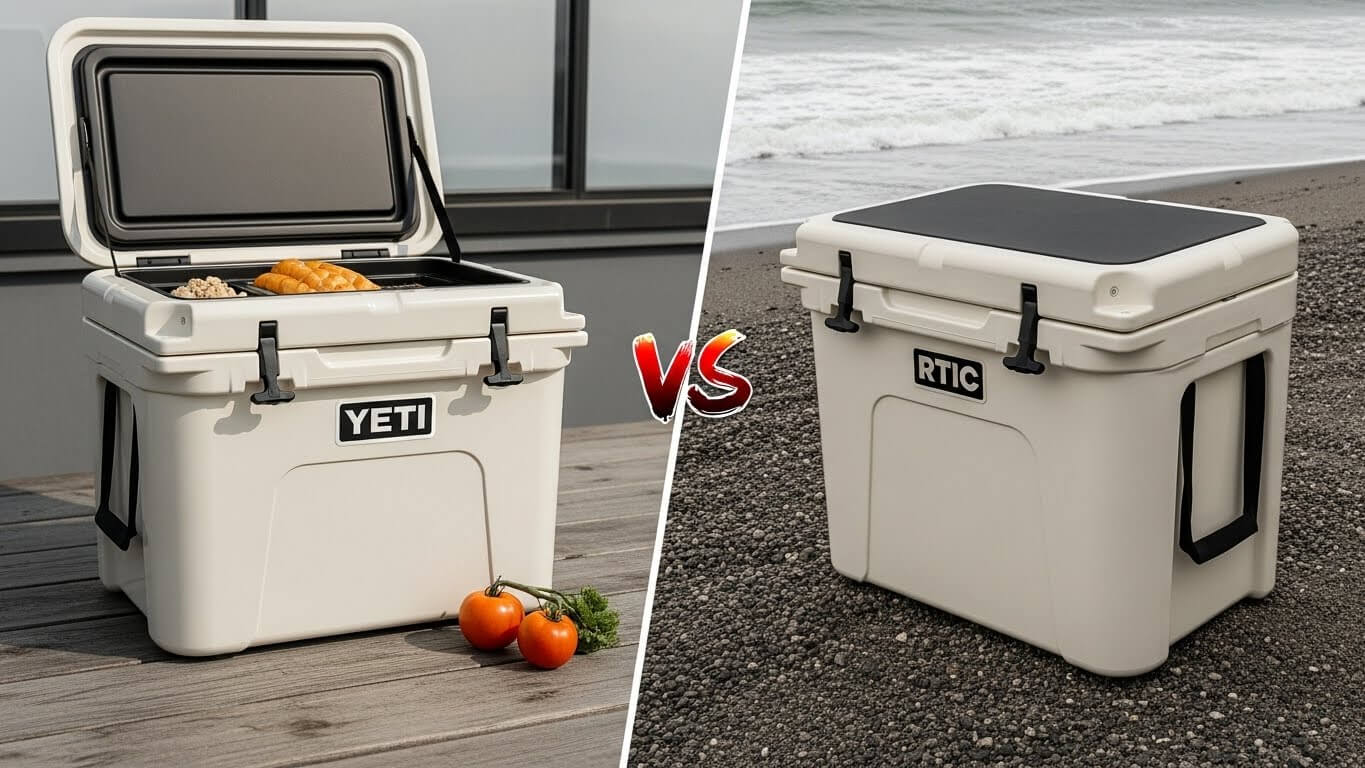
Your decision between the Yeti Roadie and the RTIC 20 ultimately depends on how you want to use the cooler, how frequently you’ll depend on it, and how much you’re willing to spend on durability and performance.
As a high-end, high-performance cooler, the Yeti Roadie distinguishes itself for its exceptional ice retention, sturdy construction, and dependable operation under a variety of circumstances. Adventurers, frequent campers, RV travelers, and anybody else who wants their cooler to function effectively over time will find it ideal. The Roadie regularly performs at a level that justifies its price; thus, many customers feel the investment is beneficial even though the initial cost is higher and the machine is heavier than other competitors. The Yeti Roadie is a great option if you value longevity, longer chilling times, and high-end amenities.
However, at a more affordable price, the RTIC 20 offers excellent cooling performance and useful use. It’s a good option for day vacations, beach visits, picnics, and casual outdoor activities because it offers reliable ice retention and portability without the high cost. It nevertheless offers excellent value for money and is more than capable of meeting most daily needs, even though it might not be able to match the Roadie’s exceptional durability or long-term ice performance in extremely hot temperatures. The RTIC 20 is a great choice if affordability, mobility, and daily ease are your top priorities.
If you want superior performance, tough durability, and long-lasting cooling, go with the Yeti Roadie. If you want dependable cooling for daily usage at a lower cost, go with the RTIC 20.
In the end, each cooler has a role. Your lifestyle, how often you use it, and how much cooling you require will determine which option is ideal for you. This comparison enables you to make an informed choice that fits your outdoor lifestyle, regardless of whether you value value and practicality or premium performance.