
Whether you’re going to the beach, kayaking, camping, or travelling with food and beverages, selecting the appropriate cooler can significantly impact how pleasurable and stress-free your activities are. The leak-resistant cooler and the waterproof cooler bag are two common choices that are frequently contrasted. Despite their similar sounds, these names refer to two completely distinct degrees of performance, protection, and intended purpose. You may prevent leaks, damp equipment, and unforeseen messes by being aware of the difference.
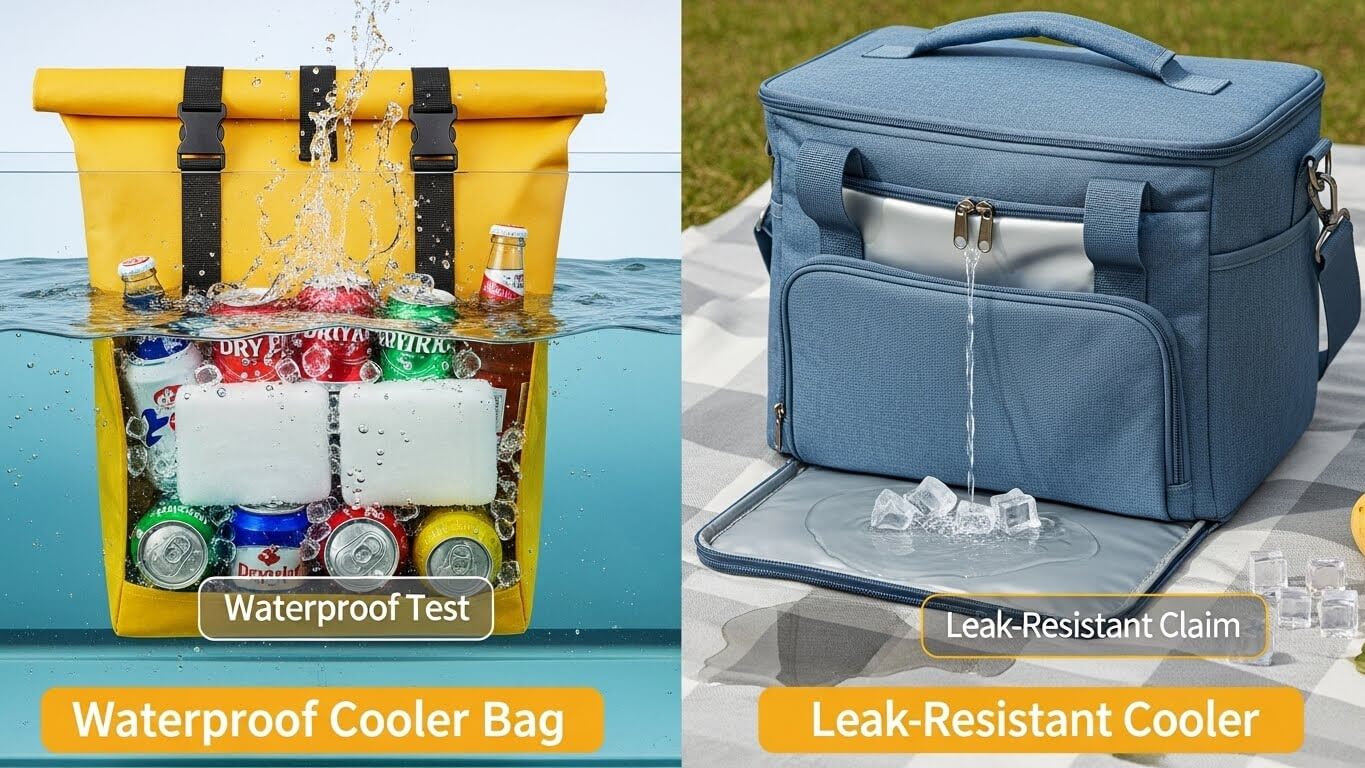
The purpose of a waterproof cooler bag is to completely shield the interior and outside from water. To stop water from entering or leaving, these bags are usually constructed with sealed zippers, welded seams, and waterproof fabrics. They are perfect for situations like boating, kayaking, beach vacations, paddleboarding, and rainy travel conditions where exposure to water is inevitable. A waterproof cooler bag can often be momentarily submerged without leaking, providing comfort in damp conditions.
On the other hand, rather than obstructing outside water, a leak-resistant cooler concentrates on retaining melted ice and small spills. These coolers are often hard coolers with sealed liners and better stitching, or insulated soft coolers. When preventing liquids from leaking into a car or bag is the main concern, they are ideal for road trips, picnics, tailgating, and regular outdoor use. Leak-resistant coolers, however, are not made to withstand heavy rain or exposure to water.
The main distinctions between waterproof cooler bags and leak-resistant coolers in terms of cooling efficiency, spill protection, portability, durability, cost, and optimal use cases are examined in this comparison. You will be able to determine which solution best suits your lifestyle at the end of this guide, regardless of whether you require dependable spill containment for daily activities or the highest level of water protection.
What Is a Waterproof Cooler Bag?
A waterproof cooler bag is a type of insulated bag that is specifically made to keep its contents cold while offering total defence against leaks and water incursion. In contrast to conventional soft coolers, waterproof cooler bags are constructed from waterproof materials such as laminated nylon, heavy-duty PVC, or TPU-coated textiles. By combining these materials with heat-sealed or welded seams, stitching holes that would let water seep in or out are eliminated.
A waterproof cooler bag’s watertight or airtight sealing technique is one of its distinguishing characteristics. Similar to dry bags used in water sports, several variants have roll-top or waterproof zippers. The bag is perfect for boating, kayaking, paddleboarding, beach outings, and fishing excursions because of its design, which makes it resistant to rain, splashes, and even brief submersion. Condensation and melted ice stay completely contained, avoiding leaks into cars, bags, or boats.
Depending on the thickness of the insulation and the outside temperature, waterproof cooler bags can provide short- to mid-term ice retention, often lasting one to two days. Their mobility and water protection are unparalleled in damp conditions, even if they might not be as effective at retaining ice as hard-sided coolers. Many models have reinforced carry handles, backpack-style harnesses, and adjustable shoulder straps, which make them pleasant to carry over longer distances.
In general, users who value portability and waterproof performance over prolonged ice retention are the ideal candidates for waterproof cooler bags. They are a great option for anyone who spends time near water or in erratic weather, when it’s just as critical to keep things dry and contained as it is to keep them cold.
What Is A Leak-Resistant Cooler?
Although it is not meant to be completely watertight, a leak-resistant cooler is made to contain melting ice, spills, and moisture without letting liquids escape. Typically constructed from sturdy materials or moulded plastics, these coolers have sealed interiors and insulated linings that lower the possibility of leakage when in regular operation. Leak-resistant coolers usually use stitched seams with internal sealing instead of welded seams or watertight closures, in contrast to waterproof cooler bags.
Every day, outdoor activities, including picnics, road trips, tailgating, camping, and sporting events, frequently use leak-resistant coolers. Their main objective is to stop water from soaking clothes, dripping into a car trunk, or causing messes while being transported. Under normal circumstances, the majority of models have drain-resistant bases, reinforced liners, and zippered closures that help control moisture.
Leak-resistant coolers frequently offer insulation that is on par with or marginally superior to waterproof cooler bags in terms of cooling efficacy. Depending on usage, ambient temperature, and the quality of the insulation, many can keep ice frozen for one to three days. Leak-resistant coolers work best in dry or controlled situations because they are not designed for submersion or prolonged exposure to water.
Additionally, leak-resistant coolers typically come in a wider range of sizes, shapes, and capacities, including both hard-sided and soft-sided models. Families and casual users find them intriguing because they are typically less expensive and lighter than fully waterproof cooler bags. A leak-resistant cooler is perfect for people who require dependable insulation and spill control but do not require complete waterproofing. For regular outdoor usage, it achieves a sensible mix between cost, performance, and ease.
Insulation and Cooling Performance
When comparing a leak-resistant cooler with a waterproof cooler bag, cooling performance is crucial, particularly if you intend to store food and drinks for long periods of time. Although both solutions are intended to keep objects cold, their overall effectiveness and insulation techniques are different.
Waterproof Cooler Cooling Performance
In order to preserve flexibility and portability, waterproof cooler bags usually use minimal insulation. When correctly packed, some high-quality bags can extend cooling capability up to 48 hours. The majority of products can keep ice frozen for 12 to 24 hours. The emphasis is still on waterproof protection rather than maximum insulating thickness, but its airtight closures and sealed seams aid in reducing heat exchange. These bags are ideal for day vacations, beach excursions, water sports, or brief excursions where it is necessary to keep contents cold for a short period of time.
Leak-Resistant Cooling Performance
Especially in hard-sided or structural soft cooler designs, leak-resistant coolers frequently offer superior overall insulation. Depending on design and circumstances, a lot of leak-resistant types can hold ice for one to three days. Manufacturers may incorporate more robust structures and thicker insulation because they are not limited by waterproof materials or closures, which improves temperature retention. Leak-resistant coolers are therefore perfect for tailgating, road trips, picnics, and camping.
Verdict: When it comes to ice retention and chilling time, leak-resistant coolers typically perform better than waterproof cooler bags. Waterproof cooler bags, on the other hand, perform exceptionally well in damp settings when protection from outside water is essential. A waterproof cooler bag is enough if temporary cooling in damp weather is your top goal. A leak-resistant cooler provides better insulation and longer chilling times in dry conditions.
Sturdiness and Construction Quality
When comparing a leak-resistant cooler with a waterproof cooler bag, durability is crucial, particularly for regular outdoor use. Both are designed to withstand wear and tear, but their building techniques and materials are very different.
Durability of Waterproof Cooler Bags
Heavy-duty PVC, TPU, or rubberised materials that are resistant to water, punctures, and abrasion are commonly used to make waterproof cooler bags. By eliminating weak spots and increasing durability in damp conditions, welded seams take the place of traditional stitching. Waterproof cooler bags are perfect for beach and marine use because these materials are resistant to sand, saltwater, and prolonged contact with moisture. However, if improperly stored, their flexible materials could be more prone to creases or cosmetic damage over time.
Durability of Leak-Resistant Coolers
Hard-sided variants of leak-resistant coolers are particularly well-known for their sturdy design. Many have exteriors made of reinforced cloth or strong moulded plastic shells that are resistant to large loads, collisions, and rough handling. Although they also use sturdy materials, soft-sided leak-resistant coolers rely on stitched seams, which can deteriorate over time with frequent exposure to moisture. All things considered, tough land-based pursuits like tailgating and camping are ideal for leak-resistant coolers.
Verdict: Leak-resistant coolers typically retain structural integrity better over time when subjected to large loads and frequent transportation. In damp and maritime settings, where moisture resistance stops material deterioration, waterproof cooler bags perform exceptionally well. While leak-resistant coolers offer high overall toughness and load-bearing strength, waterproof cooler bags offer exceptional durability in water-heavy circumstances. Whether water exposure or physical impact is more important will determine the optimal option.
Cost and Economic Value
When deciding between a leak-resistant cooler and a waterproof cooler bag, price is frequently a decisive issue, particularly since both alternatives are accessible within a broad range of budgets. Determining total value is aided by knowing what you get for the money.
Cost of Waterproof Cooler Bags
Because of their unique construction and materials, waterproof cooler bags are usually more expensive than regular soft coolers. Welded seams, airtight seals, and premium waterproof materials raise production costs. Prices are typically in the mid-to-premium category as a result. These bags are perfect for beach outings, wet-weather adventures, and marine use since they offer total water protection, even though the initial cost may be higher.
Cost of Leak-Resistant Coolers
From affordable soft coolers to high-end hard-sided models, leak-resistant coolers are offered in almost every price range. High-end leak-resistant coolers can cost much more because of their durable construction and stronger insulation, but entry-level alternatives are typically less expensive than waterproof cooler bags. Customers can select a model that suits their budget and cooling requirements thanks to this variety.
Verdict: If you frequently spend time near water and require dependable leak and moisture protection, waterproof cooler bags are a great value. For consumers who value cooling performance, capacity, and adaptability for daily activities, leak-resistant coolers offer superior value. While leak-resistant coolers provide more price flexibility and general-purpose value, waterproof cooler bags justify their cost with their specific watertight performance. How frequently you require complete waterproof protection versus standard leak prevention will determine whether the investment is better.
Pros And Cons
Selecting the best solution for your requirements is made simpler when you are aware of the advantages and disadvantages of a leak-resistant cooler versus a waterproof cooler bag.
Pros of Waterproof Cooler Bags
- Complete Water Protection: Prevents leaks in damp environments and keeps contents dry.
- Lightweight and portable: It is simple to carry because of its soft-sided design and shoulder straps or backpack-style harnesses.
- Perfect for Wet Environments: Ideal for wet weather, beach excursions, boating, and kayaking.
- Spill Containment: Melted ice cannot escape thanks to airtight closures.
Cons of Waterproof Cooler Bags
- Limited Ice Retention: Usually only keeps ice frozen for 12 to 48 hours.
- Higher Cost: Compared to regular coolers, the cost of premium materials and construction is higher.
- Less Rigid: When packed or piled, soft designs may provide less stability.
Pros of Leak-Resistant Coolers
- Improved Insulation: Usually keeps ice for one to three days.
- Robust Design: Hard-sided models are resistant to impacts, large loads, and repeated use.
- Versatile Options: Suitable for a range of activities, these options come in varied sizes and patterns.
- Cost Flexibility: Choices ranging from affordable to high-end models.
Cons of Leak-Resistant Coolers
- Not Completely Waterproof: Unable to withstand submersion, severe rain, or splashing.
- Heavier and Bulkier: Models with hard sides, in particular, may be challenging to transport over long distances.
- Limited Use in Wet Environments: Unsuitable for kayaking or boating.
Verdict: While leak-resistant coolers excel in insulation, durability, and all-purpose use, waterproof cooler bags thrive in damp situations and portability. Whether you prioritise extended cooling performance or waterproof protection will determine which cooler is best for you.
Final Verdict

Your outdoor lifestyle, regular surroundings, and cooling requirements will ultimately determine whether you choose a leak-resistant cooler or a waterproof cooler bag. The ideal choice for anyone spending time in damp conditions is a waterproof cooler bag. Even in the event of rain, splashes, or temporary submersion, their waterproof materials, welded seams, and airtight seals guarantee that the contents remain dry. They are perfect for boating, kayaking, beach excursions, and paddleboarding because they are lightweight and portable. However, compared to normal coolers, they are frequently more expensive and have a shorter ice retention period.
With its stronger design, longer ice retention, and better insulation, leak-resistant coolers are excellent for all-purpose use. Road vacations, camping, picnics, tailgating, and regular outdoor activities are all ideal uses for them. They offer longer cooling times and more durability, especially in hard-sided variants, even if they cannot be completely submerged and are less appropriate for damp environments.
If complete water protection and portability in damp conditions are your top priorities, pick a waterproof cooler bag. If durability, long-term ice retention, and adaptable use in dry or regulated circumstances are your top priorities, get a leak-resistant cooler. You can choose the cooler that provides the ideal balance of performance, convenience, and protection by assessing your usual outdoor activities and surroundings. This will guarantee that your food and beverages remain safe and chilled wherever your travels take you.