
Enjoying outdoor pursuits like camping, fishing, tailgating, or beach excursions requires selecting the appropriate cooler. A cooler is an essential piece of outdoor equipment since it keeps food and drinks fresh and guarantees that they stay cold and safe to drink. Two types of coolers frequently stand out among the many options: conventional coolers and rotomolded coolers. Making an informed purchase requires knowing how they differ from one another.
Serious outdoor enthusiasts who want utmost durability and long-lasting ice retention are the target market for rotomolded coolers. These coolers, which are constructed using a technique known as rotomolding, include reinforced hardware, freezer-grade insulation, and thick, continuous walls that enable them to endure severe weather and frequent use. They are perfect for long tailgating events, hunting and fishing excursions, and multi-day camping excursions where superior performance and durable construction are crucial. Despite its higher cost, many consumers consider rotomolded coolers to be a long-term investment because of their superior cooling performance and durability.
Conversely, regular coolers place more emphasis on convenience and affordability. Usually composed of plastic with foam insulation, they are more affordable, lighter, and easier to transport, making them ideal for casual outdoor use, backyard get-togethers, and day trips. For short-term use, regular coolers offer sufficient ice retention; however, they might not function as well in harsh environments or over several days.
This comparison of rotomolded and conventional coolers will look at important aspects such as total value, features, size and portability, cooling performance, and durability. After reading this guide, readers will know which cooler best suits their requirements, regardless of whether they are more concerned with cost-effective convenience or durable long-term performance. Making the correct decision guarantees that food stays fresh, beverages stay cold, and every outdoor experience is more pleasurable.
Overview of Rotomolded Coolers
Many people consider rotomolded coolers to be the best choice for outdoor enthusiasts who require long-lasting ice retention, performance, and durability. The manufacturing method known as “rotomolded” involves heating and rotating high-density polyethylene inside a mold to produce a seamless, very thick cooler exterior. This process produces incredibly durable construction that can handle large loads, collisions, and rough handling.
Serious outdoor enthusiasts who need long-term performance in demanding conditions are best suited for rotomolded coolers. They are ideal for multi-day camping expeditions, tailgating parties, hunting trips, or fishing excursions where maintaining ice for long stretches of time is essential. For frequent users, their investment in durability and ice retention frequently outweighs the initial expense, despite the fact that they are heavier and more costly than standard coolers.
Rotomolded coolers are the preferred option for anyone looking for a dependable, high-performance cooler because of their robust design, excellent insulation, and sophisticated usability. They differ from typical plastic or foam coolers in that they are made to withstand the elements and provide reliable performance even in harsh circumstances.
An Overview of Regular Coolers
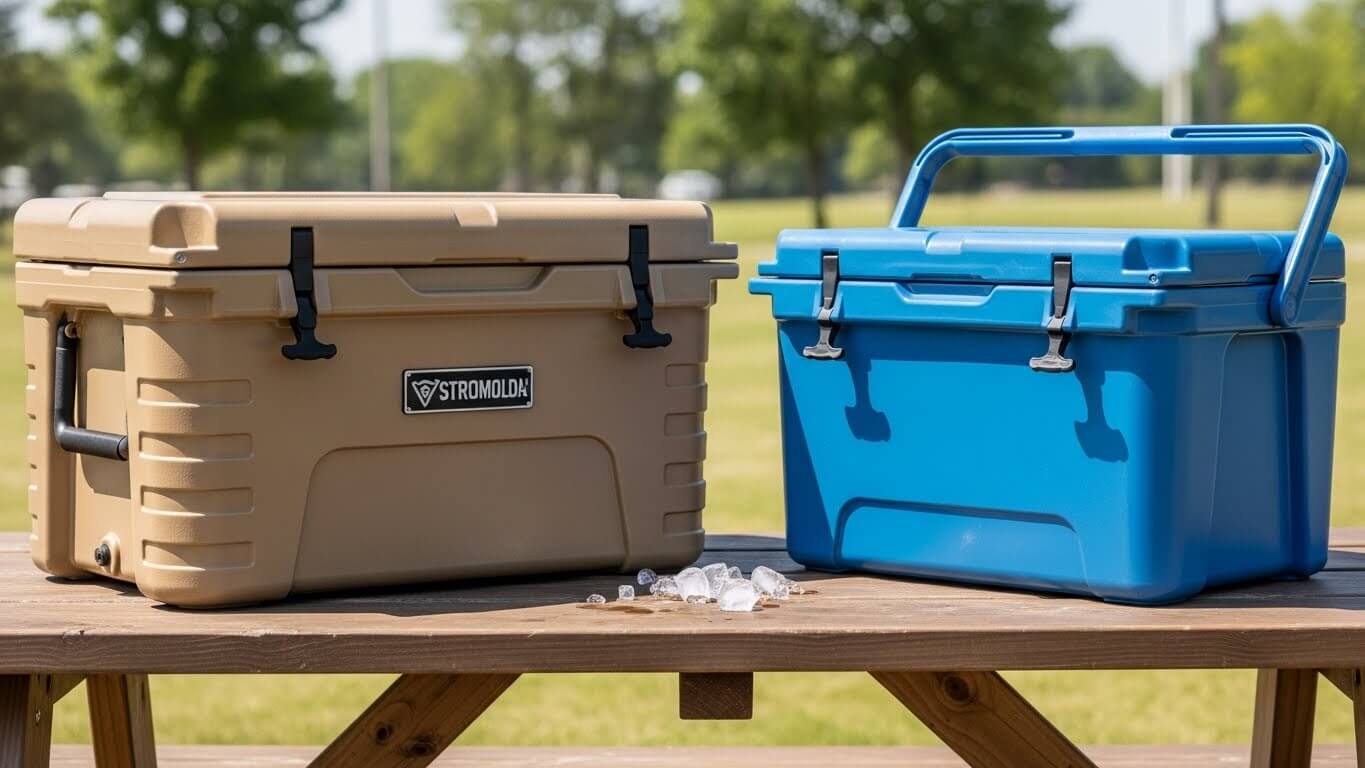
The most popular kind of cooler, regular coolers—also known as standard or traditional coolers—are made with price, portability, and convenience in mind. These coolers, which are usually made of plastic with foam insulation, offer minimal functionality for keeping food and beverages cold for brief outdoor activities.
For occasional or casual outdoor use, regular coolers work well. When ice retention for one to two days is adequate, they work well on day trips, backyard get-togethers, beach excursions, or brief camping vacations. Their low cost and lightweight design make them useful for consumers who value convenience above high performance, even if they might not be able to endure hard treatment or survive as long as rotomolded coolers.
The durability, luxury features, and ice retention of rotomolded coolers are usually superior to those of regular coolers. When used extensively or in harsh environments, they are more likely to shatter, deform, or sustain damage. Regular coolers are perfect for brief outdoor activities because they emphasize price, usability, and practicality. They are ideal for people who need a cooler for sporadic travel but don’t want to spend the money on high-end rotomolded models.
Ice Retention and Cooling Performance
The capacity of a cooler to maintain cold temperatures and keep ice frozen is one of the most crucial considerations. Although both standard and rotomolded coolers are intended for this use, their performance is very different.
Rotomolded Cooling Performance
Long-lasting ice retention is a feature of rotomolded coolers. Depending on usage and weather conditions, they can keep ice frozen for three to seven days thanks to their strong, continuous walls and superior insulation. These coolers are perfect for multi-day camping, fishing, hunting, or tailgating because they work especially well in hot weather or on long outdoor excursions. Tight-sealing lids and freezer-grade gaskets, which keep warm air out and increase overall cooling performance, are features of many high-end models.
Regular Cooler Performance
On the other hand, regular coolers usually retain ice frozen for one to two days, which is sufficient for short-term use. When prolonged cooling is not necessary, they are ideal for day vacations, beach excursions, or backyard get-togethers. They are less effective in high temperatures or on lengthy journeys due to their simpler design and lighter insulation.
Verdict: Rotomolded coolers perform noticeably better than conventional coolers for consumers who require dependable, prolonged ice retention. The investment guarantees that food and beverages stay cold for extended periods of time, even in difficult circumstances, even though they are heavier and more costly.
Regular coolers, on the other hand, provide adequate cooling for short-term or informal activities, making them a lightweight and affordable option. For serious outdoor enthusiasts who need ultimate durability and ice retention, rotomolded coolers are the finest option. Regular coolers balance price, portability, and convenience, making them perfect for infrequent or brief use. Your decision should be based on the conditions in which the cooler will be utilized as well as how long you require the goods to remain cold.
Construction Quality & Sturdiness
When choosing between a normal cooler and a rotomolded cooler, build quality and durability are important considerations because they affect how well a cooler can resist severe use and outside environments.
Rotomolded Cooler Durability
The robust, long-lasting design of rotomolded coolers is well-known. These coolers, which are made using rotational molding, have seamless, incredibly thick walls that are resistant to warping, denting, and cracking. They are perfect for tough terrain, big loads, and harsh temperatures because of their reinforced hardware, sturdy latches, and heavy-duty handles, which improve structural integrity. Additionally, some types are bear-resistant, which adds security in outdoor environments. A rotomolded cooler can endure years of frequent outdoor use because of its superior construction.
Regular Cooler Durability
Typical coolers have a moderate level of durability and are often made of plastic with foam insulation. They work well for light to moderate use, although they are more prone to warping, dents, and cracks, particularly when handled roughly or in extremely hot conditions. Regular coolers usually have less robust handles and latches, which might shorten their lifespan. These coolers are more appropriate for short camping excursions, backyard get-togethers, or day journeys when tough durability is not as important.
Verdict: When it comes to long-term dependability and durability, rotomolded coolers perform noticeably better than conventional coolers. They are a high-end investment because they are made to withstand harsh outdoor environments, frequent use, and multi-day excursions.
Even though they are lighter and more reasonably priced, regular coolers are best suited for short-term, casual use and may need to be replaced sooner if used frequently or harshly. A rotomolded cooler is the better option if long-term performance and durability are important considerations. A normal cooler offers sufficient performance at a cheaper cost for light-duty, infrequent use.
Portability, Capacity, and Size
Size, capacity, and mobility are crucial factors to take into account when choosing a cooler because they impact how much you can store and how conveniently you can move it.
Rotomolded Coolers: Size and Portability
From small personal coolers to large-capacity models intended for group travel, rotomolded coolers come in a variety of sizes. They are heavier than standard coolers due to their sturdy design and extensive insulation, which may affect portability. Many rotomolded coolers have tie-down points, ergonomic handles, and reinforced grips to help with lifting, carrying, and securing them while in transit. Despite being heavier, they are perfect for multi-day camping vacations, fishing excursions, and tailgating gatherings because of their great capacity and durability.
Regular Coolers: Size and Portability
Conventional coolers typically put lightweight convenience ahead of large capacity. They are easy to carry, even when completely equipped, and range in tiny to medium sizes, making them ideal for day trips, picnics, and brief excursions. They are portable because to their plastic design and lighter insulation, but they don’t retain as much ice as rotomolded variants. Regular coolers are usually not made for heavy-duty use, but some may have basic wheels or handles for easier mobility.
Verdict: Regular coolers are more practical if you prioritize portability and convenience of transportation, particularly for short excursions or casual use. Even though they are heavier, rotomolded coolers offer greater capacity and superior durability, which is advantageous for longer journeys or group adventures where storage and long-lasting performance are crucial. While ordinary coolers excel in lightweight mobility and ease, perfect for casual, short-term use, rotomolded coolers excel in capacity and ruggedness, making them excellent for serious outdoor expeditions. Depending on how much you need to carry, how far you want to travel, and the kind of travel you intend to take, you can choose between the two.
Cost, and Value
When comparing rotomolded coolers to conventional coolers, price and long-term value are important factors to take into account because they have a direct bearing on outdoor gear investment and budget.
Rotomolded Coolers Cost and Value
Rotomolded coolers fall into the premium category and are frequently much more expensive than standard coolers. Their superior build, longer ice retention, and cutting-edge technologies all contribute to their greater pricing. Because of their robustness and capacity to endure years of heavy use, rotomolded coolers provide long-term benefit even though the initial cost may be high. Investing in a rotomolded cooler guarantees dependable performance over numerous trips, lowering the possibility of needing a replacement for regular campers, hunters, fishermen, and outdoor lovers.
Regular Cooler Value and Cost
Because they are inexpensive, regular coolers are perfect for infrequent or casual users. Because of its lower price point, consumers can get a working cooler without having to make a big investment. Regular coolers are less durable and may require replacement sooner if used regularly or in harsh environments, even though they offer sufficient ice retention and convenience for quick travels or backyard use.
Verdict: Regular coolers usually survive 3–5 years, depending on usage and treatment, whereas rotomolded coolers excel in long-term endurance, frequently lasting 10 years or more with proper care. Because of this, ordinary coolers are best suited for short-term, light-duty use, while rotomolded models are a superior investment for heavier users or those planning long outdoor excursions. Regular coolers are a decent option for casual use if money is the main consideration. Rotomolded coolers offer long-term performance, durability, and premium features for frequent, demanding outdoor trips, making the increased expense worthwhile.
Pros and Cons
By contrasting the advantages and disadvantages of rotomolded and conventional coolers, readers may determine which kind best meets their outdoor requirements.
Pros of Rotomolded Coolers
- Outstanding Durability: The strong, seamless design can survive harsh handling and harsh environments.
- Long Ice Retention: Perfect for long excursions, it keeps ice frozen for three to seven days.
- Premium Features: Premium features include reinforced handles, heavy-duty latches, extra attachments, and bear resistance on select versions.
- Long-Term Investment: Long-lasting construction minimizes the need for replacement.
Cons of Rotomolded Coolers
- Higher Price: There is a substantial upfront expense associated with premium quality.
- Heavier Weight: When completely laden, it may be more challenging to transport.
- Overkill for Casual Use: For quick journeys or infrequent excursions, sophisticated functions might not be required.
Pros of Regular Coolers
- Accessible and Economical: An inexpensive choice for infrequent users.
- Lightweight and portable: Perfect for beach excursions, picnics, and quick vacations.
- Easy to use and maintain: The cooler’s design is practical and simple.
Cons of a Regular Cooler
- Limited Ice Retention: Ice is often only kept frozen for one to two days.
- Less Sturdy: Prone to warping, denting, or cracking when used extensively.
- Fewer Features: Doesn’t have the accessories and sophisticated use of high-end models.
Verdict: Regular outdoor enthusiasts that require long-lasting ice retention, tough sturdiness, and high-end features are best suited for rotomolded coolers. Regular coolers are lightweight, simple, and perfect for casual outdoor activities or those on a tight budget. Your outdoor lifestyle, frequency of use, and willingness to spend money on high-end performance will determine which option is best for you.
Final Verdict
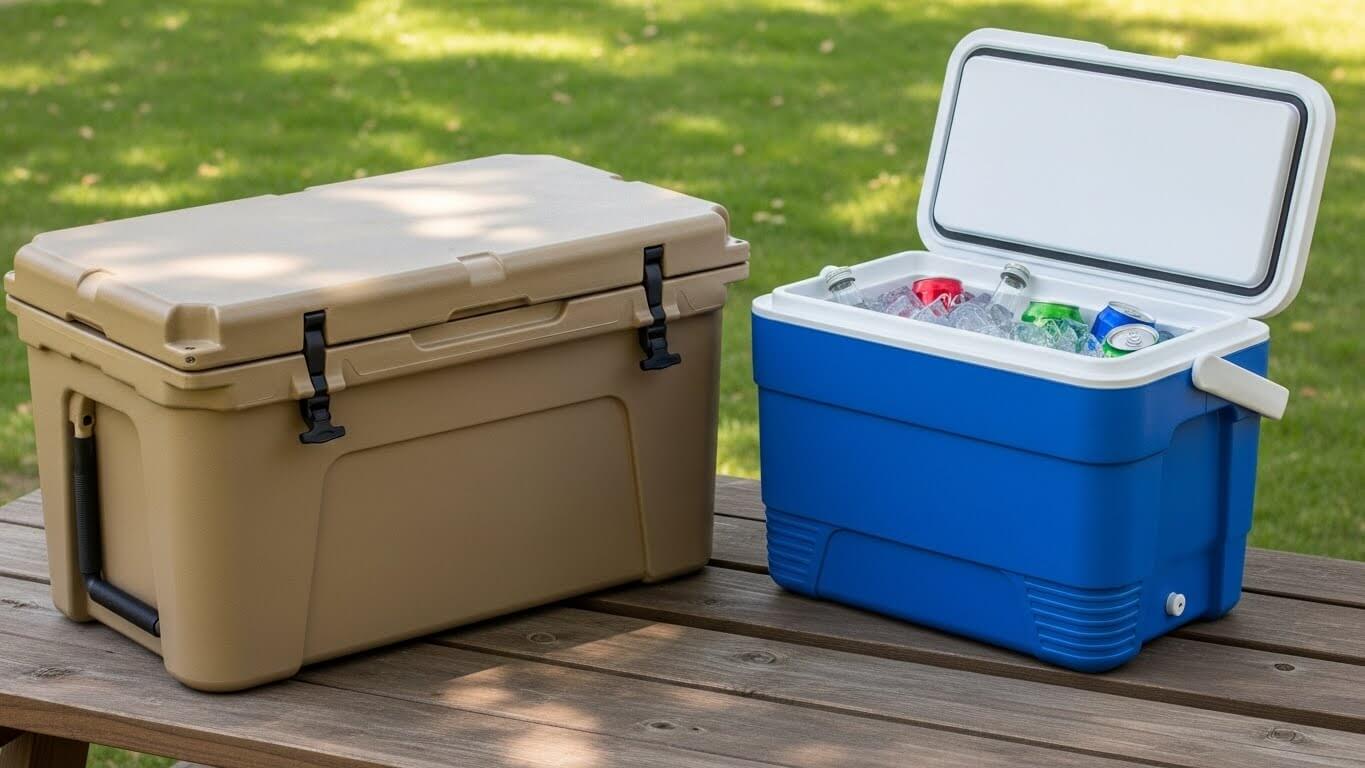
The decision between a Regular cooler and a rotomolded cooler is based on your budget, frequency of use, and outside requirements. Although they serve different purposes and goals, both types offer dependable cooling.
For serious outdoor lovers, rotomolded coolers are the best choice. They are perfect for multi-day camping, hunting, fishing, or tailgating parties because of their durable design, dense insulation, and cutting-edge technology. They are more costly and heavier, but for people who spend a lot of time outside, their remarkable ice retention, durability, and long-term dependability make them a good investment. Your food and beverages will stay cold no matter the weather thanks to rotomolded coolers, which are designed to last for many years.
Regular coolers, on the other hand, emphasize simplicity, portability, and price. They are ideal for short-term use, picnics, day outings, and informal backyard get-togethers. Compared to rotomolded models, their durability and ice retention are restricted, while they are lightweight and portable.
If you want superior performance, long-lasting ice retention, and tough durability, go for a rotomolded cooler. If you value portability and affordable ease for occasional or brief use, go with a standard cooler. You can choose the cooler that will best improve your travels and keep food and drinks cold and fresh by taking into account your outdoor lifestyle, usage frequency, and performance requirements.