
Your outdoor experience can be made or broken by your choice of cooler. Maintaining cold food and beverages is crucial for convenience and comfort, whether you’re having a backyard BBQ, a beach day, or a weekend camping vacation. Wheeled coolers and standard coolers are the two primary contenders among the best cooler alternatives available today. Although they both have the same function, keeping your drinks cold, their practicality, portability, and design vary. You can select the ideal cooler for your particular requirements by becoming aware of its main distinctions.
When it comes to mobility, a wheeled cooler provides unparalleled convenience. Even when fully laden, it is easy to transfer because of its extensible handle and strong wheels. A wheeled cooler relieves the strain of hauling big supplies for campers, tailgaters, or beachgoers who frequently traverse rocky or sandy terrain. Conversely, a standard cooler is still a well-liked option for people who want something sturdy, lightweight, and portable. It is typically more durable, easier to lift, and frequently offers superior insulation for its size because it has fewer moving parts.
In the end, the choice between wheeled coolers and conventional coolers boils down to personal preference: simplicity or convenience. The design, portability, performance, ice retention, storage capacity, and overall value of the two varieties will all be compared in this guide. You can choose the cooler that best suits your lifestyle with confidence if you know how each one works in various scenarios. Choosing the correct cooler guarantees that your food stays fresh, your drinks stay cold, and your outing remains stress-free, whether you’re preparing for a family barbecue or a single fishing trip. Design and
Design and Build Differences
The first obvious distinction between wheeled coolers and conventional coolers is found in their general construction and design. Although the purpose of both types is to keep contents cold, their design and operation serve distinct purposes.
A wheeled cooler has a robust body with built-in wheels and a handle that can be extended. Even with the cooler well stocked with food, drinks, and ice, rolling is made simple with this arrangement. All-terrain wheels that can easily handle grass, sand, or gravel are a feature of several types. For the comfort of the user, the handles are frequently telescopic, allowing for height adjustment. Wheeled coolers are typically a little heavier and bulkier due to these extra parts, which can make storage in cramped areas more difficult.
A standard cooler, on the other hand, prioritizes robustness and ease of use. Its design is frequently smaller, lighter, and more resilient to wear and tear because it lacks wheels and moving parts. It is perfect for harsh handling on camping or boating excursions because it doesn’t have any mechanical components, which lowers the chance of breaking. The rotomolded structure of many high-end conventional coolers guarantees optimal insulation and durability, making them able to survive challenging outdoor conditions.
In terms of materials, stainless steel hardware, polyurethane foam insulation, and heavy-duty polyethene plastic are commonly used in both types. The arrangement of those materials to favor portability versus compactness is the primary difference.
In summary, normal coolers prioritize strength, insulating effectiveness, and ease of storage, whereas wheeled coolers excel in convenience and mobility. Your decision is based on whether you want a lightweight, durable cooler that’s simple to lift and put into a car or if you value being able to wheel your cooler over extended distances.
Transportability and Simplicity
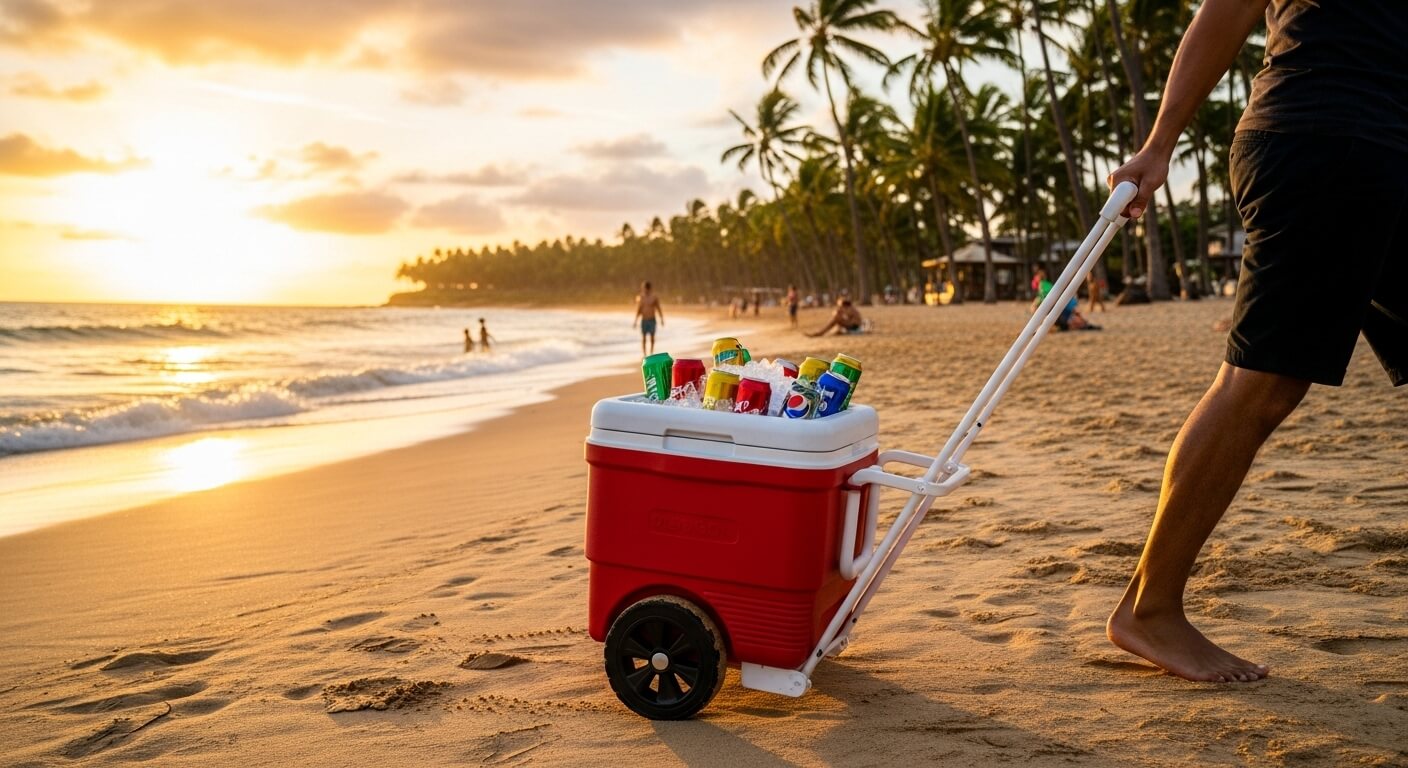
The distinction between wheeled coolers and conventional coolers becomes evident when considering portability. Your outdoor experience can be greatly impacted by how simple it is to move your cooler, particularly when it is filled with food, beverages, and ice.
Convenience is the primary consideration in the construction of a wheeled cooler. It can move smoothly over a range of terrain thanks to its sturdy wheels and telescoping or retractable handle. The wheels take on a large portion of the weight, which eases the strain on your arms and back whether you’re pushing it across a parking lot, through a campsite, or over beach sand.
In order to ensure stability when rolling, many contemporary versions come equipped with sturdy all-terrain wheels for uneven terrain and even weight distribution. Because of this, wheeled coolers are perfect for tailgating, festivals, families, and other scenarios where you’ll be carrying a hefty load over extended distances.
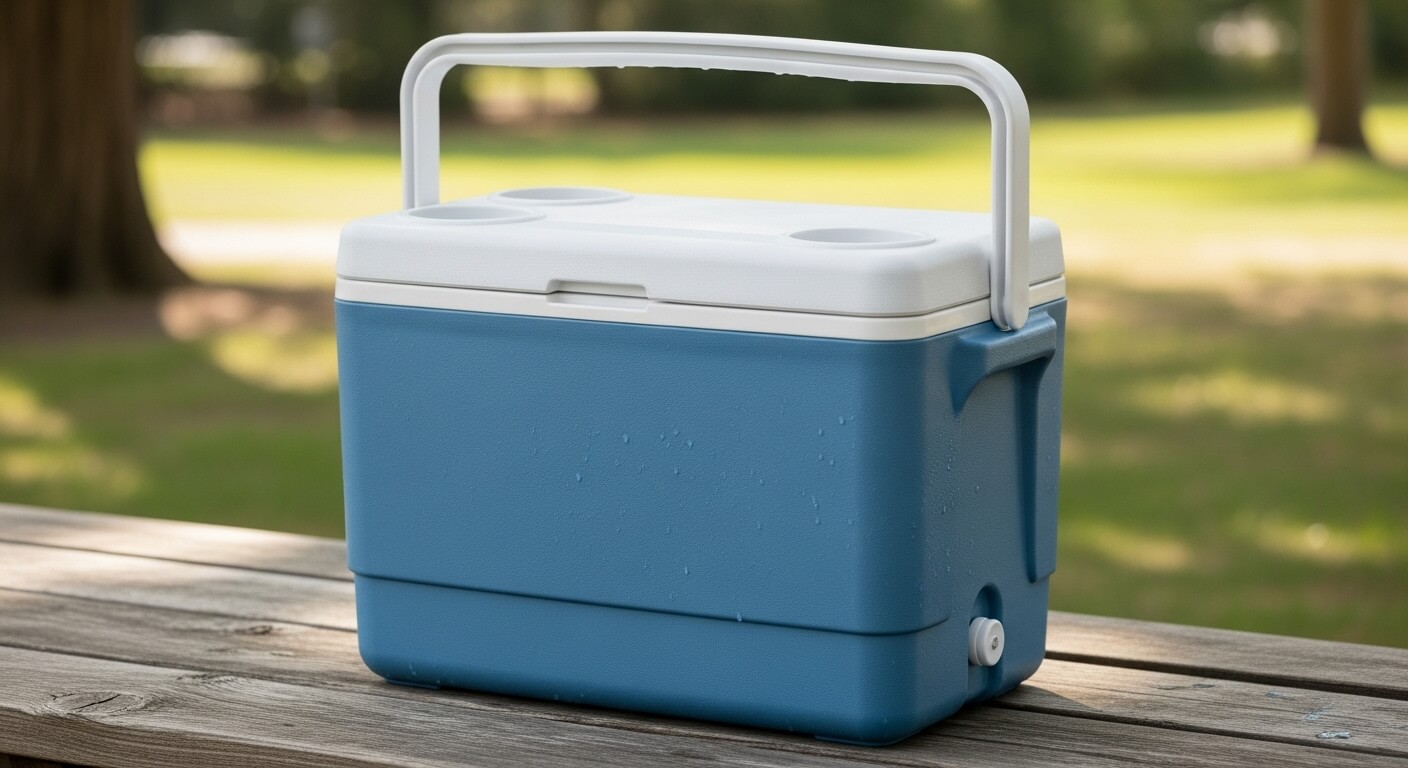
In contrast, a standard cooler necessitates physical lifting. The majority have rope grips or molded side handles, which facilitate short-distance carrying for one or two persons. They are typically lighter, smaller, and easier to store because they don’t have wheels. Because of this, they are an excellent option for boats, picnics, and shorter excursions where portability isn’t dependent on rolling the cooler over uneven ground.
A standard cooler, however, can be challenging to transport by yourself when full, particularly over long distances or uneven terrain. Wheeled coolers solve this problem, but because of their size and weight, they could be more difficult to load into cars.
In conclusion, wheeled coolers are more convenient for long-distance travel, but standard coolers are easier to carry and lighter for shorter distances. How frequently and how far you need to move your cooler when it’s packed will determine the best option for you.
Ice Performance and Retention
One of the most crucial aspects to take into account when deciding between a wheeled cooler and a standard cooler is how well it retains ice. Keeping your food and drinks cold for as long as possible is, after all, the primary goal of any cooler.
Although airtight lids and insulated walls are essential for maintaining ice in both types of coolers, their designs can have an impact on how effectively they work. Regular coolers typically have a minor advantage when it comes to ice retention. Their entire body may be devoted to insulation because they don’t have wheels or moving parts.
Rotomolded structure and thick polyurethane foam insulation are features of many high-end versions that help keep cold air in and keep heat from the outside out. Because of this, standard coolers are perfect for long-distance camping, fishing, or any other activity where maintaining ice for a longer period of time is essential.
Wheeled coolers, on the other hand, function well but might have somewhat weaker insulation in some places to provide room for handles and wheel mounting. When compared to standard models, this can shorten the maximum cooling time, but it doesn’t significantly alter the experience for weekend or day travels. Nevertheless, high-end wheeled coolers from companies like Yeti, RTIC, or Igloo MaxCold minimize cold air loss and retain remarkable cooling performance for several days by using pressure-injected insulation and tight sealing gaskets.
How you pack the cooler has an impact on performance as well. For both kinds, ice retention can be greatly increased by pre-chilling the interior, reducing air gaps, and preventing frequent lid openings.
In conclusion, because of their simpler design and thicker insulation, standard coolers typically hold ice for longer. Although they are a little less effective, wheeled coolers have the advantage of portability without compromising cooling capacity. Whether you value easy transport or maximal cold endurance will determine which option is ideal.
Storage Options and Capacity
The capacity and storage flexibility of wheeled coolers and normal coolers are important factors to consider when choosing the best option for your needs. How long you can stay outside before having to resupply depends directly on how much room you have for food, beverages, and ice.
Generally speaking, a cooler with wheels has more storage space. With many types ranging from 45 to 100 quarts, you’ll have plenty of room to store ice, drinks, and perishable goods for several days. They are therefore perfect for extended camping trips, tailgating parties, and family get-togethers. To help with organizing, some high-end wheeled coolers even come with partitions, cup holders, and dry storage baskets. But when not in use, their increased size and wheel mechanisms may make them heavier and more difficult to store.
A standard cooler, on the other hand, frequently prioritizes space efficiency and a small form factor. These coolers are ideal for solitary excursions, picnics, and shorter travels because they usually hold between 20 and 70 quarts. More of the internal room may be used for storage and insulation because they lack handles and wheel wells integrated into the body. In comparison to their outward dimensions, this enables a marginally better use of space. It’s also simpler to fit standard coolers into cars, boats, or tiny storage areas.
Since both varieties of coolers are available in different sizes, capacity shouldn’t be the sole determining criterion. Think about how much food and drink you usually pack, how far you have to carry it, and how much room you have at home or in your car for storage.
In summary, normal coolers are preferable for easy handling, short journeys, and compact storage, whereas wheeled coolers are excellent for large parties and high volume storage. Whether you require greater space or easier storage flexibility will determine your choice.
Cost and Economic Value
Value is determined by the cooler’s performance in relation to your needs, as well as its sticker price when comparing wheeled coolers and standard coolers. The two categories, relative costs and long-term values, are broken down here.
Wheeled Cooler Cost
Because of the additional features like incorporated wheels, longer handles, and occasionally improved insulation or other accessories, wheeled coolers are usually more expensive up front. For instance:
A high-end wheeled edition of the YETI Tundra Haul Wheeled Cooler costs about $450 USD. A less expensive wheeled option is the Coleman 316 Series Wheeled Cooler, which typically costs between $60 and $90 USD, depending on size and sale prices. The higher expense can be justified for customers who carry coolers over long distances, across uneven surfaces, or with big loads because wheeled variants are more convenient to handle, especially when laden.
Regular Cooler Cost
Because they have fewer moving parts and a simpler design, standard (non-wheeled) coolers are typically less expensive. They are less expensive and offer good performance; the cost varies depending on the brand, size, and quality of the insulation. Since more money is spent on foam, lid seals, and other materials rather than wheel systems, these versions frequently provide better insulation for the money.
Pros And Cons
Depending on how and where they are used, wheeled coolers and standard coolers each have pros and cons. You may choose the one that provides the best balance of value, performance, and convenience by being aware of the advantages and disadvantages of each.
Pros of a Wheeled Cooler
- Transportable: Even when completely laden, it is easy to transport because to its telescoping handles and built-in wheels.
- Ideal for Long Distances: Ideal for tailgating, beach excursions, camping, and gatherings when transporting goods over uneven ground is frequent.
- Frequently offered in larger capacities, these are excellent for extended trips or families.
Cons of a Wheeled Cooler
- Heavier and bulkier: Requires extra room in storage facilities or cars.
- Higher Price Point: More expensive because of the handles, wheels, and more intricate design.
- Possible Durability Problems: Over time, moving components like handles and wheels may deteriorate.
Pros Of Regular Cooler
- Small and light: easier to move, store, and squeeze into confined areas.
- More Durable in General: Less maintenance is required when there are fewer moving parts.
- Improved Ice Retention: Insulation that is thicker tends to chill for longer periods of time relative to its size.
- Reduced Cost: More reasonably priced without sacrificing quality of performance.
Cons of a Regular Cooler
- Longer Distances Are Harder to Carry: When full, lifting might be taxing or uncomfortable.
- Restricted Large Sizes: For multi-day group excursions, it could not hold enough.
Conclusion
The best option for you will rely on your lifestyle and intended use when deciding between a wheeled cooler and a standard cooler. Although their designs address distinct goals, each has the same function: keeping your food and beverages cool.
Convenience and mobility are key features of a wheeled cooler. Even with the cooler full of ice and drinks, transporting is a breeze due to the integrated wheels and handles. For people who regularly move their cooler over long distances or uneven surfaces—like at the beach, on campsites, or during tailgating events—this design is perfect. However, there is a cost associated with this convenience: compared to their non-wheeled equivalents, wheeled coolers are often heavier, thicker, and slightly more expensive.
In contrast, a standard cooler excels in terms of ease of use, robustness, and ice retention. Better insulation efficiency and easy lifting and storage in automobiles, boats, or small areas are all made possible by its robust and compact construction. For shorter excursions, picnics, or circumstances when carrying by hand is feasible, standard coolers are an excellent choice. They also need less upkeep over time and are typically less expensive.
Whichever type best suits your needs is ultimately more important than which is “better.” For ease of use and large-capacity transportation, choose for a wheeled cooler; alternatively, choose a standard cooler for longevity, portability, and dependability. Both will, in any case, keep your drinks cool and your travels worry-free.