
The marine environment presents unique and extreme challenges for coolers that land-based camping or tailgating never encounter. Constant saltwater exposure accelerates corrosion, intense UV radiation reflected off water surfaces degrades plastics, rocking and movement during boat travel stress components, limited storage space demands efficiency, and the combination of heat, sun, and humidity creates demanding thermal loads.
A cooler that performs adequately for weekend camping trips may fail catastrophically during a week-long fishing expedition or coastal cruise. Marine coolers represent specialized equipment engineered specifically to withstand these harsh conditions while maintaining ice retention, protecting your catch, and surviving years of saltwater abuse. Whether you’re a serious offshore angler, weekend boater, coastal cruiser, or professional captain, understanding what makes a true marine cooler different from standard options is essential for making the right investment.
This comprehensive guide examines every aspect of marine coolers from construction materials and insulation technology to marine-specific features, maintenance requirements, and choosing the right size and type for your specific boating activities. We’ll explore what separates adequate coolers from exceptional ones, how to maximize ice retention in challenging conditions, and which features actually matter versus marketing hype.
What Makes Marine Coolers Different
The Harsh Marine Environment
Marine environments create challenges that standard coolers aren’t designed to handle. Saltwater exposure is constant; from spray, splashing, deck washing, and humid salt air. Salt accelerates corrosion on metal components, including hinges, latches, drain plugs, and fasteners. Even stainless steel can corrode in marine environments without proper grades and maintenance.
UV radiation on open water is intense and reflected, potentially doubling exposure compared to land. This accelerates plastic degradation, causing fading, brittleness, and structural weakening in non-UV-stabilized materials. Temperature extremes range from freezing overnight to 120°F+ on sun-exposed decks, creating expansion/contraction stress.
Constant movement during boat travel—rocking, pitching, rolling—stresses latches, hinges, and structural integrity. Coolers must remain closed and secured despite motion. Space constraints on boats demand maximizing internal capacity while minimizing footprint. Every cubic inch of deck or cabin space is valuable.
Rough handling during loading, unloading, and repositioning gear requires robust construction. Marine coolers often serve as work surfaces, seating, or even stepping platforms. The combination of these factors means marine coolers must exceed standard cooler specifications significantly.
Marine-Specific Construction Features
True marine coolers incorporate specific design elements addressing these challenges. Corrosion-resistant hardware uses marine-grade stainless steel (316 grade preferred), heavy-duty plastics, or specially coated metals rather than standard hardware that rusts quickly. UV-stabilized plastics resist sun damage and maintain structural integrity and color through years of exposure.
Enhanced insulation thickness typically ranges 2-3 inches in premium marine coolers versus 1-1.5 inches in standard coolers. This provides superior ice retention crucial for extended trips. Superior gaskets and seals use thick, marine-grade rubber creating airtight seals that maintain performance despite saltwater exposure and temperature fluctuations.
Reinforced construction with thicker walls, integrated reinforcement ribs, and impact-resistant materials handles rough treatment. Secure latching systems use heavy-duty mechanisms that stay closed during boat movement and rough seas. Non-slip surfaces including rubber feet and textured lids prevent sliding during boat motion.
Integrated tie-down points allow securing coolers to boats, preventing dangerous shifting or loss overboard. These features collectively create coolers that perform reliably in conditions that would quickly destroy standard models.
Performance Requirements
Marine coolers must meet higher performance standards. Ice retention of 5-10 days is essential for extended offshore trips or week-long cruises where ice resupply is impossible. Thermal efficiency must maintain performance despite intense sun, high ambient temperatures, and humid conditions.
Structural integrity must withstand impacts from gear, heavy fish, rough handling, and serving as work surfaces or seating. Saltwater resistance means all materials and components must resist corrosion without regular freshwater rinsing (though rinsing extends life). UV resistance maintains appearance and function through years of sun exposure.
Capacity efficiency maximizes usable interior space relative to external dimensions, critical for space-constrained boats. Durability for years of regular use in harsh conditions justifies the premium investment marine coolers command.
Types of Marine Coolers
Hard-Sided Rotomolded Coolers
Rotomolded marine coolers represent the premium category, using rotational molding to create seamless, one-piece construction. The process produces uniform 2-3 inch thick walls filled with polyurethane foam insulation. Major brands include YETI Tundra Marine, Engel, RTIC, Cabela’s, and Grizzly with marine-specific models.
Advantages include exceptional ice retention (7-10+ days typical), extreme durability handling severe abuse, bear-resistant with appropriate locks for wilderness coastal camping, superior insulation and gasket seals, and integrated features like fish rulers, cutting boards, and accessory mounts. Longevity of 10-20+ years justifies the investment for serious boaters.
Disadvantages include high cost ($250-$600 for popular sizes), heavy weight even when empty (30-60+ pounds), and bulk consuming significant deck space. These suit serious offshore fishing, extended cruising, commercial fishing operations, and anyone prioritizing maximum performance and longevity over cost.
Traditional Marine Coolers
Traditional marine coolers use injection-molded plastic construction with marine-specific features and materials. Brands like Coleman Marine, Igloo Marine Ultra, and Rubbermaid Marine offer these at moderate prices ($50-$150).
Advantages include affordable pricing, lighter weight for easier handling, adequate performance for typical recreational use (3-5 days ice retention), and wide availability at marine and sporting goods stores. They provide good value for weekend boaters and casual anglers.
Disadvantages include shorter lifespan (3-5 years typical) than rotomolded options, less robust construction showing wear faster, thinner insulation providing less ice retention, and hardware that may corrode despite marine-grade claims without diligent maintenance.
These suit weekend coastal boating, inshore fishing trips, casual recreational use, and budget-conscious boaters accepting more frequent replacement.
Soft-Sided Marine Coolers
Soft-sided marine coolers use heavy-duty fabric with waterproof linings and insulation. Brands include YETI Hopper, Engel, and various marine-specific soft coolers ranging $100-$400.
Advantages include portability and easy storage when not in use, lighter weight than hard coolers, flexibility fitting irregular spaces, and some models being fully waterproof and submersible. Modern soft coolers provide surprisingly good ice retention (2-4 days) for their construction.
Disadvantages include less ice retention than hard coolers, less protection for contents from impact, limited capacity typically, wear faster than hard coolers especially zippers, and they can’t serve as work surfaces or seating.
These suit day trips and short excursions, supplemental storage alongside main coolers, kayak or small boat fishing, and situations prioritizing portability over maximum ice retention.
Electric Marine Coolers
Electric coolers use thermoelectric or compressor refrigeration powered by boat electrical systems (12V DC). Brands include Dometic, Engel, and ARB with marine-suitable models at $400-$1,200+.
Advantages include no ice needed—maintains set temperature automatically, precise temperature control from freezing to refrigeration, continuous cooling without ice replenishment, and space efficiency without ice consuming capacity.
Disadvantages include high cost, power dependency requiring adequate boat electrical system, weight from refrigeration components, and complexity with more potential failure points. Power consumption requires monitoring to avoid draining batteries.
These suit live-aboard cruisers, boats with robust electrical systems, long expeditions where ice resupply is impossible, and users willing to invest in ultimate convenience.
Key Features and Components
Insulation Technology
Insulation determines ice retention performance. Foam thickness directly correlates with retention; 2-3 inch walls significantly outperform 1-inch insulation. Polyurethane foam is standard in quality coolers, providing excellent thermal resistance. Pressure injection ensures foam fills all cavities without air gaps that reduce efficiency.
Lid insulation is equally important, heat enters primarily through the top. Quality marine coolers have thick insulated lids matching body insulation. Insulation in all walls including bottom prevents heat transfer from hot deck surfaces.
Some premium coolers use advanced insulation technologies or vacuum panels for enhanced performance, though standard polyurethane performs excellently when applied properly at adequate thickness.
Gaskets and Seals
Gasket quality directly affects ice retention by preventing warm air infiltration. Commercial-grade rubber gaskets at least 1/4 inch thick provide reliable sealing. Continuous gaskets around entire lid perimeter eliminate gaps. Compression from latches must evenly press gasket against lid for complete seal.
Marine environments demand gaskets resistant to saltwater, UV exposure, and temperature extremes without degrading. Quality gaskets maintain pliability and sealing effectiveness for years. Cheap gaskets become brittle, crack, or lose compression, dramatically reducing ice retention.
Latches and Hinges
Latches must secure lids reliably despite boat movement. Rubber T-latches with positive clicking action are most common, providing strong closure force and intuitive operation. Some premium coolers use stainless steel or reinforced plastic latches for extreme durability.
Latch quantity matters; larger coolers need 2-3 latches minimum for even pressure and secure closure. Hinges determine long-term reliability. Full-length stainless steel pins distribute stress across entire lid width, far outlasting molded plastic or limited-contact hinges. Integrated hinges molded into cooler body eliminate separate parts that can fail.
Pin-and-barrel designs allow easy lid removal for cleaning. Hinge durability often determines cooler lifespan—hinges fail before insulation performance degrades.
Drainage Systems
Effective drainage removes melted ice water without tipping heavy coolers. Threaded drain plugs with gaskets prevent leaking during boat movement. Leash attachments prevent plug loss overboard; critical in marine use.
Drain plug location should allow complete water evacuation when the cooler is level. Some coolers include garden hose attachments for thorough cleaning. Stainless steel or heavy-duty plastic components resist corrosion better than standard brass or cheap plastic.
Handles and Portability
Handle design affects usability significantly. Rope handles with rubber grips distribute weight comfortably and fold flat when not in use. Molded side handles with integrated grips enable two-person carrying for large coolers. Handle placement and strength must support fully loaded weight without failure.
Some coolers include both rope and molded handles for versatility. Handle attachment points should be through-bolted or heavily reinforced to prevent tearing under load.
Additional Marine Features
Integrated fish rulers on lids help anglers measure catches legally. Built-in bottle openers add convenience. Non-slip rubber feet prevent sliding on wet decks. Tie-down channels or built-in anchor points secure coolers during boat travel.
Cup holders moulded into lids provide drink storage. Some coolers include cutting boards, divided compartments, or dry storage areas. Premium models offer accessory mounts for rod holders, cutting board inserts, or specialized fishing accessories.
Choosing the Right Size
Capacity Considerations
Marine cooler capacity typically ranges from 20 quarts for personal use to 150+ quarts for commercial applications. Determine appropriate size based on trip length, group size, dual purpose (food/drinks plus fish storage), and available boat space.
General guidelines suggest 20-30 quarts for day trips or solo anglers, 40-60 quarts for weekend trips or couples, 70-90 quarts for extended trips or small groups, and 100+ quarts for week-long trips or large groups. Remember that ice consumes 30-40% of interior space, reducing actual usable capacity.
Boat Space Constraints
Measure available deck, cabin, or storage space before purchasing. Consider cooler external dimensions including handles and latches extending beyond the body. Account for lid opening clearance—you need space above the cooler for full lid access.
Weight distribution on boats matters—placing heavy loaded coolers improperly can affect boat handling. Consult boat specifications about weight limits and recommended placement.
Multi-Cooler Strategy
Many serious boaters use multiple coolers for different purposes: one for beverages accessed frequently, another for food accessed less often, and sometimes a third for fish storage. This system maintains better ice retention by minimizing openings of food coolers.
Smaller coolers for high-access items and larger coolers for longer-term storage balances convenience with efficiency.
Maximizing Ice Retention
Pre-Cooling Techniques
Pre-chill coolers 24 hours before trips by filling with ice or frozen items overnight. This brings cooler mass to cold temperature, reducing thermal load when you add ice for the trip. Remove pre-chill ice and add fresh ice for maximum retention.
Pre-freeze food and drinks when possible—frozen items act as supplemental ice while eventually thawing for use. This maximizes usable space while extending ice life.
Ice Selection and Packing
Block ice lasts significantly longer than cubed ice due to lower surface-area-to-volume ratio. Freeze water in clean milk jugs or dedicated ice blocks for optimal performance. Layer ice and contents strategically—ice on bottom, items, more ice on top provides best coverage.
Maintain 2:1 ice-to-contents ratio for maximum retention. More ice means less storage but dramatically longer retention. Eliminate air space by filling gaps with ice or frozen items—air conducts heat requiring more cooling energy.
Minimizing Heat Transfer
Limit lid openings—each opening exchanges cold air for warm air. Access drinks from a separate high-traffic cooler rather than the main food cooler. Keep coolers shaded using boat canvas, towels, or dedicated cooler covers. Shade dramatically extends ice life.
Avoid placing coolers on hot surfaces—use insulating pads or elevate slightly for air circulation underneath. Drain meltwater periodically as liquid water at 32°F conducts heat better than ice, accelerating melting. However, completely drained coolers warm faster, so maintain some cold water.
Location and Positioning
Store coolers in shaded, ventilated areas on boats when possible. Cabin storage provides protection from sun and weather. Secure coolers to prevent sliding that could break seals or cause safety hazards.
Maintenance and Care
Saltwater Exposure Management
Rinse coolers thoroughly with fresh water after each saltwater use, paying special attention to hinges, latches, drain plugs, and gaskets. Salt accumulation accelerates corrosion even on marine-grade components.
Periodically lubricate moving parts with silicone-based lubricant or marine grease to prevent salt buildup and maintain smooth operation. Inspect hardware regularly for corrosion signs—early detection allows replacement before major failure.
Cleaning and Sanitization
Clean interior surfaces after each trip with mild soap and water. Avoid harsh chemicals that could damage plastics or leave residues. Sanitize periodically, especially after storing fish, using diluted bleach solution (1 tablespoon per gallon water). Rinse thoroughly after sanitizing.
Allow coolers to dry completely before storage with lids propped open to prevent mildew and odors. Baking soda absorbs odors if they develop—leave open box inside closed cooler overnight.
Storage Best Practices
Store coolers in dry, shaded locations when not in use. UV exposure during storage degrades plastics unnecessarily. Store with lids propped open for air circulation preventing mildew. Avoid stacking heavy items on coolers during storage—this can deform lids or bodies.
Periodically inspect stored coolers for damage, corrosion, or degradation requiring attention.
Component Replacement
Quality coolers allow component replacement extending useful life. Gaskets can be replaced when they lose pliability or develop cracks. Latches, hinges, and drain plugs are often available as replacement parts from manufacturers. Handle ropes can be replaced easily.
Investing in component replacement versus buying new coolers makes economic sense for premium marine coolers.
Top Marine Cooler Recommendations
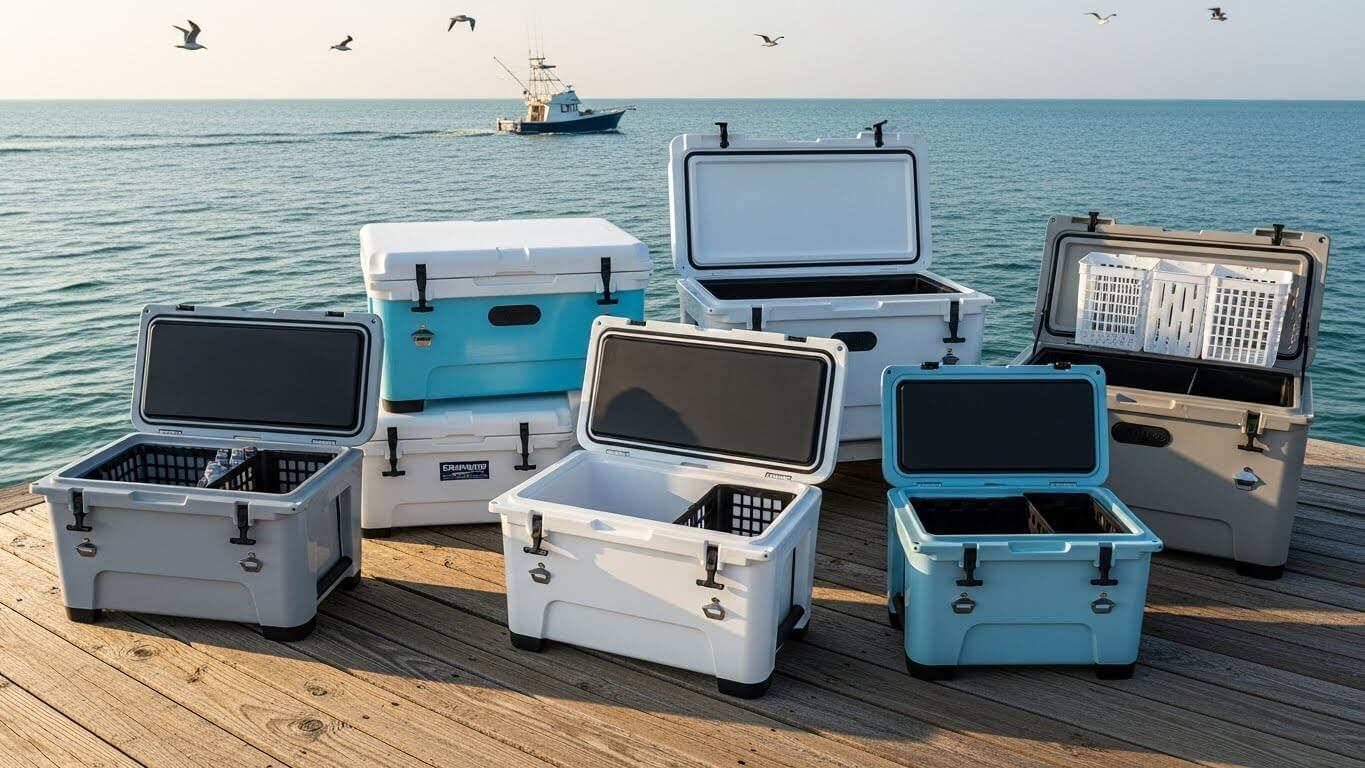
Premium Category: YETI Tundra 65 ($375-$425)
The industry standard for premium marine coolers. Rotomolded construction provides exceptional durability. Ice retention of 7-10 days with proper use. Bear-resistant certified. Integrated features including fish rulers. Available in multiple sizes. Backed by extensive dealer network and good warranty support. Best for serious offshore fishing, extended cruising, and users prioritizing absolute maximum performance.
Premium Value: Grizzly 60 ($300-$350)
American-made rotomolded construction matching YETI quality at lower cost. Excellent ice retention (6-8 days). Lifetime warranty demonstrates manufacturer confidence. Marine-grade components throughout. Best for value-conscious buyers wanting premium performance while supporting American manufacturing.
Mid-Range: Cabela’s Polar Cap 50 ($220-$250)
Solid rotomolded construction at competitive pricing. Very good ice retention (5-7 days). Adequate durability for regular recreational marine use. Available through extensive Cabela’s retail network. Best for weekend warriors and recreational boaters wanting good performance without extreme investment.
Budget Marine: Coleman Xtreme Marine 70 ($60-$75)
Affordable traditional construction with marine-specific features. Adequate ice retention (3-4 days) for weekend trips. UV-resistant materials and rust-resistant hardware. Wide availability. Best for casual boaters, budget-conscious users, or those wanting to test marine cooler benefits before larger investment.
Soft-Sided: YETI Hopper M30 ($300-$350)
Premium soft cooler with impressive ice retention (2-3 days). Fully waterproof and submersible. Excellent portability for small boats or supplemental use. Durable construction justifies premium soft cooler pricing. Best for day trips, kayak fishing, or supplemental storage alongside main coolers.
Frequently Asked Questions
What’s the difference between marine and regular coolers?
Marine coolers use UV-stabilized plastics, corrosion-resistant hardware, enhanced insulation, and robust construction specifically for saltwater environments. Regular coolers use standard materials that degrade quickly in marine conditions, with less insulation and non-corrosion-resistant components.
How long should a marine cooler hold ice?
Quality marine coolers should hold ice 5-7 days minimum with proper technique. Premium rotomolded models achieve 7-10+ days. Budget marine coolers typically provide 3-5 days. Performance depends on ambient temperature, sun exposure, insulation thickness, and usage patterns.
Are expensive marine coolers worth it?
For serious boaters, offshore anglers, or extended cruisers, yes—the superior ice retention, durability, and longevity justify the investment. For casual weekend boaters, mid-range options provide adequate performance at better value. Assess based on usage frequency and performance requirements.
Can I use a regular cooler on a boat?
You can, but expect shorter lifespan due to saltwater corrosion, UV degradation, and less robust construction. Regular coolers work for occasional use but aren’t suitable for regular marine environments or extended trips.
How do I prevent cooler odors?
Clean thoroughly after each use, especially after storing fish. Dry completely before storage with lid open. Use baking soda for odor absorption. Sanitize periodically with diluted bleach solution. Proper maintenance prevents most odor issues.
What size cooler do I need for a week-long trip?
For two people, 70-90 quarts minimum. For four people, 100-120 quarts. Remember ice consumes significant space—larger than you think you need is often appropriate. Many boaters use multiple coolers rather than one massive unit.
Conclusion
Marine coolers represent specialized equipment engineered for the unique challenges of boating environments; saltwater exposure, intense UV radiation, constant movement, space constraints, and demanding thermal loads. Understanding what separates true marine coolers from standard models helps you make informed investments in equipment that performs reliably for years.
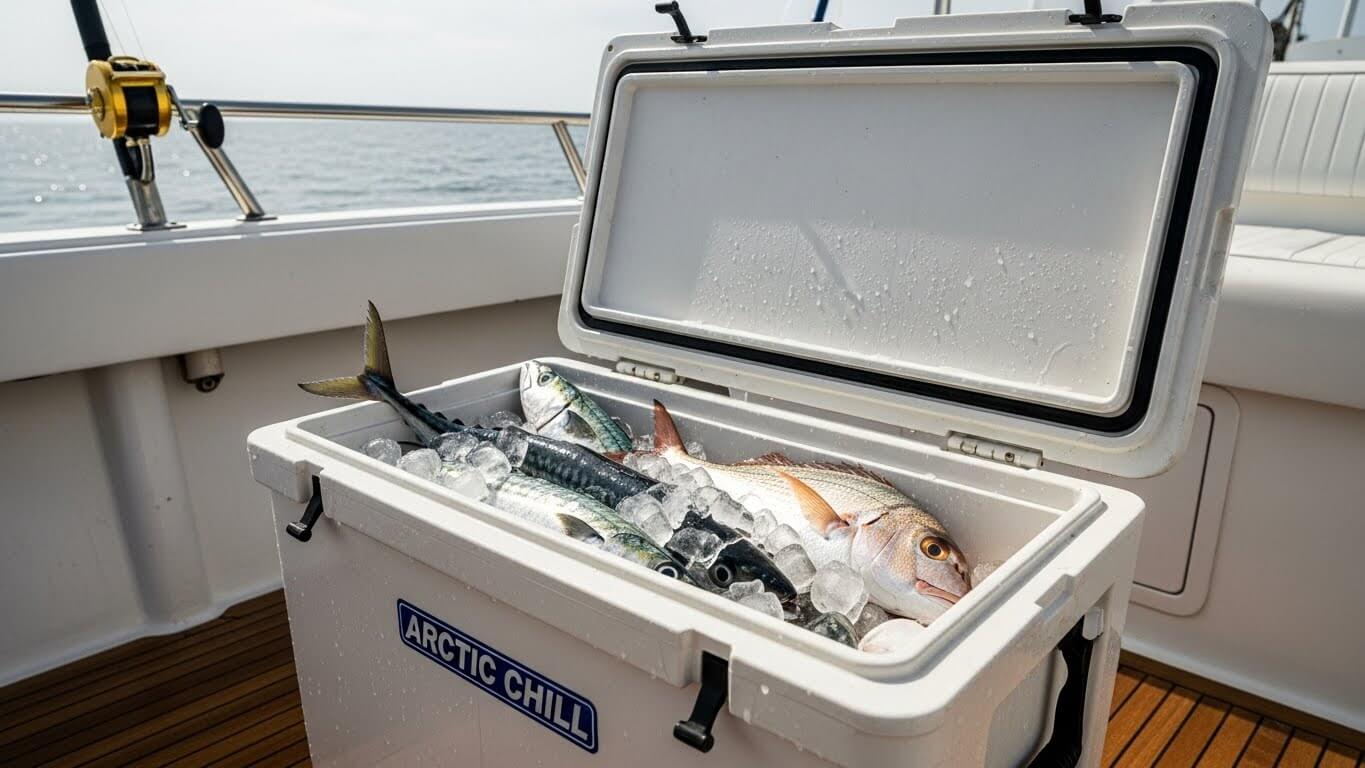
Premium rotomolded coolers ($250-$600) deliver exceptional ice retention (7-10 days), extreme durability (10-20 year lifespan), and comprehensive marine features justifying their cost for serious boaters, offshore anglers, and extended cruisers. Mid-range options ($150-$300) provide excellent value with very good performance (5-7 days ice retention) suitable for regular recreational use. Budget marine coolers ($50-$150) offer adequate performance (3-4 days) for casual boating at accessible prices.
Choose based on your specific boating activities, trip lengths, performance requirements, and budget. Premium coolers make sense for frequent use, extended trips, and professional applications. Mid-range coolers serve most recreational boaters excellently. Budget options work for casual use accepting more frequent replacement.
Regardless of which cooler you choose, proper technique—pre-chilling, block ice, strategic packing, shade protection, and limited openings—dramatically impacts performance. Combined with regular maintenance including saltwater rinsing and proper storage, quality marine coolers provide years of reliable service supporting memorable days on the water.