
I’ll be upfront with you. By the time a gadget has shown up in my feed a hundred times in a single month, my instinct isn’t excitement; it’s suspicion. That’s roughly where I started with this portable unit, and it’s why I sat down to write this Coolizi reviews in the first place. The Coolizi Coolzy is being sold as a cooler and a heater rolled into one small box that you just plug in, with no window kit, no drilling, and no installer knocking on your door. That’s a lot to claim for something the size of a small speaker, and bold claims are exactly the thing I like to take apart on this site.
So here’s my promise for this post. I’m not going to parrot the sales page back at you, and I’m not going to dunk on it for sport either. I just want to walk through what this thing really is, the questions readers keep firing at me about it, the spots where I think it actually delivers, and the spots where I’d grab your arm before you hit checkout. A worrying number of the Coolizi reviews out there read like carbon copies of one another, all repeating the same theatrical lines, so let me try to be the version that actually thinks it through.
Before anything else, one idea worth tattooing on the inside of your eyelids: this is a one-room machine. It’s designed to take care of the patch of air you’re personally sitting in, the bedroom, the office nook, and the den, not to wrap your whole house in one even temperature like a ducted system does. Carry that with you, and almost every argument in these Coolizi reviews sorts itself out. Forget it, and you’ll end up annoyed at a device that was quietly doing precisely what it was built to do.
What You’re Actually Buying
Peel off the marketing, and the Coolizi Coolzy is a compact, plug-in unit that cools and heats a single space. You park it somewhere, feed it a normal wall socket, and drive it from the touchscreen on the front or the remote that comes in the box. The hook is that you get genuine two-way climate control without the bill, the fitter, or the permanence that a fixed system drags along with it.
When it’s hot, it behaves as an air conditioner. The brand explains it as a heat exchange setup: warm air gets pulled in, runs over cold coils that strip the heat out of it, and is sent back into the room noticeably cooler. The damp that naturally collects when you chill air is dealt with inside the cabinet through evaporation, so you’re never threading a hose out a window or tipping out a tray. That detail is the whole reason it can call itself a no installation device, because the hose is the thing that usually chains a portable AC to one spot by the glass.
When it’s cold, the same box turns into a heater built around PTC ceramic. The handy trait of that material is that it eases off its own power as it gets up to temperature instead of roaring along at full tilt, so it warms fast, finds a steady level, and sits there. The company puts the cooling end somewhere around 61 degrees Fahrenheit, the heating end near 113 degrees, the coverage at up to 550 square feet, the mode count at six, and it bundles in a stack of safety features. Those are the maker’s own numbers, and I’m reading them as company stated rather than lab proven, which is just the honest way to treat any spec sheet you didn’t test yourself.
Check the current Coolizi Coolzy price and availability on the official site
The Questions Readers Keep Asking Me
Instead of reciting a feature list you could skim off any product page, let me just answer the things people actually email me, because those reveal far more about whether this suits your life than any spec ever will.
Is it a real air conditioner or a fan in disguise?
Everybody asks this first, and they’re right to, because the cheap end of this market is crawling with fans wearing a costume. As far as I can tell, the Coolizi sits on the right side of that line. It leans on the same logic your refrigerator uses, a coil that genuinely lifts heat out of the air, rather than a blade that only flings warm air at you faster. That’s the difference that matters: a fan never changes the temperature of anything, which is why it feels pointless the moment the air itself turns hot, while this is meant to actually drop the number on the thermometer. The string attached is the room size. It conditions your immediate space, not the entire floor plan, so in a shut, sensibly sized room, you’ll feel it working, and in a wide open layout you won’t get the same result.
Hold on, it heats as well?
It does, and frankly that’s the feature I think gets the least credit. The same unit that takes the edge off a July afternoon will warm you in the depths of winter through its ceramic element. Because that element governs its own output as it heats, it climbs quickly, levels out, and holds a comfortable temperature, which is also part of why ceramic heating is regarded as a gentle way to warm a small room. For my money, the heating is what drags this out of the throwaway summer toy category and makes it something you’d keep plugged in across all twelve months. One purchase quietly replaces two seasonal appliances, and that math is a big part of why it keeps surfacing in Coolizi reviews from people in four-season climates.
Can it cool my entire house?
No, and I’ll say it plainly because this single misunderstanding is behind most of the disappointed write-ups you’ll ever read. The 550 square foot figure is the ceiling, not the comfort zone, and it shines brightest in one closed, decently insulated room. Shut yourself in a modest bedroom or a home office and it can genuinely own that space. Set it loose in a cavernous open-plan area, or run it with the patio doors flung wide, and it’ll spend all its energy fighting an endless river of warm air it can never win against. If what you want is a uniform temperature spread across a whole multi-room home, that’s a job for central air, and nothing this size is going to fake it convincingly.
Is the whole thing a scam?
I hear this one constantly, mostly because it’s pushed online with slashed prices and ticking clocks, the exact combo that makes my eyebrow climb. After weighing it up, my read is that this is a real product wrapped in very loud marketing, not a con. The cooling sits on ordinary, proven coil technology and the heating on equally ordinary ceramic, so nothing here is bending the laws of physics.
The company also has an excellent rating from over 20,000 reviews, which I file under company-reported, and it stands behind every order with a 30-day money-back guarantee, which would be a financial bloodbath to offer if the unit routinely failed to cool. The fair warning isn’t really about the hardware, it’s about the ad copy. Some of the promos reach for cinematic backstories and exotic, lab coat flavored explanations of how it supposedly works, and those bits deserve a good, hard squint. Weigh the device on its plain mechanics and that refund window, order from the official store, and you route around the nonsense.
What’s it cost, and is it actually worth it?
A single unit lands at 137.99 dollars on the current promotion, the per-unit price slides downward if you grab a multi pack, and shipping’s thrown in free. Whether that’s a smart spend hinges entirely on the lens you use. Seen purely as a hot weather cooler, it’s priced like a respectable gadget. Seen as a year-round machine that stands in for both a personal cooler and a small heater and that lets you back off an expensive central system for hours at a stretch, the value reads a lot kinder. And the 30-day guarantee is the thing that turns the worth-it question from a leap of faith into a low-stakes audition, since you get to run it in your own room, in your own weather, before you’ve truly parted with anything.
How It Pulls Off the Cooling and Heating, in Plain Words

I always trust these machines more once I picture what’s happening inside, and the reassuring thing about the Coolizi is that there’s genuinely nothing mysterious to picture.
Cooling first. Air gets drawn in, passes over chilled coils that act like a sponge for heat, and is is pushed back out with that heat removed; then the loop runs again. That’s bona fide refrigeration-style cooling, the same family as your fridge or any proper AC, and a world away from the temperature blind air shoving a fan does. The moisture that condenses out along the way is evaporated off inside the unit, which is the move that frees it from any hose or tank and lets it stay properly portable instead of being tethered to a window like its bulkier cousins.
Heating second. The ceramic element does the lifting, throttling its own draw as it warms so it never bolts off to scary temperatures, climbing fast from cold and then holding a steady, even warmth. Stitch the two together and what you’ve really got is an honest little coil cooler and an honest little ceramic heater living in one carry anywhere shell, run off a screen and a remote. Wherever the advertising starts reaching for grander, flashier stories, you can quietly ignore that and lean on the dull, dependable reality, which is that it cools and heats the way trustworthy appliances always have.
Where I Think It Genuinely Earns Its Keep
Having chewed through all that, here are the situations where I’d happily nudge a friend toward it, because there are a handful where it’s close to perfect for the money.
If you rent. This is the standout, no contest. When your lease bans window units, and you can’t put a screw in anything, your historical choices have been grin and bear it or buy a fan that barely registers. The Coolizi sidesteps all of that with zero installation, zero window kit, and zero awkward conversation with a landlord, which hands renters real cooling and heating that used to be flat out unavailable to them. Better still, it walks out the door with you when the lease is up instead of staying screwed to a wall you’ll never see again.
If you work from one room. Spend your days anchored to a single office or desk and conditioning just that pocket of the house, rather than the whole thing, is precisely the brief this was written for. The remote means you can fine-tune it without breaking from what you’re doing, and it tends to fade into the background while it quietly keeps you comfortable.
If noise wrecks your sleep. The brand makes a lot of noise, ironically, about how quiet it runs, and paired with its dedicated sleep mode, it’s pitched at holding a comfortable bedroom through the night without the rattling hum that has you slapping the off button at 2 am. For anyone who’s been driven half mad by a clattering old AC, that hush counts for as much as the cooling itself.
If you actually have winters. Because it swings both ways, it doesn’t sit idle for half the year collecting dust. Live somewhere with proper summers and proper winters, and that dual purpose is the single feature that most cleanly pays for the thing.
If you’re watching the budget. A gentle upfront price stacked on a running cost based on conditioning one room instead of a whole house is the entire pitch for anyone who wants to stay comfortable without the financial gut punch of buying and feeding a full system. Right across the Coolizi reviews I waded through, those are reliably the folks who come away grinning.
See the current Coolizi Coolzy discount on the official site
Where I’d Tap the Brakes
Nothing’s all sunshine, and a review that pretends otherwise isn’t doing you any favors, so here’s the honest flip side.
The big one, yet again, is scale. This is a single room tool, full stop. If you need several far flung rooms handled at once, you’re either hauling it around all day or buying more than one, and at that point it’s worth pausing to ask whether something else fits your home better. It does its finest work boxed into a closed, decently insulated room, and it’ll come up short in an oversized, drafty, or wide open space, the same as any unit this size would.
I’d also keep the brand’s figures at arm’s length. That rating from 20,000 plus reviews and the energy savings talk all come from the seller rather than an independent bench test, so I treat them as encouraging rather than gospel, and you should too. What you actually get will shift with your room, your climate, your insulation, and your habits.
Then there’s the marketing layer itself, which I’d mentally scrape off before deciding anything. A slice of the Coolizi advertising reaches for movie style origin tales and exotic, sci fi sounding descriptions of the cooling that sail way past what a plain coil unit really does. None of that should be mistaken for evidence. The genuine product is more modest and more believable than the spectacle around it, which is honestly a mark in its favor, but you’ve got to look straight through the drama to spot it. And last, it’s sold mostly through the official channel rather than off a shelf, so if you want the real article, today’s price, and that guarantee, buy from the source and give unfamiliar marketplace listings a wide, suspicious berth.
A Few Things the Ads Won’t Tell You
Since I’ve taken a few swipes at the marketing already, let me be specific about what to mentally cross out when one of those long, dramatic Coolizi promos catches you, because separating the wheat from the chaff is half the value of reading honest Coolizi reviews in the first place.
Cross out the tear jerking inventor saga. Whatever emotional origin story a given ad is built around, that’s a copywriting device meant to make you feel something and reach for your card fast, not a measurement of what the hardware does. Cross out any explanation that makes the cooling sound like alien technology. What’s actually inside is a plain coil and a ceramic heater, and that’s a good thing, because ordinary and proven beats exotic and unprovable every time. Cross out the wilder energy and capacity boasts too. The unit’s real job is one room up to 550 square feet, and the sensible, defensible version of its efficiency story is simply that conditioning one room costs less than running a whole house system for the same hours. You don’t need the fireworks to make that case. What’s left once you’ve struck all that out is a modest, useful device, and it’s a far easier thing to trust than the spectacle wrapped around it.
The Six Modes, and the Way I’d Actually Run Them
Those six modes are the dial that turns this from a dumb on-off lump into something you can shape around your day, and using them well is the whole gap between a comfortable, cheap-to-run experience and a wasteful one. The maker spreads them across cooling, heating, and intensity, but I find it easier to think about them as tools for different jobs.
There are soft, low output settings for mild days or just keeping a room ticking over, which barely sip power and suit mornings and evenings. There’s a middle gear for an ordinary day. There’s a punchier, faster setting for when a room’s drifted genuinely hot or cold, and you want it back to comfortable in a hurry. There’s an economy-minded setting that chases the lowest energy use while still keeping you happy, which is the one I’d reach for on long overnight or all-day runs. And there’s a sleep-tuned mode built for quiet, even running through the night.
The clever rhythm, and the one that keeps the meter from spinning, is to lean on a strong setting to drag the room to where you want it, then ease back to economy or a soft mode to hold it steady. Leaving the fiercest setting blazing all day in a room that’s already comfortable is the classic way people waste power with one of these, and the modes exist precisely to talk you out of that habit.
Setting It Up In Simple Terms

I want to give the “no installation” line its due, because it’s one of those rare marketing claims that survives contact with reality. There’s no dreaded setup ritual. You stand the unit in whatever room you’re targeting, on the floor or a surface, with its vents clear of walls and furniture so air can actually move. You plug it into any everyday socket; nothing special is required. You switch it on at the screen, choose a mode there or on the remote, and dial in your temperature and fan speed. That’s genuinely the entire procedure.
Shifting it to another room is the same gentle nothing: flick it off, unplug, carry, done. No hose to re-route, no tools, and no starting from scratch. For anyone who’s ever fought a window unit into a frame or written a cheque to a fitter, that ease is a real exhale, and it surfaces over and over in the firsthand Coolizi reviews from people who describe simply picking it up and relocating it on a whim.
A Few Straight Tips for Getting the Best Out of It
Like any room-sized unit, this one pays you back for using it the way it was meant to be used, and a touch of technique goes a surprisingly long way.
Shut the door first. That’s the heavyweight tip. A closed room lets the unit work on one fixed pocket of air, so close the windows and doors for the quickest change and the cheapest run. Hit it hard, then back off, using a punchy mode to bring the room to comfort and then dropping to economy to keep it there. Give it breathing room rather than wedging it into a corner facing a wall, so the conditioned air can actually spread. Switch to the sleep mode overnight instead of leaving a high setting screaming. Use the remote to wind the mode down the second the room feels right, since people who keep adjusting burn far less power than people who set it to max and wander off. And keep the vents clean, because a clogged intake forces any heat exchange device to grind harder for less reward.
How It Stacks Against What’s Already in Your House
Readers always want to know how it measures up to what they’ve got, so let me line it up beside the usual suspects, treating each as the answer to a slightly different question.
Next to a plain fan, it’s not a nicer fan; it’s a different species. A fan only stirs the air and leaves its temperature untouched, while this genuinely lowers it through coil cooling, and it warms you in winter on top of that.
Next to a window unit or split system, you’re swapping muscle for freedom. Those can force more raw cooling into one fixed room, but they cost more upfront, usually demand installation, and for renters, they’re frequently a non-starter anyway. The Coolizi trades a chunk of that brute force for being portable, install-free, and quiet.
Next to central air, it isn’t a rival and never claims to be. Central wins on blanketing a whole home evenly, but it pays to chill every empty room whether a soul is in it or not, which is wasteful and dear. This unit’s entire argument is that conditioning the one room you’re physically in is cheaper and smarter for a huge slice of daily life, letting you rest the big system for long stretches.
Next to the evaporative coolers and misting toys it sometimes gets shelved beside; it’s the more serious tool. Those just lob moisture into the air for a faint chill and wilt in humidity, whereas this strips heat out through a coil, so it cools far more like a true AC. If something this size only ever calls itself a personal cooler you load with water and ice, that’s an evaporative gadget, not an air conditioner, and worth telling apart before your card comes out.
What Owners Are Actually Reporting
I never form a verdict without wading through a pile of buyer feedback, and with the Coolizi the themes line up pretty tightly. People flag quick cooling in whatever room they’re using, genuinely low noise, how painless it is to shuttle between rooms, and slimmer bills once they stop leaning so hard on a central system. One renter described a landlord who wouldn’t permit a split system and fans that did nothing, and how this finally delivered relief they could wheel into the bedroom come nightfall.
Another buyer who’d been bleeding money on central heat just to keep a single room warm said it heated up fast and trimmed the bills, while cooling every bit as well once summer rolled around. A third was simply delighted at how truly plug and play it turned out to be, no tools, no contractors, the whole thing run from the couch.
Taken as a crowd, the happy customers are almost all using it as intended, one room, sealed off. The gripes, when they crop up, tend to circle back to the exact expectation trap I keep hammering, somebody hoping a single-room device would somehow chill a whole house. That pattern, more than any lone rave or rant, is the most useful thread running through the Coolizi reviews, and it’s the one I’d weigh most heavily.
Is The Coolizi Coolzy a Waste of Money?
Since value depends on the actual numbers, here’s the full pricing as it stands on the official store, shipping included, all of it worth confirming live before you order because promo pricing has a habit of shifting. A single unit is 137.99 dollars. Two units come to 249.98 dollars, which the brand pitches as the sweet spot deal and which drops the cost per unit. Three units run 339.99 dollars, trimming the per unit price again. Four units land at 399.96 dollars, the lowest per-unit rate of the lot.
The multi-packs make obvious sense if you want a unit humming in more than one room at once, or you fancy handing one over as a gift, since the per-unit price tumbles on the bigger bundles. Because the company sells direct rather than through a chain of middlemen, the entry price stays gentle next to what buying and fitting a traditional system would set you back. They also flag strong demand and thin stock, so if you’ve made up your mind, it’s worth checking what’s actually available rather than assuming it’ll sit there waiting.
So Who Should Actually Buy It?
Let me boil this down, because the call really does land on one clean line.
I’d buy it if I were a renter who can’t install a thing, someone who works from a single room all day, a light sleeper who needs hush at the bedside, or anybody after one device to cover both a baking summer and a biting winter without stuffing a cupboard with two seasonal machines. For those people it pulls off something a fan simply can’t, at a price and hassle level a fitted system can’t approach.
I’d walk away if my real need were a whole home held at one even temperature, if I had a big open space I couldn’t close off, or if I needed several distant rooms sorted at the same moment. In those cases the cash is better aimed at a properly sized system, and I’d rather tell you that to your face now than watch you wrestle this into a role it was never cast for.
Check the current Coolizi Coolzy price and availability on the official site
How I’d Test It in the First 30 Days
Here’s the part I wish more Coolizi reviews actually spelt out, because that 30-day money-back guarantee is only worth something if you put it to work. If it were landing on my doorstep, here’s exactly how I’d spend the trial window so I knew, for sure, before the clock ran out.
I’d run it on the hottest day I could get, in the one room I most want to be comfortable, with the door and windows shut, and I’d give it a solid stretch rather than judging it in the first ninety seconds. I’d start on a strong setting to pull the room down, then drop to economy and see whether it actually held the temperature steady over a few hours. I’d sleep with it on the quiet overnight mode at least once to find out whether the noise level genuinely works for me, since that’s the kind of thing you can’t tell from a spec sheet.
If winter’s anywhere close, I’d flip it to heat and confirm the ceramic side does its job too. And I’d keep an eye on whether leaning on it lets me back off my usual system. If it nails the single room brief across those tests, it’s a keeper. If it’s straining against a space that’s too big or too open, that’s the guarantee telling you to send it back; no harm done. Using the trial that deliberately is how you turn a leap of faith into a calm, evidence-based decision.
Coolizi Reviews: Quick FAQ
Is the Coolizi sold on Amazon or Walmart? No. The company sells the Coolizi Coolzy only through its official website, and it specifically cautions that lookalike or resold listings can pop up on outside marketplaces. To be certain you’re getting the real unit, today’s price, the free shipping, and the 30-day guarantee, order from the official site rather than an unfamiliar seller.
Does it need any installation? None at all. You plug it into a normal socket, switch it on, and pick a mode. There’s no exhaust hose, no window kit, no drilling, and no contractor or landlord sign-off involved.
Is it a genuine air conditioner or just a fan? A genuine one. It uses coil-based cooling, the same core idea as full-size air conditioning, so it removes heat from the air instead of merely circulating it the way a fan does. Inside its single room rating, it lowers the real temperature.
Will I have to empty a tank or hook up a drain hose? No. The company says the moisture is handled inside the unit through evaporation, so there’s nothing to empty and no hose to run. That’s exactly what keeps it genuinely portable instead of semi-permanent.
What size room can it manage? It’s rated for spaces up to 550 square feet, depending on insulation and layout, and it does its best work in one closed, reasonably insulated room rather than a sprawling open plan area.
Is it loud? The company stresses very quiet running, helped by the lack of a bulky window unit compressor, plus a dedicated sleep mode for overnight use. Low noise is among the most praised points in the feedback, though the smart move is to test it overnight inside the guarantee window.
What does it cost? On the current promotion a single unit is 137.99 dollars, with lower per unit pricing on the two, three, and four unit packs, and free shipping. Two units are 249.98 dollars, three are 339.99 dollars, and four are 399.96 dollars. Every order carries the 30 day money back guarantee.
My Verdict on the Coolizi Coolzy
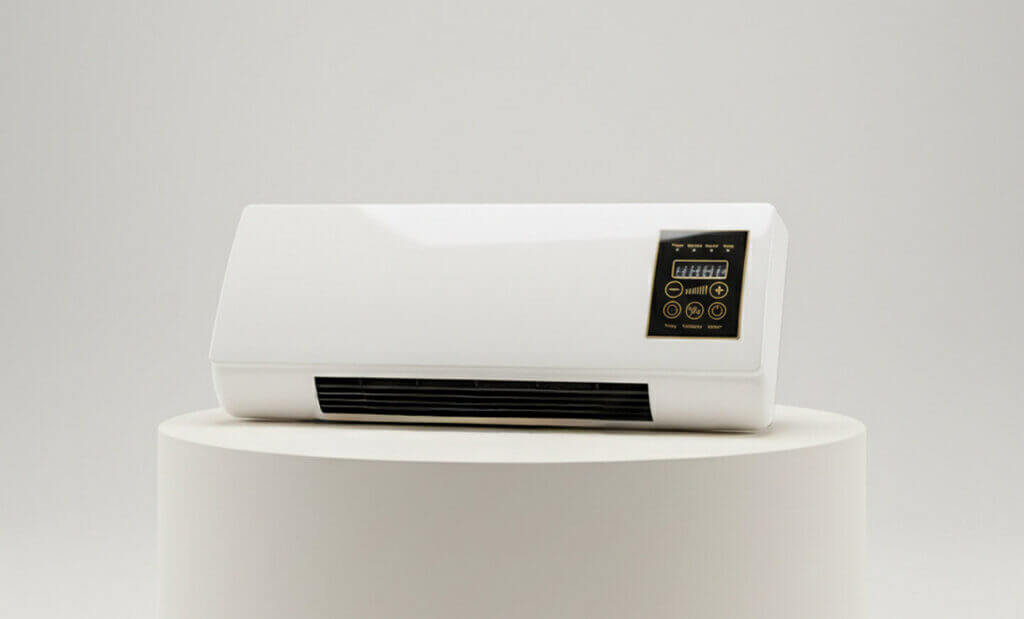
Stack it all up, and my take settles somewhere calmer and less breathless than the ads. The Coolizi Coolzy is a genuinely handy personal air conditioner and heater that does real coil cooling, folds in a legitimate year-round heating trick, runs quietly, and requires no installation whatsoever, all in a box you can carry one-handed from room to room. It is not a shrunken central air system, and the instant you demand that of it, it’ll let you down. Buy it for the room you actually live in, and it tends to hand you precisely what it promised.
If you twisted my arm for a number, I’d settle around 4.4 out of 5 as a single room, year-round device, with marks held back only for that one room ceiling and the fact that the headline stats are the maker’s own. The 30-day money-back guarantee is the cushion that makes it an easy thing to audition, since you can prove it in your own space before you commit for real. For the right buyer, that’s about as confident as my recommendations get around here, and it’s the note these Coolizi reviews end on.
See the current Coolizi Coolzy discount on the official site