
Finding the best method for keeping a house cool involves weighing cost, effectiveness, and usefulness in addition to comfort. Homeowners frequently have to make the difficult choice of whether to install a permanent, fixed system or invest in a portable cooling solution as temperatures rise throughout the warmer months. Although there are obvious benefits to both methods, the optimal selection will rely on factors including budget, space, and lifestyle.
Evaporative coolers and portable air conditioners are examples of portable cooling devices that are made to be flexible. They are usually less expensive up front, are portable, and require little installation. These units can be a convenient and affordable option for tenants, tiny apartments, or seasonal cooling requirements. However, there are drawbacks to portability, such as reduced cooling capacity, increased noise levels, and possibly higher long-term energy expenses.
Whole homes can be reliably and effectively cooled by fixed home cooling solutions, such as split systems and central air conditioning. They can increase a property’s value, run more silently, and frequently have higher energy efficiency ratings. Higher installation costs, longer setup times, and limited mobility after installation are the drawbacks. Homeowners who intend to remain in one place for a number of years are usually better suited for these systems.
It’s important to take into account not just the initial cost but also the maintenance requirements, continuing operating expenses, and how each system integrates into daily life when comparing portable versus fixed cooling. Climate also matters; what is efficient in a hot, dry area might not be as beneficial in a humid coastal setting.
In order to help you make an informed decision that maintains home comfort while optimizing efficiency and value, this article thoroughly examines the benefits and drawbacks of both fixed and portable home cooling options.
Understanding Portable Cooling Solutions
For homes looking for simple and adaptable ways to stay cool, portable cooling solutions have grown in popularity. Evaporative coolers, portable air conditioners, and other transportable equipment intended to chill a single room or a limited area are examples of these systems. Because portable units don’t need to be permanently installed like fixed cooling systems do, they’re perfect for temporary setups, tenants, and areas where standard air conditioning isn’t practical.
Warm air is drawn from the room by a standard portable air conditioner, which then cools it using a refrigeration cycle before releasing the chilled air back into the room. A venting hose that directs hot air outdoors through a window or wall opening is typically included with units. Evaporative coolers, sometimes referred to as swamp coolers, work particularly well in arid settings by using water evaporation to cool the air.
The mobility of portable cooling solutions is one of its main benefits. Targeted cooling may be provided where it’s most needed thanks to these units’ easy mobility. It is a cost-effective option up front because setup is typically straightforward and doesn’t require expert installation. Additionally, a lot of models have small designs that make them appropriate for businesses, little flats, or spaces without built-in cooling.
Portable cooling devices do have several drawbacks, though. They may find it difficult to efficiently cool vast spaces because of their relatively lesser cooling capacity compared to stationary systems. Utility bills may increase as a result of some portable units’ increased electricity consumption and varying levels of energy efficiency.
Additionally, because the compressor is located inside the room, noise levels are typically higher than with fixed air conditioners. To guarantee peak performance, routine maintenance is required, such as cleaning filters or emptying water tanks. Many users find portable cooling solutions to be a versatile and useful option; nevertheless, before making a choice, one must take noise, energy consumption, and space into account.
Understanding Fixed Home Cooling Solutions
The purpose of fixed home cooling solutions is to deliver dependable, steady cooling for big areas or the entire house. These systems, which call for permanent setup and expert installation, include split systems, ducted evaporative coolers, and central air conditioning. For households seeking long-term comfort and efficiency, fixed cooling systems are a popular option.
Cooled air is circulated through ducts to distribute air to different rooms in central air conditioning systems. Split systems, which provide cooling without ductwork and are frequently utilized in open-plan areas or single rooms, are made up of an indoor air handler and an outdoor compressor. In arid climates, ducted evaporative coolers work well because they circulate cooled, humidified air through ductwork, creating a natural cooling effect.
The capacity of permanent cooling solutions to evenly cool entire homes is one of their main benefits. These systems are appropriate for larger spaces and many rooms because they usually have higher cooling capacity than portable devices. In general, fixed systems—especially the more recent models with cutting-edge technology and energy-saving features—are more energy efficient. Because the noisy compressor is outside the house, they run more silently, increasing indoor comfort.
However, because of the equipment and expert installation required, fixed cooling systems have a greater initial cost. Installation may take a long time and necessitate structural changes to the house, such as mounting units or ducting. Fixed systems cannot be readily moved after they are installed. In order to maintain the system operating well and avoid expensive damages, maintenance typically entails yearly expert servicing.
All things considered, long-term, quiet, and energy-efficient cooling is offered by fixed home cooling systems. Homeowners should compare the advantages of whole-home automation with the expenses of installation and maintenance.
Key Factors to Consider Before Choosing a Cooling Solution
Comfort, cost, and convenience are some of the key considerations when deciding between portable and fixed home conditioning options. Knowing these elements might help you choose the cooling solution that best suits your needs.
- Budget: The initial cost of purchasing and installation for fixed and portable systems differs greatly. While fixed systems require more expensive equipment and expert installation, portable units typically offer lower upfront costs and require less setup. It’s also critical to take into account continuing operational expenses because fixed systems frequently have higher energy efficiency, which could eventually result in lower electricity prices.
- Home Size and Layout: The best cooling technique for your house depends greatly on its size and layout. Because they provide focused cooling where needed, portable coolers are most effective in smaller spaces or single rooms. For larger homes or open floor plans, fixed cooling solutions offer whole-home climate control.
- Climate: The efficacy of the system and cooling requirements are influenced by the local climate. While portable or fixed air conditioners are more appropriate for humid or mixed weather, evaporative coolers work best in dry, arid areas. When choosing a cooling system, take into account the regular weather trends in your location.
- Energy Efficiency: Energy efficiency affects energy prices as well as the environmental impact. Compare the energy usage of fixed and portable choices, and look for Energy Star ratings. Even though fixed systems are often more efficient, some high-quality portable ones can be more affordable.
- Mobility and Lifestyle: Your dwelling arrangement and way of life are important. Because of their versatility, portable units may be preferred by renters or those who move around a lot. Long-term homeowners frequently enjoy the convenience and affordability of permanent cooling systems.
By keeping these things in mind, you can make sure that the cooling solution you choose fits your house, lifestyle, and budget, which will improve comfort and value.
Which Is Best for You?
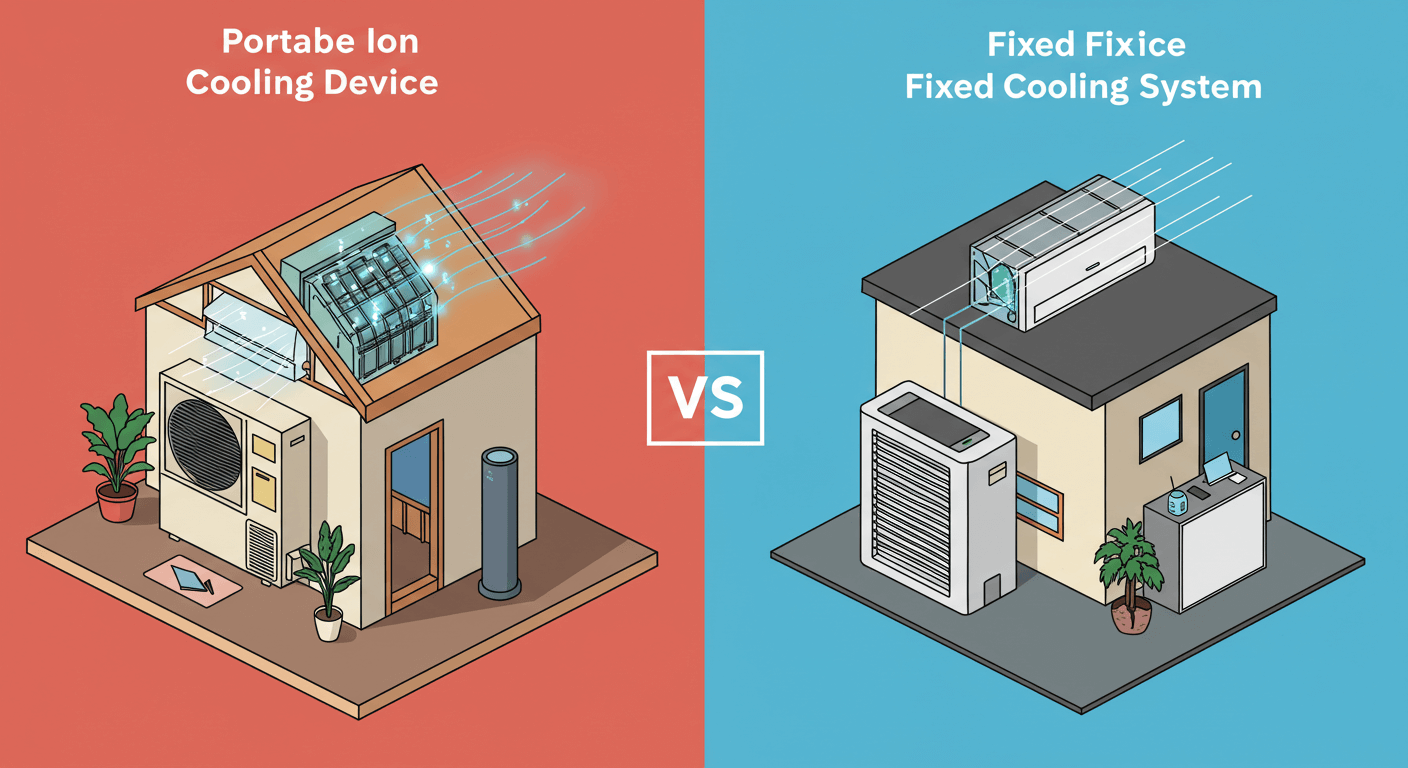
Your particular needs, financial condition, and living arrangement all play a major role in the decision between portable and fixed home cooling options. While there are advantages to both choices, knowing which one fits best can ultimately increase comfort and reduce costs.
Portable cooling units might be the best option if convenience and flexibility are your top concerns. For renters, those living in small apartments, or anyone who needs to chill a few rooms rather than their entire house, these units are ideal. Evaporative coolers and portable air conditioners are less expensive up front, portable, and don’t need to be permanently installed. Though they may use more energy than fixed systems, bear in mind that they work best in small to medium-sized environments. If you like a calmer setting, noise levels may also be an issue.
However, homeowners looking for all-inclusive, long-term cooling solutions are better off with fixed cooling systems. Split systems and central air conditioners provide quieter operation, more energy efficiency, and whole-home cooling. Fixed systems provide value to the property and offer constant comfort across numerous rooms, despite the greater installation cost and longer setup time. For people who live in larger homes or in hotter climes, this makes them a great investment.
The decision is also influenced by the climate. While permanent air conditioning systems work better in humid settings, portable evaporative coolers may not be as effective in dry ones. In the end, choosing the best cooling solution requires striking a balance between immediate convenience, long-term comfort, and cost. When choosing, take your home’s size, finances, lifestyle, and climate into account. By weighing these considerations, you may choose a cooling system that will keep your house cozy all year long without going over budget.
Conclusion
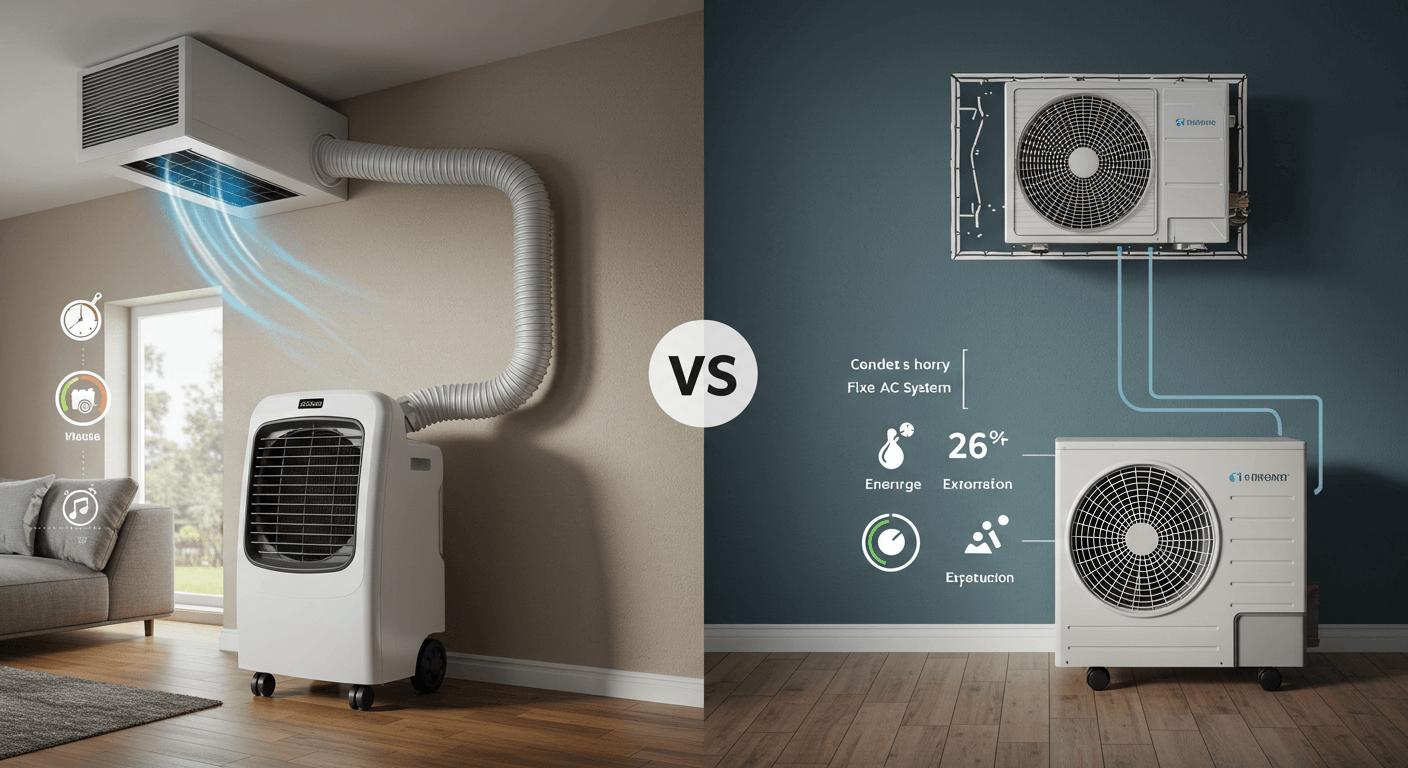
Comfort, energy expenses, and the overall value of the home are all impacted when deciding between portable and fixed home cooling options. Before choosing an investment, it is crucial to assess each option’s distinct advantages and disadvantages.
Because of their price and versatility, portable cooling units are a great option for people looking for a short-term fix, small rooms, or renters. Their portability and simplicity of setup provide cooling where it’s most required without requiring a large initial outlay of funds. Long-term enjoyment, however, can be impacted by restrictions on noise levels, energy efficiency, and cooling capacity.
Central air conditioners and split units are examples of fixed home cooling systems that provide strong, whole-house cooling with increased energy efficiency and quieter operation. These systems tend to increase the value of your property and improve comfort in larger settings. Homeowners are rewarded with reliable and efficient temperature management, but the greater installation costs and permanency demand a sustained commitment.
Think about your lifestyle, climate, home size, and budget when selecting the ideal cooling option. While homeowners looking for long-term comfort and efficiency frequently find permanent systems more appropriate, those who value flexibility and cheaper upfront expenses may gravitate toward portable units.
Because they affect the longevity of your system and your monthly expenses, energy efficiency and maintenance should not be disregarded. While portable evaporative coolers work best in dry conditions, permanent air conditioning frequently performs better in hot or humid regions.
You can choose a cooling solution that strikes a balance between comfort, affordability, and convenience by carefully assessing the advantages and disadvantages. A wiser investment in the climate management of your house is ensured by taking the time to learn about and comprehend these possibilities. To find the ideal solution for your needs and take advantage of a more comfortable and cool living environment throughout the year, carefully consider both fixed and portable cooling choices.