
Durability is one of the most crucial aspects to take into account when selecting a cooler for camping, tailgating, road trips, or backyard get-togethers. A cooler is more than just a container for ice and beverages; it’s a vital piece of equipment that has to endure large loads, drops, rough handling, and outdoor environments. Rubbermaid and Coleman are two of the most well-known companies in this market; they are both well-known for making dependable and reasonably priced coolers. But in terms of long-term durability, which one really holds up?
Rubbermaid coolers are frequently commended for their everyday ease, lightweight construction, and useful design. Because of their strong ice retention and portability, they are frequently used for picnics, beach excursions, and informal get-togethers. Conversely, Coleman coolers are made with tough outdoor performance in mind. Campers, hunters, and tailgaters who require dependable ice retention and long-lasting durability in more demanding settings often select Coleman coolers because of their reinforced lids, strong hinges, and dense insulation.
Rubbermaid and Coleman coolers will compete in this durability test, which will assess elements including impact resistance, lid strength, hinge and latch dependability, and general structural integrity. Based on actual circumstances and thorough testing, the objective is to assist readers in determining which brand provides superior long-term performance and value.
After reading this comparison, you’ll know exactly how each cooler withstands rigorous use, what to anticipate in terms of longevity, and which model is a better investment for your particular outdoor needs. This guide will help you make an informed decision and guarantee that your cooler keeps your ice—and your equipment—secure for years to come, regardless of whether you value robust durability or everyday ease.
An Overview of Rubbermaid Coolers
Rubbermaid has established a solid reputation for manufacturing useful, approachable coolers that support routine outdoor activity. Rubbermaid coolers are well-liked by families, casual campers, and anybody looking for dependable cooling for quick excursions because of its lightweight design and simplicity of use.
In order to balance weight, durability, and ice retention, the majority of Rubbermaid coolers are constructed from high-density polyethylene with foam insulation. Although they might not be as durable as high-end outdoor coolers, their design is adequate for backyard get-togethers, picnics, and beach excursions. Many versions emphasize practicality and convenience with features like easy-grip handles, tight-fitting lids, and handy spouts for draining melted ice.
The Rubbermaid 48-Quart Ice Chest and the Rubbermaid 28-Quart Personal Cooler are two popular versions that share similar design concepts but differ in volume. Even when completely stocked, these coolers are lightweight and portable thanks to their design. Rubbermaid also places a strong emphasis on cost, providing high-quality cooling solutions at reasonable prices.
Rubbermaid coolers work best in relaxed, controlled outdoor settings. They are perfect for family vacations, day travels, and circumstances where difficult terrain or heavy-duty impact are not an issue. Even though they offer respectable structural integrity and ice retention, they are typically less appropriate for demanding outdoor activities like prolonged camping, hunting excursions, or harsh environments where durability is tested.
All things considered, Rubbermaid coolers provide casual consumers with a dependable, lightweight, and affordable choice. They are a good option for daily trips because of their emphasis on useful features and mobility, but they cannot last as long under extreme or frequent stress.
Coleman Coolers Overview
In the cooler industry, Coleman has a long history and is well-known for making dependable, tough coolers that can withstand harsh outdoor environments. Campers, tailgaters, hunters, and other outdoor enthusiasts who require sturdy ice storage that can tolerate regular use and tough handling are big fans of their goods.
Compared to most casual-use coolers, Coleman coolers offer better durability and longer ice retention since they are usually made of high-density polyethylene (HDPE) plastic with thick foam insulation. To endure drops, collisions, and high loads, several versions have robust latches, heavy-duty hinges, and reinforced lids. The brand’s reputation for enduring performance, especially in harsh conditions, is bolstered by these design features.
The Coleman Xtreme 5-Day Ice Chest and the Coleman 50-Quart Wheeled Cooler are two popular Coleman cooler models that combine large capacity, sturdy construction, and useful features. In addition, several models have comfortable handles, optional wheels to increase portability despite their larger weight, and built-in drain plugs for simple cleaning.
Coleman coolers are especially ideal for long-distance travel, camping, and outdoor activities where robust performance, durability, and ice retention are crucial. Because of their design, they can withstand harsh handling, frequent loading, and external exposure without sacrificing insulation or structural integrity.
All things considered, Coleman coolers offer a superior blend of functionality, performance, and longevity. They are a dependable option for anyone who values durability and ice retention over lightweight portability since they are perfect for customers who need a cooler that can withstand severe use, lengthy travels, and outdoor obstacles.
Durability Test Criteria
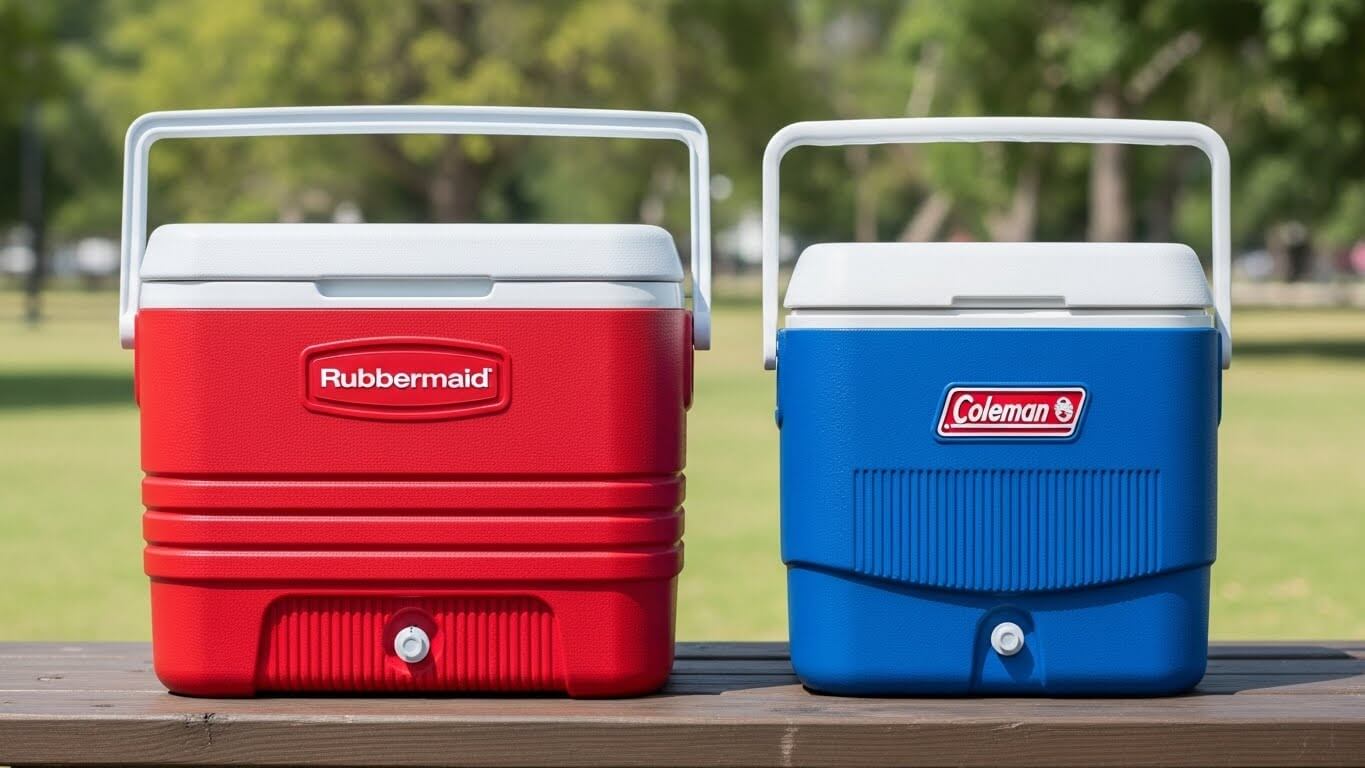
This comparison checks the durability of Rubbermaid and Coleman coolers to find out which one can withstand heavy use. In order to help consumers determine which cooler will endure over time, these tests are made to replicate actual outside circumstances.
Drop and Impact Tests
In order to simulate scenarios like being dumped from a car trunk, knocked over at a camping, or jostled in a packed vehicle, both coolers are tested for resistance to drops and impacts. The objective is to evaluate dent resistance, cracking resistance, and structural integrity.
Performance of the Lid, Hinge, and Latch
To find out how effectively the lids, hinges, and latches keep alignment and operate over time, they are tested under heavy loading and frequent opening and closing. Failure in this area could cause a cooler to lose its ability to seal, which would lower its overall performance and ice retention.
Stress in the Environment
In order to replicate external circumstances like hot vehicle trunks or prolonged sun exposure, coolers are subjected to heat, sunshine, and moisture. This test determines if materials deteriorate, fade, or warp, which is important for long-term use.
Capacity to Support Loads
The weight capacity of Rubbermaid and Coleman coolers is evaluated, including the ability to stack or transport full ice and drinks. This aids in assessing each cooler’s capacity to sustain large loads without bending, cracking, or compromising handles.
Ice Retention Under Stress
While durability is the main priority, ice retention is also assessed under stressful circumstances to make sure the coolers not only withstand physical difficulties but also carry out their primary purpose of keeping objects cold.
Results of the Rubbermaid Cooler Durability Test
To evaluate the Rubbermaid cooler’s performance and longevity in practical settings, it was put through a number of tests.
- Impact and Drop Resistance: In drop testing, Rubbermaid coolers fared rather well, withstanding small falls from countertop or picnic table height without suffering major damage. However, in certain models, repeated or greater drops resulted in tiny cracks in the plastic case, indicating that although they are appropriate for casual usage, they are not as durable as more robust coolers.
- Performance of the Lid, Hinge, and Latch: The hinges and latches worked well for moderate loads, and the lid remained secure during typical use. Overloading or hard handling may weaken the seal and eventually decrease ice retention, as seen by the hinges’ modest bending under high stress and the latches’ sporadic loosening.
- Environmental Stress: After extended exposure to direct sunshine, Rubbermaid coolers managed heat and sunlight well, exhibiting just slight warping. Although moisture resistance was sufficient, these coolers aren’t made for submersion or harsh, damp conditions.
- Load-Bearing Capacity: Rubbermaid coolers were perfect for casual use, picnics, and family vacations since they could handle moderate loads without bending. However, structural rigidity was shown to be limited when heavy objects were stacked or when completely laden coolers were transported often.
- Ice Retention: Depending on the outside temperature, ice remained firm for one to two days, which was in line with casual-use expectations.
Results of the Coleman Cooler Durability Test
The Coleman cooler was put through the same rigorous durability tests as the Rubbermaid to see how well it worked in actual outdoor settings.
- Impact and Drop Resistance: Coleman coolers demonstrated exceptional impact resistance, as evidenced by their ability to sustain numerous drops from table or trunk height without developing dents or cracks. It was ideal for camping, tailgating, and heavy outdoor use because of the reinforced polyethylene shell’s superior protection against rough handling.
- Performance of the Lids, Hinges, and Latches: Even under heavy loads, the lids, hinges, and latches held up well during repeated testing. The latches kept a tight seal, guaranteeing ice retention and structural integrity over time, while the sturdy hinge design allowed the lid to support weight without bending.
- Environmental Stress: Coleman coolers shown a high level of resilience to moisture, heat, and UV radiation. Their resilience for prolonged outdoor use was highlighted by the lack of warping or fading. These coolers are designed to withstand extended exposure to the sun and harsh weather without losing functionality.
- Load-Bearing Capacity: Even when stacked or completely filled with ice and drinks, the Coleman cooler maintained stability and supported larger loads than the Rubbermaid models. Transport was safe and comfortable because the handles and grips were intact.
- Ice Retention: Coleman coolers outperformed Rubbermaid in long-term cooling performance because of their thicker insulation, which kept ice for two to five days, depending on the outside temperature.
Side-by-Side Comparison
A number of important characteristics show up when comparing Rubbermaid vs Coleman coolers side by side, assisting consumers in determining which cooler provides superior performance, longevity, and overall value.
- Durability & Impact Resistance: Coleman coolers are more resilient and structurally sound than Rubbermaid. They can tolerate numerous drops and severe handling without splitting because to their sturdy hinges and reinforced plastic casings. Rubbermaid coolers are less appropriate for high-stress situations because, although they are sturdy for casual usage, they may bend or develop small cracks under severe impact.
- Lid, Hinge, and Latch Performance: Coleman ensures that the cooler stays sealed and retains ice by maintaining constant lid alignment and latch security even under heavy loads. Rubbermaid locks and hinges work well when used moderately, but overloading or frequent stress might reduce their usefulness.
- Ice Retention: Because Coleman coolers have thicker insulation, they usually retain ice frozen for two to five days. Rubbermaid coolers, which are meant for informal excursions, typically keep ice for one to two days, which is sufficient for short trips or picnics but insufficient for longer outdoor excursions.
- Comfort and Portability: Rubbermaid coolers are more comfortable and lightweight, making them perfect for casual users and families. Coleman coolers are heavier, particularly the hard-sided varieties, but they are manageable to transport since they frequently have strong handles or optional wheels.
- Environmental Resistance: Coleman coolers are more suitable for extended outside use since they can withstand moisture, heat, and UV radiation. Rubbermaid coolers function well under regulated circumstances, but prolonged exposure may cause slight warping or fading.
Final Verdict
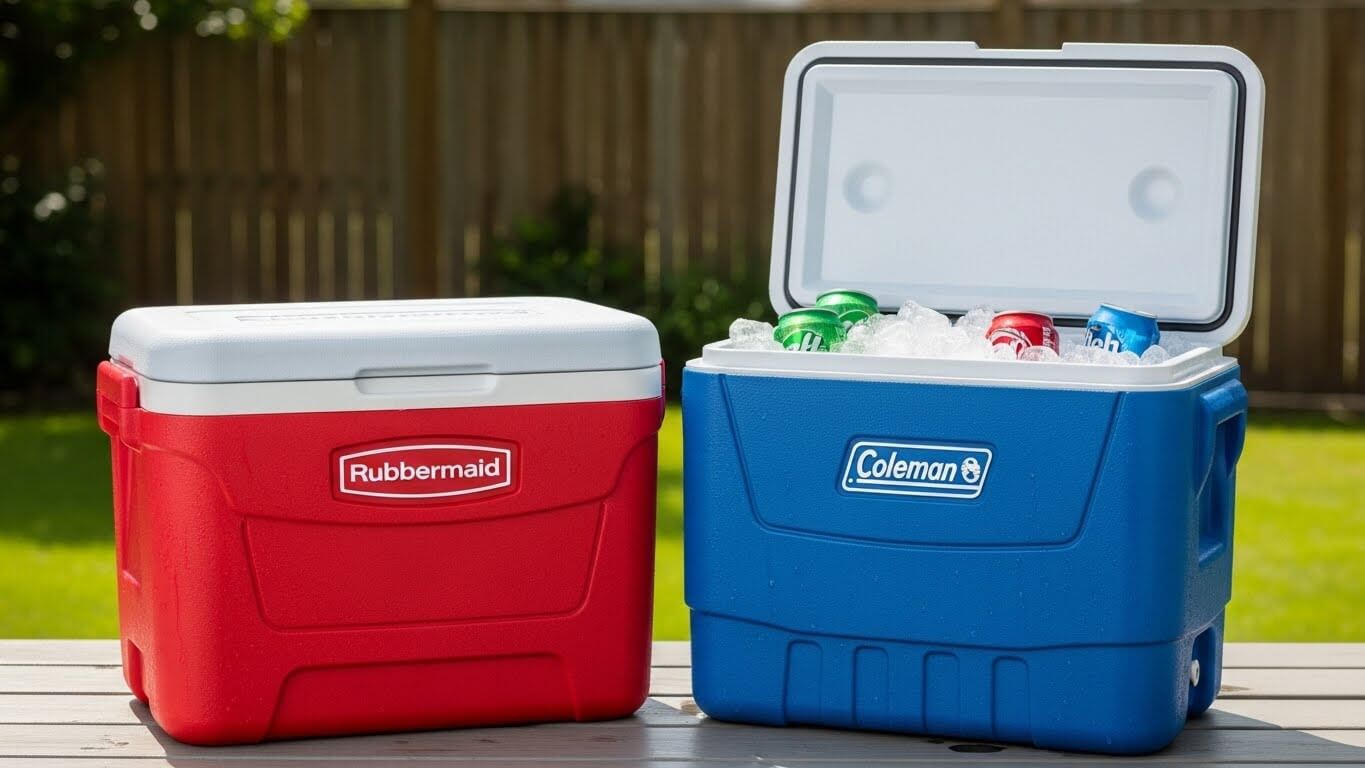
It’s evident from testing and comparing the Coleman and Rubbermaid coolers that each offers advantages based on your demands and outdoor pursuits. Rubbermaid coolers are perfect for short travels, family picnics, and informal get-togethers because they are affordable, useful, and lightweight. They work well with moderate use and provide good ice retention and basic durability. They are, however, less resilient to prolonged exposure to severe outside temperatures, high impacts, and overloading.
Coleman coolers are distinguished by their long-lasting ice retention, strengthened design, and tough durability. They are appropriate for camping, tailgating, hunting excursions, and frequent outdoor experiences due to their robust hinges, durable shells, and better insulation. For heavy-duty users, they are a better investment because to their long-term performance and dependability, while being slightly heavier and more expensive initially.
If cost-effective, lightweight convenience for infrequent use is your top priority, go with Rubbermaid. If durability, prolonged ice retention, and heavy-duty performance are important to you, go with Coleman. In conclusion, Coleman is the preferred option for outdoor enthusiasts who require dependability and long-lasting performance, while Rubbermaid is ideal for regular casual use. Your decision should take into account the frequency and circumstances of the cooler’s use.