
Road trips demand reliable cooling solutions for food, drinks, and sometimes medications. The choice between electric coolers that plug into your vehicle and traditional ice chests filled with frozen water has significant implications for convenience, cost, and effectiveness. Each approach offers distinct advantages depending on your trip duration, vehicle type, and cooling needs. This comprehensive comparison examines both options to help you choose the ideal cooling solution for your adventures on the road.
Understanding the Technologies
Electric Coolers
Electric coolers use one of three technologies to maintain cold temperatures without ice. Thermoelectric coolers rely on the Peltier effect, where electricity flowing through dissimilar materials creates temperature differential. These units typically cool 40°F below ambient temperature, meaning they reach about 50°F on an 90°F day.
Compressor-based electric coolers function like miniature refrigerators with actual refrigeration cycles. They achieve true refrigerator temperatures regardless of outside heat, often reaching 35-40°F or even freezing temperatures. These units cost more but deliver dramatically better performance.
Absorption coolers use heat to drive a cooling cycle, making them ideal for RVs with propane systems. They’re less common for standard vehicles but offer silent operation. For most road trippers, the choice comes down to thermoelectric or compressor models.
Electric coolers require 12V DC power from your vehicle’s electrical system, though many include 120V AC adapters for home or hotel use. Power consumption ranges from 45-60 watts for thermoelectric units to 60-100 watts for compressor models. Most draw about 5 amps at 12V, well within the capacity of vehicle power outlets.
The key advantage is consistent, ice-free cooling. You set the desired temperature, plug in the cooler, and it maintains that temperature until unplugged. No water from melting ice, no need to find ice suppliers, and no gradual warming as ice depletes.
Ice Chests
Ice chests, also called coolers, rely on insulation and ice to maintain low temperatures. The insulation slows heat transfer from outside, while melting ice absorbs thermal energy. As ice changes from solid to liquid, it absorbs heat without raising temperature, keeping contents cold.
Modern ice chests use expanded polystyrene, polyurethane foam, or vacuum panel insulation. Rotomolded coolers with two-inch foam walls can maintain ice for five to seven days under ideal conditions. Budget coolers with thin foam walls might keep ice for 24-36 hours.
The performance depends entirely on insulation quality, ice quantity, ambient temperature, and how often you open the lid. Each opening allows heat and humidity to enter, accelerating ice melt. Strategic packing, pre-chilling, and minimizing access all extend ice retention.
Ice chests require no power, making them universally compatible with any vehicle. They work whether the engine is running or not, and they continue cooling at campsites, picnic areas, or anywhere you take them. This independence from electrical systems provides reliability that electric coolers cannot match.
The trade-off is the ice itself. You must purchase or make ice, find space for it in the cooler alongside food and drinks, and deal with meltwater. Over long trips, you’ll need to source additional ice, adding time and expense to your journey.
Temperature Control and Consistency
Electric Cooler Performance
Compressor electric coolers deliver precise temperature control comparable to home refrigerators. You set the desired temperature, and the cooler maintains it within a few degrees. This precision matters for temperature-sensitive items like medications, fresh meat, or dairy products requiring consistent refrigeration.
The performance remains constant regardless of how long you travel. On day five, your electric cooler maintains the same temperature as day one. There’s no gradual warming as resources deplete. As long as power is available, cooling continues indefinitely.
However, thermoelectric coolers show limitations in extreme heat. When outside temperature exceeds 90°F, a thermoelectric cooler reaching only 40°F below ambient might struggle to keep beverages truly cold. They work adequately in moderate climates but disappoint in desert or summer conditions.
Compressor coolers handle heat better, maintaining set temperatures even in extreme conditions. They cycle on and off like refrigerators, using more power during hot weather but still achieving target temperatures. This reliability comes at higher cost and slightly increased power consumption.
Electric coolers also respond to changes. If you load warm items, the cooler actively works to cool them down rather than simply losing ice faster. This active cooling helps when you buy groceries during a trip and need to bring them to safe temperatures quickly.
Ice Chest Temperature Range
Ice chests maintain temperatures near freezing as long as ice remains. A well-packed cooler with sufficient ice keeps food at 32-38°F, ideal for food safety. The temperature is remarkably consistent while ice lasts, matching or exceeding refrigerator performance.
The challenge is duration. Ice eventually melts, and as the ice-to-water ratio decreases, the cooling capacity diminishes. In the final hours before ice depletion, temperatures can rise rapidly. You might have perfect cooling for three days, then watch temperatures climb from 35°F to 60°F in just a few hours.
Opening frequency dramatically affects ice longevity. Each opening admits heat and moisture, accelerating melt. Families with children frequently grabbing drinks can halve ice retention compared to minimally opened coolers. This variability makes predicting ice life challenging.
Environmental conditions matter enormously. A cooler in a shaded vehicle maintains ice far longer than one in a hot trunk or direct sunlight. Temperature swings from cool nights to hot afternoons stress the system. Consistent shade and moderate temperatures can extend ice life by 50% compared to harsh conditions.
Pre-chilling food and drinks before loading substantially improves ice retention. Starting with refrigerated or frozen items means the ice maintains cold rather than having to cool warm items. This single practice can add an extra day of ice life on long trips.
Power Requirements and Energy Management
Electric Cooler Power Consumption
Electric coolers draw power continuously while plugged in, though compressor models cycle on and off. A typical thermoelectric cooler consumes 45-60 watts continuously, while compressor units average 35-45 watts with cycling. Over 24 hours, expect consumption of 1-1.5 kilowatt-hours.
Most vehicles provide adequate power while the engine runs. The alternator easily supplies the 5-7 amps an electric cooler requires. Problems arise when using the cooler with the engine off. Running a cooler from your vehicle battery for extended periods can drain the battery, potentially leaving you stranded.
Quality electric coolers include low-voltage cutoffs that disconnect when the battery drops to preset levels, typically around 11.5-12V. This protection prevents complete battery drain, preserving enough power to start the engine. Budget models may lack this crucial feature, risking dead batteries.
For overnight use at campsites or hotels without hookups, you’ll need alternative power. Portable power stations with 300-500 watt-hour capacity can run a compressor cooler for 8-12 hours. Solar panels can extend this indefinitely in sunny conditions, though adding equipment and complexity.
Many road trippers run electric coolers only while driving, then rely on residual cold when stopped. A well-insulated electric cooler can maintain temperatures for 2-4 hours after unplugging if you keep the lid closed. For longer stops, you might move contents to hotel refrigerators or purchase ice for overnight cooling.
Ice Chest Energy Independence
Ice chests require no electrical power, eliminating range anxiety and battery concerns. They work identically whether your vehicle is running, parked, or even absent. This independence provides peace of mind and simplifies trip planning.
However, ice requires energy to freeze, just not from your vehicle. You’re outsourcing the energy consumption to grocery stores, gas stations, or your home freezer. From a total energy perspective, ice production consumes considerable power, but you don’t pay that cost directly or deal with it during your trip.
The “energy” cost of ice is financial rather than electrical. A 10-pound bag of ice costs $2-$4 depending on location. A week-long road trip might require 30-50 pounds of ice total, costing $10-$20. This recurring expense adds up over multiple trips but requires no equipment investment beyond the cooler itself.
Making ice at home before trips eliminates purchase costs but requires freezer space and planning. Large-capacity freezers can produce substantial ice over several days. Dedicated ice makers work faster. Either approach transfers energy costs to your home electricity bill rather than paying retail ice prices.
Convenience and Usability
Electric Cooler Operational Simplicity
Electric coolers offer set-it-and-forget-it convenience. Plug in the cooler, set your desired temperature, and let it run. No ice to purchase, no meltwater to drain, and no concerns about ice depletion. The cooler quietly maintains temperature while you focus on driving and enjoying your trip.
The dry interior keeps food packaging clean and prevents the soggy mess associated with ice. Produce, bread, and paper packaging remain dry. You can organize contents without items floating in water or ice shifting around. Many electric coolers include removable baskets or dividers that maintain position.
However, the power cord creates limitations. You need proximity to a 12V outlet, which might not reach the ideal cooler location in larger vehicles. Extension cables exist but add complexity. The cord also presents a tripping hazard and must be routed carefully to avoid doors or moving components.
Temperature adjustment takes time. If you decide to freeze items that were refrigerating, the cooler needs hours to reach freezing temperature. Ice chests respond instantly when you add ice. This lag matters less on long trips where you maintain consistent settings but can frustrate short trips with changing needs.
Noise varies by model. Compressor coolers produce noticeable humming when the compressor runs, potentially bothering light sleepers in vehicles or tents. Thermoelectric coolers run quieter but still generate fan noise. Quality models minimize sound, but completely silent operation is rare.
Ice Chest Traditional Reliability
Ice chests operate silently and require no setup beyond loading. No cords to plug in, no settings to adjust, no power to manage. This simplicity appeals to many users who appreciate the straightforward nature of ice cooling.
The ice itself provides flexibility. Need something extra cold? Add more ice. Want to chill drinks quickly? Bury them directly in ice. Making ice packs for injuries? You have a ready supply. The physical ice serves multiple purposes beyond cooling food.
However, ice management becomes a chore on long trips. Finding ice suppliers in rural areas can prove challenging. Gas stations and convenience stores sell ice, but availability varies. You might drive extra miles to find ice, wasting time and fuel. Planning routes around ice availability feels frustrating compared to the plug-and-go nature of electric coolers.
Dealing with meltwater annoys many users. Draining water from coolers creates mess and requires finding appropriate disposal locations. Some campgrounds prohibit dumping ice water on the ground. The constant wet interior makes organization challenging as items slide around in water.
Loading ice efficiently requires strategy. Too little ice means poor cooling, too much ice reduces space for food and drinks. Finding the optimal ratio takes experience. The ice also adds significant weight—10 pounds of ice is substantial when combined with food and drinks in an already heavy cooler.
Capacity and Space Efficiency
Electric Cooler Interior Space
Electric coolers dedicate internal volume to cooling mechanisms, reducing usable space compared to similar-sized ice chests. A 40-liter electric cooler provides roughly 30-35 liters of actual storage once you account for compressor, fans, and insulation. The cooling equipment occupies fixed space regardless of contents.
However, every cubic inch stores food and drinks rather than ice. You’re not sacrificing 20-30% of capacity to ice like with ice chests. This efficiency means a 40-liter electric cooler might hold more usable items than a 50-quart ice chest that needs 15 quarts of ice.
The dry interior allows denser packing. Items stack reliably without floating or shifting. You can pack to the lid without concerns about ice settling or items emerging above the ice line. The predictable interior space simplifies organization.
Weight is another consideration. Electric coolers weigh 25-40 pounds empty due to compressors and cooling components. Add food and drinks, and you approach 60-80 pounds. Ice chests weigh less empty but gain significant weight when loaded with ice, often equalizing the total weight.
Ice Chest Volume Trade-offs
Ice chests offer maximum interior volume since they contain only insulation and empty space. A 50-quart cooler provides the full 50 quarts for whatever you choose to pack. This theoretical advantage disappears once you add the 15-25 quarts of ice necessary for effective cooling.
The remaining space efficiently holds food and beverages, but the wet environment creates organization challenges. Items shift as ice melts and water accumulates. The irregular shapes of ice bags or blocks create gaps where small items hide. Finding specific items often requires digging through ice and water.
For large groups or extended trips, ice chests scale better. You can buy 100+ quart coolers that hold massive quantities. Electric coolers top out around 50-60 liters for portable models, limiting total capacity. If you need to feed a family for two weeks, multiple coolers or very large ice chests become necessary.
The ability to redistribute space offers flexibility. Need more ice today because it’s hot? Add extra ice. Cooler weather tomorrow? Use less ice and gain food space. Electric coolers offer fixed capacity with no such adjustments possible.
Cost Analysis: Initial and Ongoing
Electric Cooler Investment
Quality compressor electric coolers cost $400-$900 for 40-50 liter capacity. Premium brands like Dometic and ARB command higher prices but deliver proven reliability. Budget compressor coolers start around $250 but may lack durability and features. Thermoelectric models cost $100-$250 but provide inferior performance.
The upfront investment creates sticker shock compared to ice chests. However, the elimination of ice purchases reduces ongoing costs. If you road trip frequently and spend $15 per trip on ice, the electric cooler pays for itself in 30-60 trips over several years.
Power consumption adds minimal cost. Running a 50-watt cooler for 8 hours while driving consumes 0.4 kWh, costing roughly 5 cents if you could directly measure it. The vehicle alternator easily handles this load. For hotel or home use at 120V, overnight operation might cost 15-20 cents. These energy costs pale compared to ice purchases.
Maintenance costs remain minimal. Quality units last 5-10 years with no maintenance beyond occasional cleaning. Compressors may eventually fail but often outside the expected replacement cycle for vehicles themselves. There are no consumables to purchase or parts to replace regularly.
The resale value of quality electric coolers remains strong. A well-maintained Dometic or ARB cooler sells for 50-70% of original price years after purchase. This residual value offsets some initial cost, making the effective long-term expense more reasonable.
Ice Chest Economics
Quality rotomolded ice chests cost $200-$400 for 50-60 quart capacity. Mid-range coolers run $80-$150, while budget options start at $30-$50. The lower entry price makes ice chests more accessible for casual road trippers or those testing whether they need serious cooling equipment.
Ice costs create ongoing expenses. A weekend trip might require $5-$8 worth of ice, manageable for occasional use. Frequent road trippers spending $15-$25 per trip on ice accumulate substantial costs over years. Ten trips annually at $20 per trip equals $200 annually, matching the cost of many coolers.
Making ice at home shifts costs to electricity, typically cheaper than buying ice but requiring freezer space and advance planning. Ice trays produce small quantities slowly. Dedicated ice makers cost $100-$200, adding to total investment though providing long-term savings.
The ice chest itself requires minimal maintenance but eventual replacement. Budget coolers last 2-3 years before gaskets fail or insulation compresses. Quality rotomolded coolers endure for decades, making them comparable to electric coolers for longevity when properly maintained.
Hidden costs include the fuel and time for ice runs. Detouring to gas stations or stores consumes time and fuel. On long trips through remote areas, finding ice can add 30-60 minutes to travel time. This inconvenience has real cost even if difficult to quantify.
Reliability and Failure Modes
Electric Cooler Vulnerabilities
Electric coolers contain mechanical and electrical components that can fail. Compressors have limited lifespans, typically 5-10 years with regular use. Thermoelectric units last longer since they have no moving parts in the cooling system, but fans still fail eventually.
Electrical connections, particularly 12V plugs, experience wear and can develop poor contact. Corroded or loose connections prevent proper operation. The electronics controlling temperature can malfunction, though quality brands build reliable control systems.
Power supply issues create problems. Blown fuses in vehicle power outlets disable the cooler. Low-voltage cutoffs protect batteries but mean the cooler stops working when parked for extended periods. Without backup power sources, you’re without cooling when it matters most.
In remote locations, a failed electric cooler becomes useless. There’s no field repair for a dead compressor or failed electronics. You’re entirely dependent on the cooler functioning properly. This single point of failure creates risk on trips far from stores or ice sources.
Quality matters enormously for reliability. Premium brands like ARB and Dometic engineer for harsh conditions and provide proven durability. Budget brands fail frequently, with compressors dying within a year in some cases. Reviews and brand reputation help identify reliable units worth the investment.
Ice Chest Simplicity
Ice chests have minimal failure points. Gaskets eventually wear and may need replacement, but the cooler continues working with degraded performance. Latches and hinges can break but are often repairable or replaceable. The basic insulated box rarely fails catastrophically.
Even damaged coolers function. A cracked lid or worn gasket reduces ice retention but doesn’t eliminate cooling entirely. You can limp along with reduced performance rather than facing total failure. This graceful degradation provides peace of mind.
The ice itself never fails. As long as ice is available, the cooler works. You’re not dependent on specific components functioning correctly. If your cooler breaks during a trip, you can buy a replacement at any store and continue your journey.
However, running out of ice in remote areas creates problems as severe as electric cooler failure. If you can’t find ice, your cooler becomes useless regardless of its condition. The difference is you can often improvise solutions—buying frozen items to use as makeshift ice, for example.
Environmental Impact
Electric Cooler Efficiency
Electric coolers consume electricity continuously, contributing to your vehicle’s fuel consumption indirectly. The alternator must work harder to supply the 50-100 watts, increasing engine load. The actual fuel impact is minimal—roughly 0.1-0.2 gallons per day of continuous use—but exists nonetheless.
Manufacturing electric coolers requires more resources and energy than simple ice chests due to complex components. Compressors, electronics, and refrigerants have environmental costs in production. The longer lifespan partially offsets this, but the initial environmental debt is higher.
Disposal presents challenges. Electronic waste requires proper recycling to recover metals and handle refrigerants safely. Many electric coolers end up in landfills where they contribute to electronic waste problems. Responsible disposal requires effort and access to e-waste recycling programs.
However, eliminating ice production saves substantial energy. Commercial ice making consumes significant electricity. A typical ice machine uses 300-500 watts per kilogram of ice produced. By avoiding ice purchases, electric cooler users reduce demand for commercial ice production.
Ice Chest Sustainability
Ice chests themselves have minimal environmental impact during use—they’re passive containers requiring no energy input. A quality ice chest lasts decades with no power consumption or ongoing environmental cost beyond occasional cleaning.
Ice production drives the environmental impact. Commercial ice making consumes electricity for freezing and transportation for distribution. A bag of ice might travel hundreds of miles from production facility to convenience store. This transportation adds carbon emissions to the equation.
Home ice production shifts environmental cost to personal electricity consumption. Making ice in home freezers is more efficient than commercial production due to eliminated transportation, but still requires energy. The energy cost is real whether paid through ice purchases or home electricity bills.
Single-use plastic bags containing ice create waste. While recyclable in theory, most ice bags end up in landfills. Reusable ice blocks or making your own ice in containers eliminates this waste but requires planning and effort.
Product Recommendations
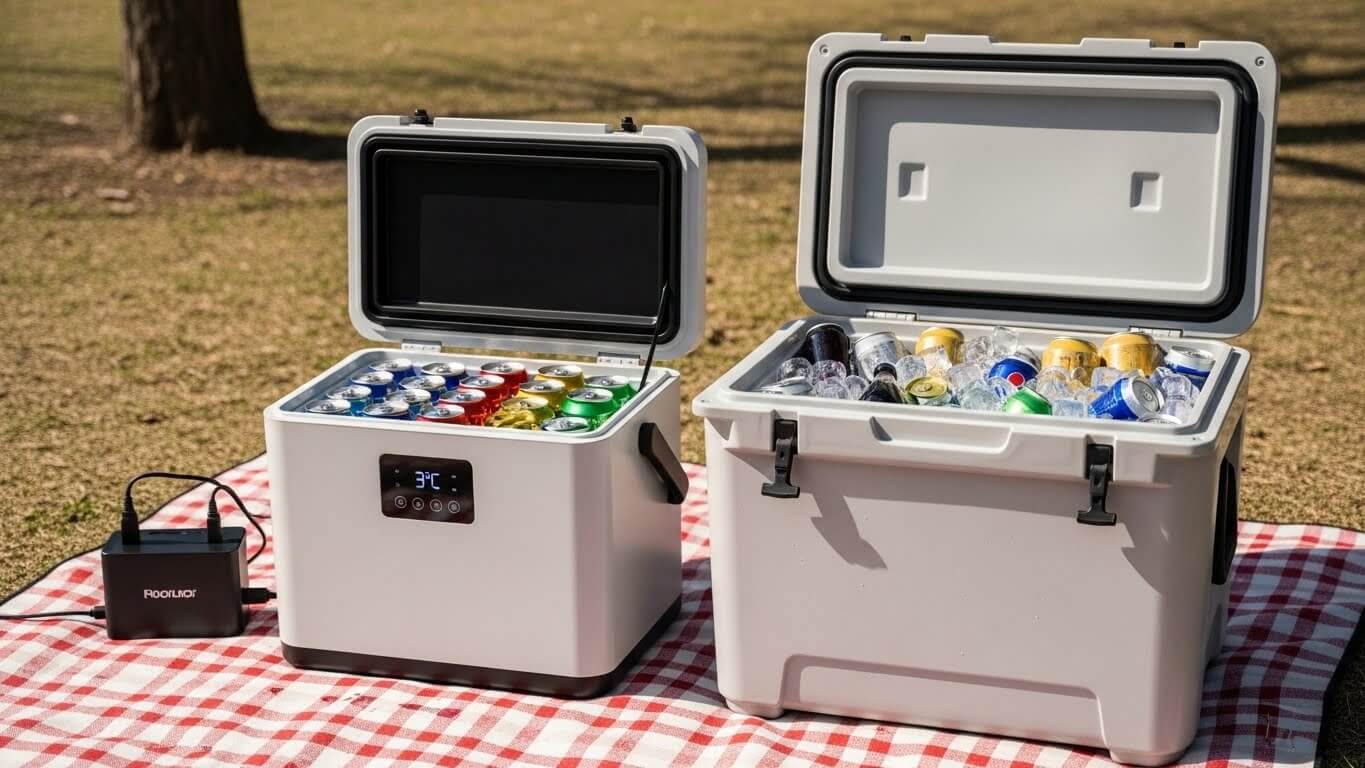
Best Compressor Electric Cooler: Dometic CFX3 45
The Dometic CFX3 45 represents the premium standard for portable refrigeration. The 46-liter capacity suits most road trips, and the compressor delivers true refrigerator performance down to -7°F. The WiFi connectivity allows temperature monitoring from your phone, and the app tracks power consumption.
At approximately $900, it’s expensive but delivers commercial-grade reliability. The low-voltage protection has three settings to match your comfort level with battery drain. Dometic’s reputation ensures parts availability and customer support. The investment makes sense for frequent road trippers who will use it for years.
Best Value Compressor Cooler: Alpicool C40
The Alpicool C40 provides legitimate compressor cooling at about $280. The 40-liter capacity handles weekend trips for couples or families. Performance matches much more expensive units, reaching freezing temperatures reliably. The build quality doesn’t match premium brands, but reviews suggest decent reliability.
The lower price makes compressor cooling accessible to budget-conscious buyers. It’s an excellent choice for testing whether you prefer electric cooling before committing to premium models. The savings could fund other road trip equipment.
Best Thermoelectric Cooler: Koolatron P75 Voyage
For buyers wanting electric cooling at ice chest prices, the Koolatron P75 Voyage delivers at around $200. The thermoelectric design cools 40°F below ambient, adequate for moderate climates. The 33-quart capacity suits weekend use.
Understand the limitations—this won’t maintain refrigerator temperatures in summer heat. But for spring and fall road trips or nighttime cooling, it performs admirably. The plug-and-play simplicity appeals to users intimidated by more complex compressor models.
Best Premium Ice Chest: Yeti Tundra 45
The Yeti Tundra 45 sets the standard for ice retention, maintaining ice for 5-7 days under proper conditions. The rotomolded construction withstands abuse, and the bear-resistant design doubles as security. The 37-quart capacity suits weekend trips without excessive bulk.
At $325, Yeti pricing reflects brand premium, but the performance justifies the cost for serious users. The lifetime warranty provides peace of mind. For road trippers preferring ice chests who want maximum performance, Yeti delivers.
Best Value Ice Chest: Coleman Xtreme
The Coleman Xtreme series provides surprising performance at budget pricing. The 50-quart model costs approximately $50 and maintains ice for 3-5 days with proper use. The build quality won’t match rotomolded coolers, but for occasional use, it’s entirely adequate.
This option suits casual road trippers who need functional cooling without premium investment. The money saved could fund several trips worth of ice before matching the cost of premium alternatives.
Best Hybrid Approach: Decent Ice Chest + Portable Power Station
Consider buying a mid-range ice chest ($100-$150) and a portable power station ($200-$300). Use the ice chest normally, but keep the power station available for emergency refrigeration, charging devices, and running small appliances. This combination provides cooling redundancy and useful power for other purposes. If ice runs out, you could even run a small electric cooler from the power station temporarily.
Frequently Asked Questions
Can I run an electric cooler when my car is parked overnight?
Most quality electric coolers include low-voltage cutoffs that disconnect when your battery drops to safe levels, typically 11.5-12V. This prevents complete battery drain while allowing several hours of cooling when parked. The exact runtime depends on your battery capacity and the cooler’s power consumption—expect 4-8 hours safely. For longer periods, use a portable power station or move contents to alternative cooling.
How much ice do I actually need for a weekend trip?
For a 50-quart cooler on a typical weekend (2-3 days), start with 15-20 pounds of ice. Pre-chill all items before loading, pack tightly to minimize air space, and keep the cooler in shade. This should maintain safe temperatures throughout the weekend. Hot weather or frequent opening requires more ice. A good rule is ice should occupy 30-40% of cooler volume for optimal performance.
Will an electric cooler drain my car battery while driving?
No. While driving, your alternator easily supplies the 5-7 amps an electric cooler draws. The alternator generates far more power than the cooler consumes. The battery drain concern applies only when the engine is off and the cooler runs from battery reserves alone.
Can I freeze things in an electric cooler?
Compressor electric coolers can freeze items, typically reaching -7°F to 0°F depending on model. Set the temperature to freezing and allow several hours for items to freeze solid. Thermoelectric coolers cannot freeze items since they only cool relative to ambient temperature. Check your specific model’s specifications for freezing capability.
How do I prevent ice chest meltwater from making a mess?
Use a drain plug with a hose attachment to direct water away when draining. Place the cooler on a slight angle so water accumulates near the drain. Some users install marine drain fittings for easier draining. Inside the cooler, consider placing food in waterproof containers or bags. Using block ice instead of cubed ice reduces the total water volume when melted.
Are electric coolers worth it for occasional road trips?
For occasional trips (2-4 times per year), ice chests generally provide better value. The upfront cost of quality electric coolers is difficult to justify without frequent use. However, if those trips are long duration (week+) or you value the convenience highly, the investment might still make sense. Calculate your annual ice costs and consider whether the electric cooler pays for itself in 3-5 years.
Can I use a regular cooler as a battery cooler with ice packs?
Yes, using frozen ice packs or gel packs in regular coolers works well and eliminates meltwater. Quality reusable ice packs maintain cold for 24-48 hours. This approach combines ice chest benefits (no power needed) with electric cooler advantages (no meltwater). The downside is limited cooling duration—ice packs don’t last as long as traditional ice. For weekend trips, it’s an excellent compromise.
What happens if my electric cooler breaks during a trip?
A failed electric cooler becomes an insulated box that maintains temperatures passively for a few hours. If you’re near civilization, buy ice and use it as a traditional cooler temporarily. The insulation still works even if the powered cooling doesn’t. This is why some road trippers carry backup ice packs—they provide emergency cooling if electronics fail. In remote areas, a cooler failure could mean losing perishable food, making reliability critical.
Conclusion
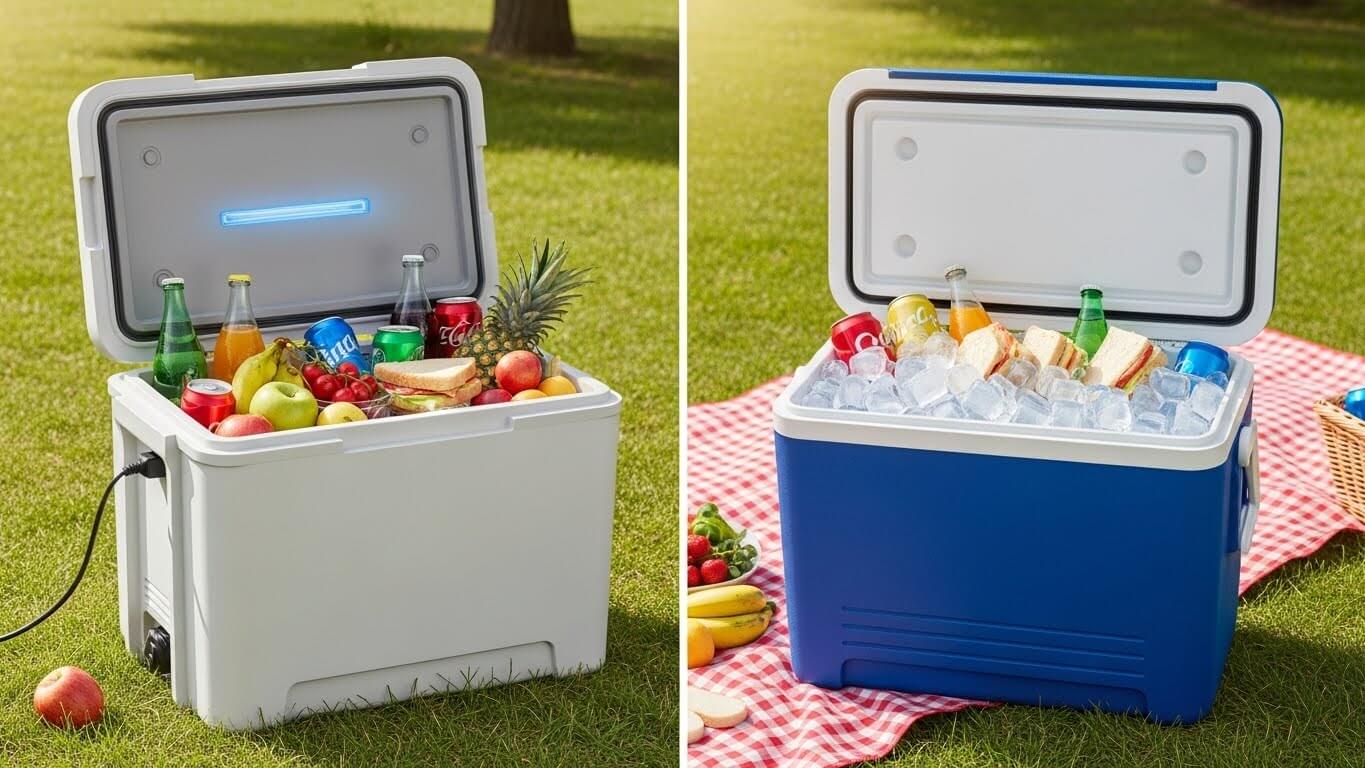
The choice between electric coolers and ice chests for road trips reflects a fundamental trade-off between convenience and simplicity. Electric coolers eliminate the ice hassle, provide consistent temperatures indefinitely, and keep contents dry and organized. They excel on frequent, long-distance trips where their convenience and reliability justify the significant upfront investment. The set-and-forget operation appeals to road trippers who value technology and appreciate the freedom from ice management.
Ice chests deliver proven, reliable cooling with no power requirements or electronic components to fail. They work anywhere, continue functioning during vehicle breakdowns, and cost substantially less upfront. For occasional road trippers, those on tight budgets, or travelers who value simplicity, ice chests remain the practical choice. The universal availability of ice and the straightforward operation ensure you’re never stranded without cooling options.
Many experienced road trippers eventually adopt hybrid strategies, using electric coolers for primary refrigeration while keeping a small ice chest as backup or for beverages. This redundancy provides cooling security while maximizing the benefits of both approaches. Others choose based on trip type—electric for long cross-country journeys, ice chests for weekend getaways.
Consider your typical road trip profile when deciding. If you road trip frequently (monthly or more), travel for extended periods (week+), or struggle to find ice in your usual destinations, electric coolers provide measurable value. If your trips are occasional (few times per year), relatively short (2-4 days), or follow routes with easy ice access, quality ice chests serve admirably at lower cost.
Budget matters significantly. If $400-$900 for a quality electric cooler strains your finances, start with a good ice chest and upgrade later if your needs justify the expense. Conversely, if the investment is trivial relative to your overall travel budget, the convenience of electric cooling may be worth the cost even for moderate use.
Ultimately, both technologies effectively keep food and drinks cold on road trips. Your choice determines whether you’re buying ice during trips or managing battery power and electrical connections. Neither is universally superior—the right answer depends on your priorities, budget, and travel patterns. Choose the cooling solution that aligns with how you actually road trip rather than chasing the theoretically perfect option.