
Heat pumps, air conditioners, and other cooling devices depend on refrigerants to function. They allow households and businesses to maintain appropriate indoor temperatures by transferring heat from one location to another. The type of refrigerant used in HVAC systems has changed throughout time due to regulatory changes and environmental concerns. R22 and R410A are two of the most talked-about refrigerants; they differ in terms of their chemical makeup, functionality, and effects on the environment.
In the past, R22, sometimes referred to as HCFC-22, was the common refrigerant used in air conditioners in homes and businesses. It became well-known for its efficient cooling capabilities, but because it depletes the ozone layer, its usage is now restricted by international rules. Although R22 is still used by many older systems, its availability is dwindling and replacement costs are increasing.
R410A is an HFC blend that was released as an alternative to R22 and does not destroy the ozone layer. In contemporary HVAC systems, it provides increased energy efficiency and operates at higher pressures. Since R410A is in line with international initiatives to cut harmful emissions, its adoption represents both technological innovation and environmental responsibility.
It is essential for homeowners, experts, and anybody else working on HVAC repair or replacement to comprehend the distinctions between R22 and R410A. System damage, decreased efficiency, and even safety risks might result from using the incorrect refrigerant. Additionally, consumers are better able to make educated judgments about switching to eco-friendly systems when they are aware of the environmental effects of each refrigerant.
The main distinctions between R22 and R410A will be explained in this guide, along with information on operating pressure, energy efficiency, environmental impact, system compatibility, chemical composition, and regulatory issues. By the end, readers will have a good knowledge of the significance of the switch from R22 to R410A and how it impacts modern cooling systems’ sustainability and performance.
What Is A R22 Refrigerant?
For many years, R22, sometimes referred to as HCFC-22, has been a common hydrochlorofluorocarbon refrigerant in heat pump and air conditioning systems in both homes and businesses. It became the go-to option for older HVAC equipment due to its dependable performance and efficient cooling capabilities.
Chemically, R22 is made up of carbon, fluorine, chlorine, and hydrogen. Despite its effectiveness in heat transfer, when released into the atmosphere, chlorine causes the ozone layer to thin. R22 manufacturing and use are subject to stringent controls as a result of this environmental risk. Many nations have limited the manufacture and import of R22 by phasing it out progressively under agreements like the Montreal Protocol. Because of this, R22 has become more costly and difficult to locate, particularly when it comes to maintaining older systems.
Although R22 runs at a lower pressure than more recent refrigerants like R410A, it is still compatible with older air conditioners and heat pumps. Because compressors and other components can be damaged by variations in pressure and chemical composition, systems built for R22 cannot simply transition to newer refrigerants without significant adjustments.
R22 systems are still used in many homes and companies even after they were phased out, so understanding them is crucial. Because R22 depletes the ozone layer, service technicians must handle it cautiously and adhere to environmental standards by following the right recovery and disposal procedures.
Knowing R22 enables HVAC specialists and homeowners to make well-informed choices regarding system replacements, repairs, and retrofits. Although R22 used to be the industry standard, more eco-friendly substitutes like R410A, which provide more efficiency and a less environmental impact, are gradually taking its place.
What Is A R410A Refrigerant?
A contemporary refrigerant called R410A was created to take the role of R22 in air conditioning systems used in homes and businesses. R410A is a hydrofluorocarbon (HFC) blend, mostly made up of R32 and R125, in contrast to R22. It is a more environmentally friendly option because it doesn’t include chlorine, which causes the ozone layer to thin.
R410A was first introduced in the early 2000s and swiftly established itself as the industry standard refrigerant for new heat pump and air conditioning systems. Its higher working pressure than R22 makes heat transfer more effective, which enhances cooling efficiency and energy efficiency in general. R410A is therefore perfect for contemporary HVAC systems that are made to adhere to more stringent energy regulations.
R410A’s higher pressure requirements and distinct chemical characteristics make it incompatible with older R22 systems. System failure, compressor damage, and safety hazards might arise from attempting to convert an R22 system to R410A. To guarantee correct operation, additional systems must be created especially for R410A.
R410A’s zero ozone depletion potential (ODP) complements international initiatives to phase out ozone-depleting chemicals. It still has the potential to cause global warming (GWP), hence recycling and appropriate treatment are still crucial to reducing the negative effects on the environment.
R410A offers homes increased efficiency, interoperability with contemporary systems, and adherence to environmental standards. When upgrading old R22 systems, HVAC specialists advise switching to R410A to guarantee long-term dependability, energy savings, and less environmental damage.
Customers and technicians can make well-informed decisions regarding system improvements, refrigerant selection, and prudent maintenance procedures by being aware of R410A and its benefits.
Key Differences Between R22 and R410A
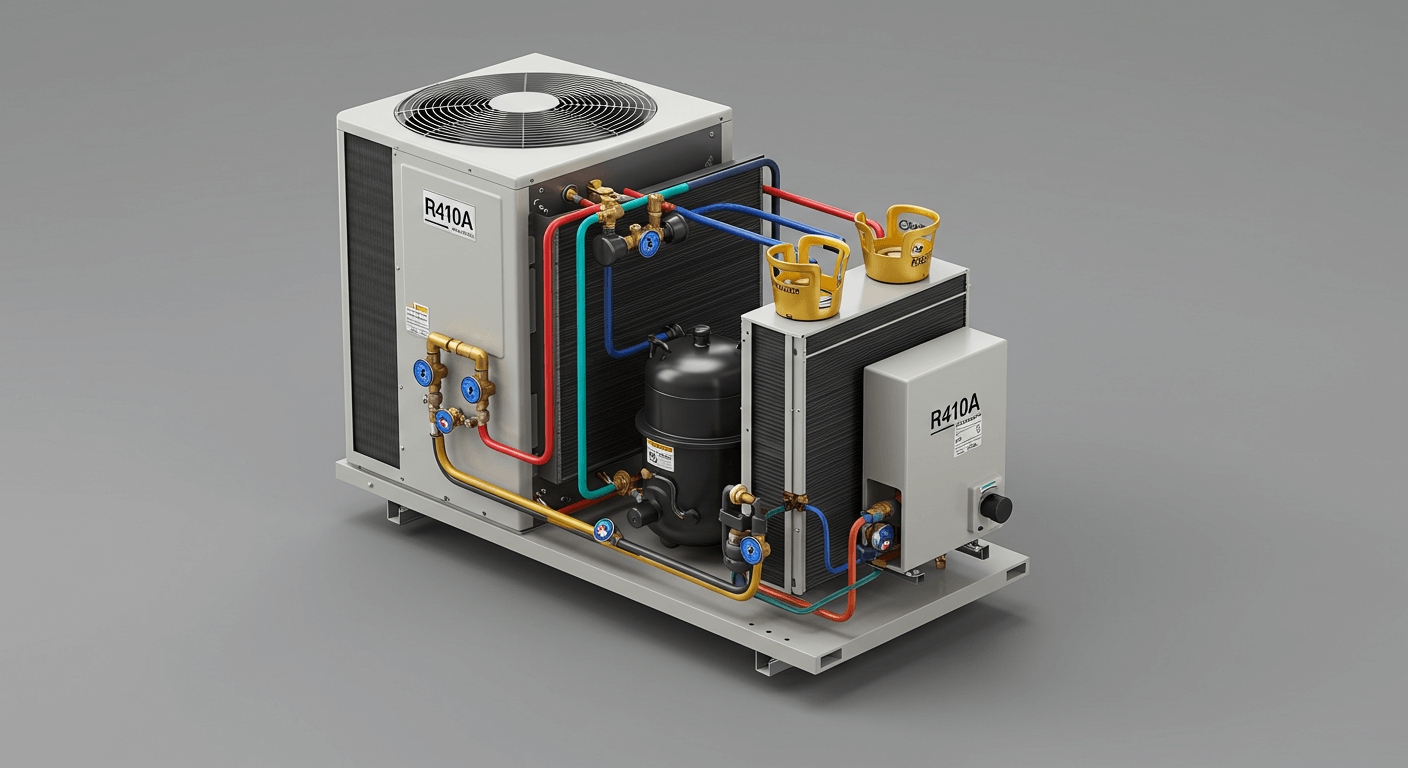
There are several important differences between R22 and R410A that impact safety, efficiency, system compatibility, and the environment. Homeowners, professionals, and anybody else working on HVAC replacement or maintenance must be aware of these distinctions.
- 1. Environmental Impact: R410A is chlorine-free and has no potential to deplete the ozone layer, whereas R22 includes chlorine and contributes to its depletion. R410A is the environmentally friendly substitute for R22, which is being phased out globally by agreements like the Montreal Protocol.
- 2. Operating Pressure: Compared to R22, R410A runs at a substantially higher pressure. Because of this distinction, R410A systems need to be built to withstand greater pressures, whereas R22 systems cannot be safely retrofitted without significant changes.
- 3. Energy Efficiency: Compared to R22 systems, R410A often performs better in cooling and uses less energy because of its higher working pressure, which makes it more effective at heat transfer. R22 is often less efficient by today’s energy standards, even though it works well in older systems.
- 4. System Compatibility: In terms of system compatibility, R22 and R410A are not equivalent. Due to differences in compressors, pipework, and lubricating systems, older R22 units cannot just convert to R410A. For R410A, new systems need to be created from the bottom up.
- 5. Safety Considerations: R410A needs specific training because of its higher pressure, but both refrigerants are generally safe when handled correctly. Technicians are required to adhere to appropriate handling protocols, which include recycling and recovery techniques.
- 6. Adherence to Regulations: Repairs are expensive because R22 usage is becoming more and more restricted, and availability is limited. R410A is readily accessible for new systems and complies with current environmental laws.
It is evident from analyzing these elements why R410A has supplanted R22 in contemporary HVAC systems. Safe handling, energy efficiency, and adherence to environmental regulations are guaranteed by proper comprehension.
Why the Transition Matters
More than just a technological improvement, the switch from R22 to R410A refrigerant is a reaction to energy efficiency requirements, environmental restrictions, and the need for HVAC systems that are future-proof. Homeowners and businesses may make better judgments regarding upkeep, repairs, and system replacements if they understand why this shift is important.
- Environmental Accountability: International rules are phasing out the manufacturing and use of R22 because it contributes to the depletion of the ozone layer. R410A is a more environmentally friendly choice for contemporary cooling systems because it doesn’t include chlorine, which reduces the risk of ozone depletion. Selecting R410A supports international initiatives to lessen environmental damage and HVAC systems’ ecological imprint.
- Regulatory Compliance: R22 imports and manufacture are currently restricted or prohibited in several nations. As availability declines, older R22-based systems may become more costly to maintain. Energy Efficiency and Performance: R410A systems are typically more energy-efficient than R22 units and function at greater pressures, ensuring compliance with present and future environmental laws while avoiding expensive legal or service issues. This results in a more dependable system, better cooling performance, and reduced electricity costs. Long-term savings and increased comfort are two advantages for homeowners that switch to R410A.
- Developing HVAC Systems for the Future: R410A is specifically developed for modern technology. It’s frequently hazardous or impractical to retrofit older R22 systems with R410A. By switching to R410A, you can be sure that your HVAC system will work reliably for many years to come, be compatible with modern technologies, and be maintainable with easily accessible refrigerants.
Switching from R22 to R410A is critical for system longevity, energy efficiency, regulatory compliance, and environmental preservation. When maintaining or replacing HVAC systems, homeowners and technicians can make safer, more economical, and ecologically friendly choices by being aware of these aspects.
Common Misconceptions
Even though R22 and R410A are frequently discussed, there are still a number of myths that might result in incorrect handling, needless expenses, or system damage. Dispelling these myths enables professionals and homeowners to make well-informed decisions regarding HVAC upgrades and upkeep.
- 1. You can use R22 and R410A interchangeably: Assuming that R410A may be used in place of R22 in an existing system is one of the most frequent errors. In addition to requiring different compressors, lubricants, and system components, the two refrigerants operate at different pressures. Compressor failure and safety risks may arise from retrofitting R410A into an R22 system.
- 2. R410A Is Always Safer: R410A functions at a higher pressure than R22 and necessitates specific handling and equipment, even if it doesn’t destroy the ozone layer. Equipment damage or leakage may result from improper installation or maintenance. Proper handling is just as important to safety as the type of refrigerant.
- 3. Older Systems Can Be Efficiently Upgraded: Many homeowners think that with a few small tweaks, an outdated R22 system may function just as well as a contemporary R410A system. Since older systems frequently lack R410A-optimised design characteristics, upgrading the system is typically the best course of action.
- 4. All Refrigerants Have the Same Environmental Impact: R410A has the potential to cause global warming (GWP) even while it stops ozone depletion. To reduce the impact on the environment, proper recovery, recycling, and disposal are still essential.
- Availability Means Low Cost: Although R410A is widely accessible, the limited supply of earlier R22 units makes servicing them more costly. This false belief frequently results in neglected maintenance or needless dependence on antiquated technologies.
Conclusion
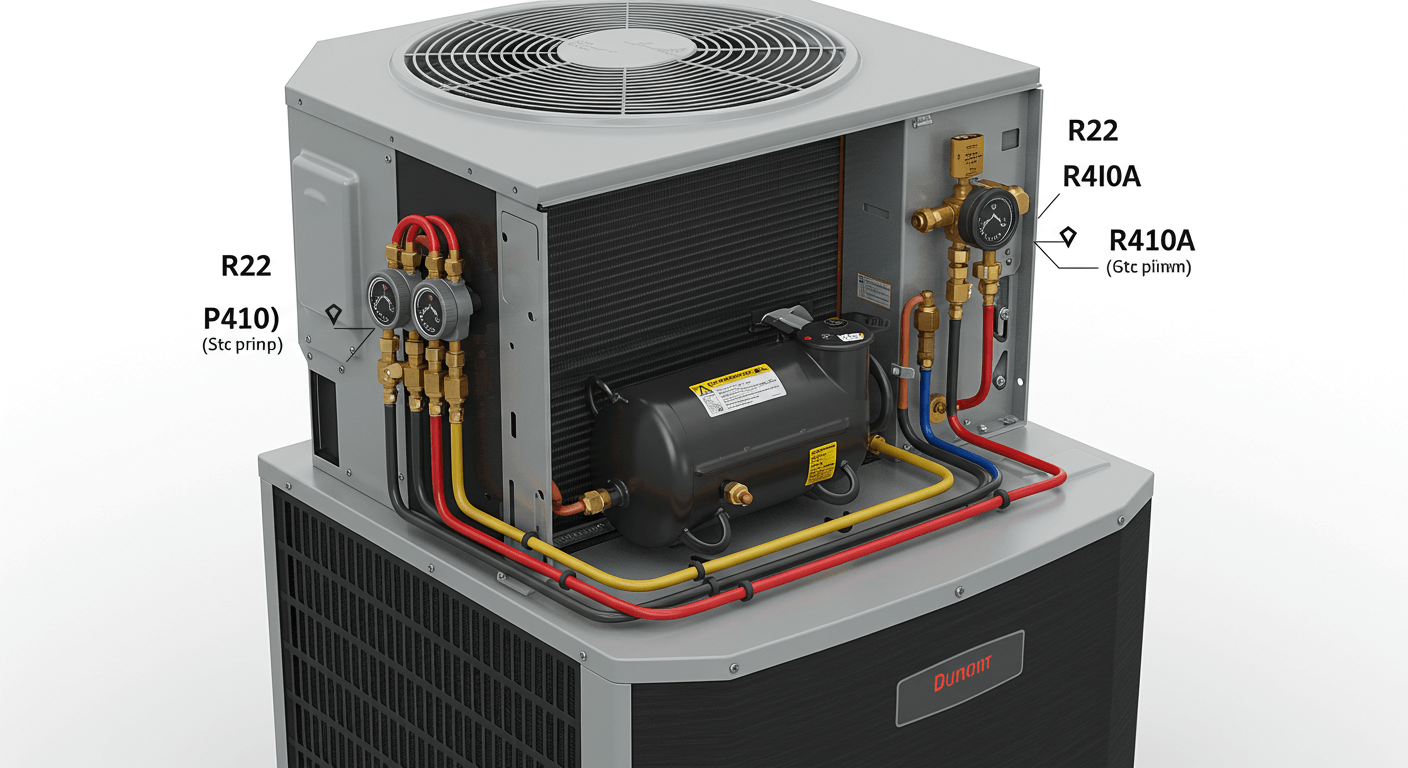
Homeowners, technicians, and anybody else working on HVAC repair or replacement must be aware of the distinctions between R22 and R410A refrigerants. Due to its ozone-depleting qualities, R22, which was originally the standard refrigerant, is being phased out. In contrast, R410A provides a safer, greener substitute with increased efficiency and greater working pressures.
Energy efficiency objectives, environmental requirements, and the requirement for contemporary system interoperability are the main drivers behind the switch from R22 to R410A. It is crucial to use the appropriate refrigerant for each system because trying to retrofit R410A into an R22 system might be risky and result in equipment failure.
Selecting R410A offers improved cooling performance, long-term dependability, and alignment with environmentally beneficial practices in addition to ensuring compliance with international standards. The safety and effectiveness of HVAC systems are maintained, and expensive errors can be avoided by being aware of common misconceptions, appropriate handling techniques, and system needs.
Homeowners and professionals can make well-informed decisions regarding system replacements, maintenance, and upgrades by being aware of these important distinctions. The transition from R22 to R410A is a crucial step toward contemporary, effective, and sustainable cooling solutions since proper refrigerant selection guarantees peak performance, regulatory compliance, and environmental responsibility.