
The difference between a cozy, energy-efficient home and one that remains hot and muggy can be determined by the size of the swamp cooler. A lot of homeowners purchase evaporative coolers without understanding that size is equally as crucial as model. A swamp cooler that is too big could waste energy and provide an uncomfortable humidity level, while one that is too tiny will have trouble cooling the area. Achieving the ideal balance guarantees that the system functions effectively and provides the cooling respite you anticipate on sweltering summer days.
Evaporative coolers, sometimes referred to as swamp coolers, operate in a different way than conventional air conditioners. They use water evaporation, a natural mechanism, to reduce temperatures rather than refrigerants. Because of this, appropriate sizing takes into account airflow, which is measured in cubic feet per minute (CFM), in addition to square footage. To have the best performance, you must know how to match the CFM rating of a cooler with the size of your room or house.
“What size swamp cooler do I need?” is a question that many people have. A number of variables, such as the environment in which you live, the design of your house, and the amount of ventilation that is available, will affect the answer. Evaporative coolers work best in arid climates because they add humidity to the air, which can both lower indoor temperatures and improve comfort. By choosing the appropriate size, you can make sure that your cooler can continuously circulate cool, fresh air through your room while allowing warm air to escape.
Everything you need to know about swamp cooler sizing will be covered in this tutorial. From figuring out room size to comprehending CFM ratings, you’ll find helpful tips to steer clear of typical errors made by homeowners. By the end, you’ll understand precisely how to size your swamp cooler for optimal comfort, energy efficiency, and long-lasting functionality.
How Swamp Cooler Sizing Works (CFM Explained)
CFM, or cubic feet per minute, is the most crucial figure to comprehend when it comes to swamp cooler sizing. The cooler’s capacity to transfer air per minute is indicated by this measurement. Larger rooms are better suited for swamp coolers with higher CFM ratings because they can force more air through your house.
Evaporative coolers employ airflow as the primary performance indicator, as opposed to conventional air conditioners that use BTUs (British Thermal Units) for sizing. A swamp cooler that is the right size should change the air in the space or house it is cooling once every minute. In other words, once every 60 seconds, the cooler should be able to replace all of the air inside with newly chilled air.
CFM can be calculated using the following simple formula:
Required CFM is equal to room square footage × ceiling height ÷ 2.
The computation might be as follows, for instance, if your living room is 500 square feet and has an 8-foot ceiling:
2,000 CFM is 500 × 8 ÷ 2.
To adequately chill that area, you will therefore require a swamp cooler with a CFM rating of at least 2,000.
Square footage isn’t the sole consideration, though. Since heated interior air must depart as cool air enters, swamp coolers function best when there is adequate ventilation. You might need a somewhat larger unit to make up for any blocked windows or restricted airflow in your house. Climate also matters; hot, dry climates need greater cooling power, whilst mildly heated regions could get by with a smaller unit.
Additionally, it’s critical to keep in mind that oversizing isn’t always preferable. If a swamp cooler is too big for your house, it might overhumidify the air, making it uncomfortable and clammy. A unit that is too tiny, on the other hand, will not be able to handle the heat and will continuously operate at maximum capacity. Achieving the ideal balance guarantees optimal comfort and efficiency.
Selecting the appropriate swamp cooler size will be easier if you know how CFM relates to the size of your house. Your cooler will provide balanced humidity, consistent airflow, and the cool comfort that swamp coolers are known for if it fits properly.
Step-by-Step Guide to Calculating the Right Swamp Cooler Size
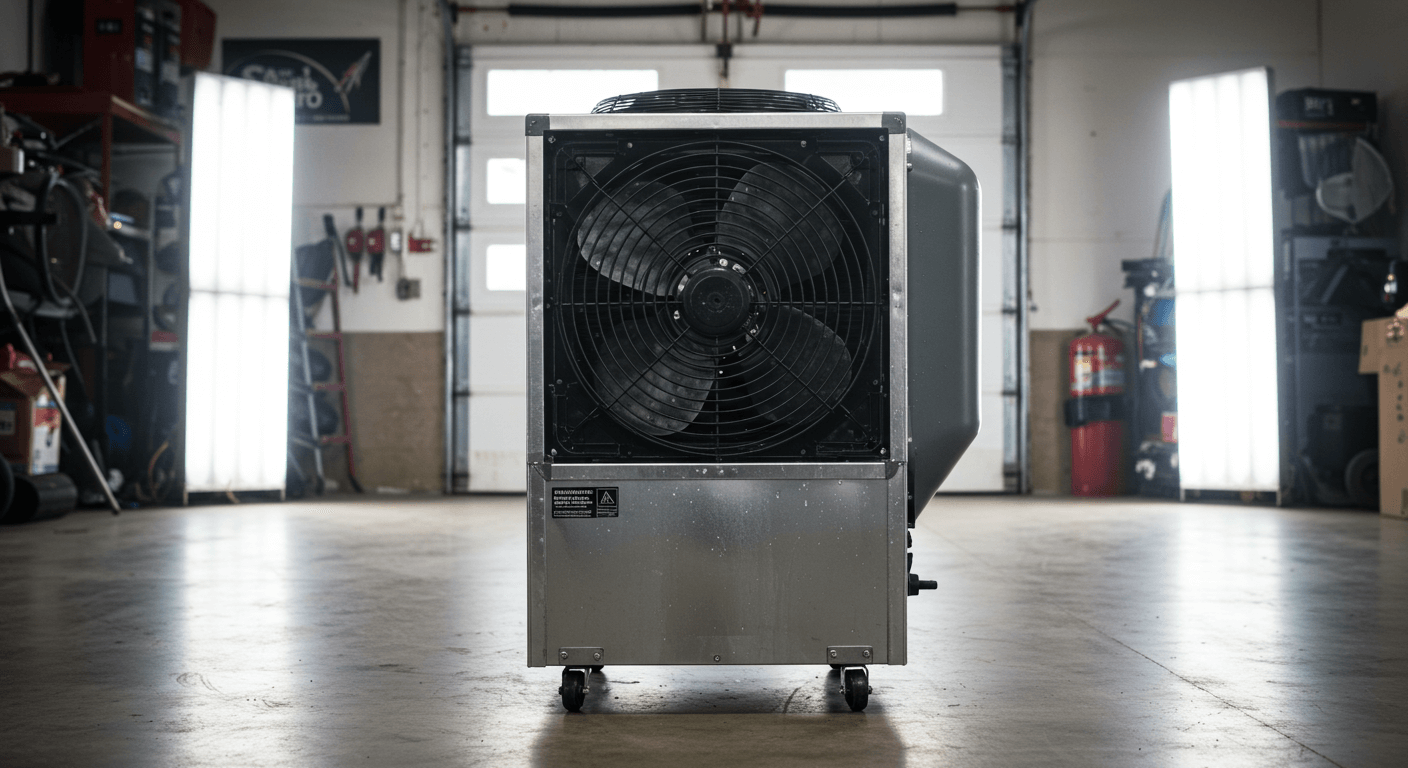
Knowing the size of your area and the amount of airflow you require is the first step in choosing the best swamp cooler. Choosing a unit that cools well and doesn’t waste energy is ensured by following a defined, step-by-step procedure.
Step 1: Measure Your Space
To start, figure out how big the space you wish to chill is. Each room’s length and width should be multiplied, and if you have more than one room, the entire square footage should be added up. Remember to account for ceiling height because higher spaces need more ventilation.
Step 2: Calculate the Required Airflow (CFM)
You can determine how many cubic feet per minute (CFM) your swamp cooler needs once you know how big your area is. Apply the standard formula:
CFM = (square footage of the room × height of the ceiling) ÷ 2
For instance, 600 × 8 ÷ 2 = 2,400 CFM would be needed for a living room that is 600 square feet and has an 8-foot ceiling.
To properly cool the area, the cooler must flow at least 2,400 cubic feet of air per minute.
Step 3: Take ventilation into account
Make sure there is enough ventilation because swamp coolers depend on airflow. Warm air can escape through open windows or vents, allowing the cooler’s airflow to function correctly. To make up for poor ventilation, think about going a size up.
Step 4: Take Usage and Climate into Account
You could require a unit with a higher CFM than the formula recommends since hot, dry areas require more cooling power. On the other hand, a smaller unit might be adequate in milder climates. To prevent overusing the cooler, think about how frequently and when you’ll use it.
Step 5: Double-Check Your Choice
Make sure the CFM matches or slightly surpasses your calculation by looking over the manufacturer’s specifications before making a purchase. Steer clear of undersizing, which won’t keep your room cool, and oversizing, which might result in excessive humidity.
You may choose a swamp cooler that suits your space, temperature, and lifestyle with confidence if you follow these guidelines. Appropriate size increases comfort, boosts energy efficiency, and prolongs the unit’s lifespan, providing you with dependable cooling all summer long.
Factors That Affect Swamp Cooler Sizing
It takes more than simply square footage and CFM to select the best swamp cooler. How well your unit cools an area depends on a number of other things. By taking these factors into account, you may avoid oversizing or undersizing your system and guarantee maximum performance.
- Humidity and Climate: In hot, dry regions, swamp coolers perform best. Since evaporative cooling relies on the air’s capacity to absorb moisture, the cooling effect is less pronounced in high-humidity environments. To reach the ideal temperature, homes in humid areas could need an additional cooling system or a somewhat larger unit.
- Ceiling Height: More airflow is needed at higher ceilings. Rooms with vaulted or particularly tall ceilings require more CFM to flow enough cooled air and ensure comfort throughout the space, even though a normal calculation utilizes an 8-foot ceiling.
- Ventilation: For swamp coolers, enough ventilation is essential. Continuous airflow is made possible by warm air escaping through open windows or vents. A higher CFM rating may be required if ventilation is restricted because the cooler may find it difficult to maintain the temperature.
- Exposure to the Sun: Large windows or a lot of direct sunshine cause rooms to heat up more quickly, which raises the need for cooling. To account for the additional heat load in sun-exposed places, you might need to use a unit that is a little higher than the conventional CFM calculation.
- The quantity of occupants: A room becomes warmer and more humid when people are around. Selecting a swamp cooler with a slightly larger capacity guarantees constant cooling and comfort in areas that are regularly used by several persons.
- Room Configuration and Barriers: Airflow can be restricted by closed-off spaces, furniture placement, and partitions. Even cooling in areas with obstructions that can prevent air circulation is maintained with the use of a greater CFM unit or a cooler that is positioned correctly.
- Indoor Activities: The cooling load may be impacted by heat-generating activities like cooking, working out, or using electronics. Underperformance can be avoided by modifying the size of your swamp cooler to take these aspects into consideration.
You can choose a swamp cooler that provides efficient cooling for your particular area by taking these aspects into consideration in addition to traditional sizing calculations. Throughout the hot season, energy efficiency, comfort, and long-lasting performance are ensured by taking temperature, ventilation, and space factors into account.
Common Mistakes to Avoid When Choosing a Swamp Cooler
Price and brand are not the only factors to consider when choosing a swamp cooler. Many homes make preventable errors that reduce comfort and cooling effectiveness. By being aware of these traps, you can guarantee your unit operates at its best and save money.
1. Choosing the Wrong Size
Choosing a unit that is either too big or too little for your space is one of the most frequent mistakes. An undersized cooler runs continuously without doing anything to chill the room since it has trouble lowering the temperature. Oversized coolers have the potential to cause discomfort and moisture problems by over-humidifying the air. To prevent this issue, precise square footage measurements and appropriate CFM computation are crucial.
2. Ignoring Ventilation Needs
For swamp coolers to function well, there must be adequate ventilation. Open windows and vents are essential for letting warm air escape, but some homeowners install units without taking these factors into account. Inadequate ventilation can make the room feel stuffy and lower cooling efficiency.
3. Neglecting Climate Factors
Evaporative cooling does not work well in all environments. No matter how big, a swamp cooler will not work as well in humid climates. Disappointment and wasted efforts can result from failing to take local weather conditions into consideration.
4. Ignoring Upkeep
Regular maintenance, like cleaning coils, pads, and filters, is sometimes neglected. A cooler that is unclean or congested will not function well and may malfunction sooner. For long-term dependability and efficiency, routine maintenance is essential.
5. Focusing Only on Price
Purchasing the cheapest unit can backfire, even though budgeting is crucial. Cheap swamp coolers frequently feature lower CFM, subpar construction, and shorter lifespans. In the long run, it makes more sense to invest in a high-quality unit that is the right size for your room.
6. Overlooking Noise Levels and Placement
Comfort may suffer if the unit is positioned incorrectly or if noise levels are disregarded. If the unit will be utilized in bedrooms or living areas, take into account its sound production and avoid obstructing airflow with furniture. You can make sure your swamp cooler runs smoothly, consistently cools, and lasts for many years by avoiding these typical errors. To maximize comfort and energy savings, proper sizing, location, and upkeep are essential.
Conclusion
Achieving efficient, energy-saving cooling requires selecting the appropriate swamp cooler size. An appropriately sized unit guarantees that your area remains cozy without taxing the system excessively or squandering electricity and water. You may choose a cooler that is tailored to your home’s needs with confidence if you are aware of important variables like CFM, room dimensions, ventilation, and climate.
Your swamp cooler will operate more effectively and last longer if you steer clear of frequent blunders like oversizing, disregarding ventilation, or skipping maintenance. Proper installation and airflow control are essential for reliable cooling performance, regardless of whether you choose a whole-house system or a portable unit.
The cooler runs at its best with routine maintenance, which includes cleaning pads and filters, keeping an eye on water levels, and doing periodic inspections. By combining these techniques with professional advice, such as changing fan settings and installing reflective window coverings, comfort is increased while energy expenses are decreased.
In the end, investing the time necessary to properly size and maintain your swamp cooler will result in dependable, cool comfort throughout the sweltering summer months. Without needless investment or aggravation, you can enjoy cooler, more comfortable indoor environments with the correct unit and management.