
On any outdoor excursion, selecting the appropriate cooler can have a significant impact. Maintaining cold food and beverages is crucial for any tailgating event, weekend camping trip, or day at the lake. The RTIC 45 and the Yeti Tundra 45 are two of the most well-liked models in the 45-quart cooler market. Although both are renowned for their sturdy design, remarkable ice retention, and dependable operation, minor variations may affect which one is more appropriate for your requirements.
The RTIC 45 cooler is made to offer superior performance at a lower cost. RTIC uses freezer-grade gaskets, a sturdy polyethene shell, and dense insulation to keep ice frozen for days. It is a good option for campers, fishermen, and outdoor lovers who require a dependable cooler without going over budget because of its sturdy construction and simple design.
Part of Yeti’s well-known Tundra series, the Yeti Tundra 45 is constructed using rotomolded materials, ColdLock™ gaskets, and sturdy hardware such as T-Rex™ locks and NeverFail™ hinges. Yeti coolers are renowned for their outstanding durability, superior quality, and long-lasting ice retention. Although the Tundra 45 is usually pricier than RTIC, it is made for people who value superior performance, dependability, and a reputable brand.
We’ll compare these two 45-quart coolers side by side in this guide, paying particular attention to design, portability, capacity, ice retention, and cost. You may determine which cooler best suits your lifestyle by looking at these important considerations. This RTIC 45 vs. Yeti Tundra 45 comparison will assist you in making an informed choice, regardless of whether you’re planning a lengthy fishing trip, a camping weekend, or just need a cooler that can hold ice for days.
Design Quality and Construction
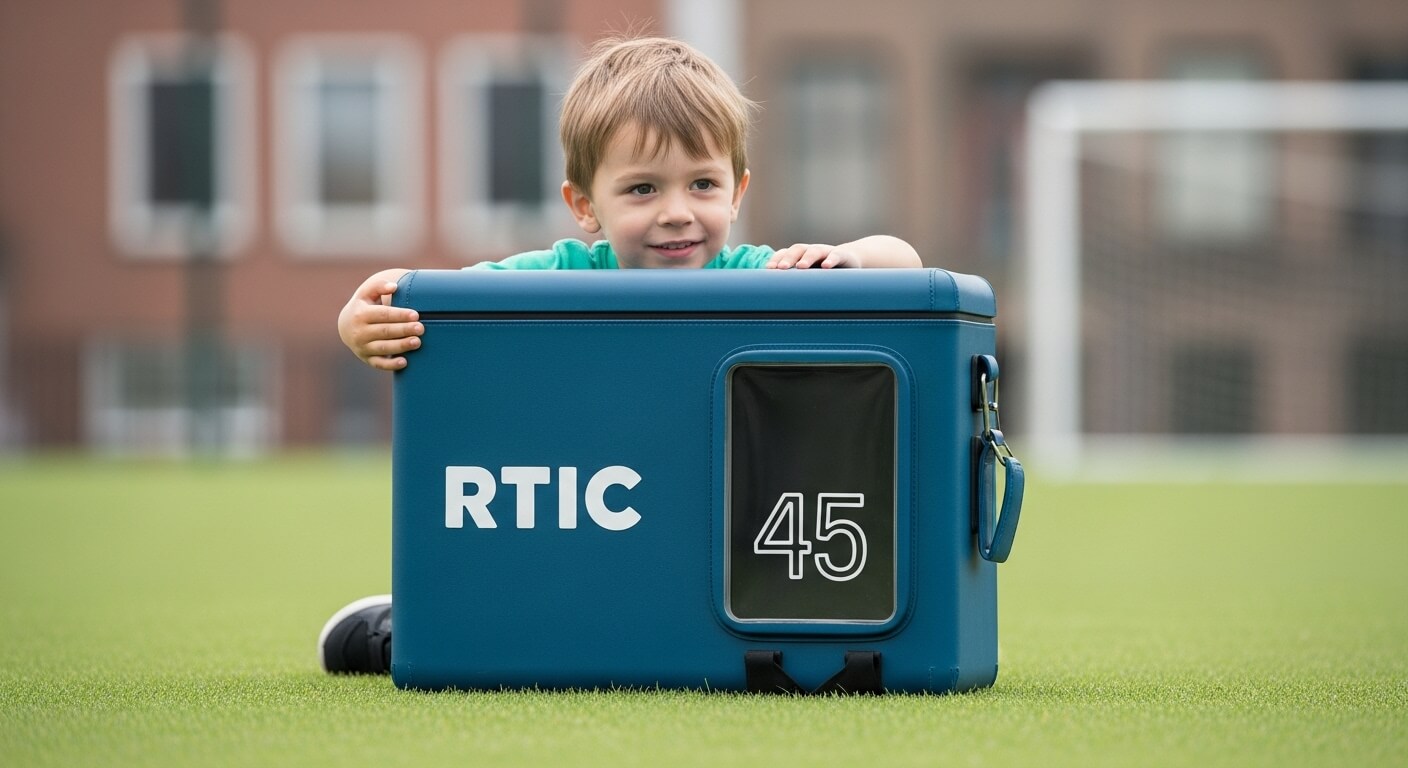
Though their construction specifics and design philosophies cater to slightly different consumers, the RTIC 45 QT and the Yeti Tundra 45 QT both offer luxury design and durability.
RTIC 45 QT
The RTIC 45 has a robust, hard-sided casing composed of substantial insulation and impact-resistant polyethene. The external measurements are approximately 26.35 × 18.19″ × 15.75″, according RTIC. The approximate inside measurements are 18.90 × 11.42 × 10.98. According to reviews, depending on setup, it can hold up to 60 cans and 40–41 pounds of ice. The cooler has big hinge points, a useful top, and rope-style handles or hefty molded grips. Its design prioritises affordability without sacrificing durability, providing several high-end features at a lower cost.
Yeti Tundra 45 QT
The rotomolded one-piece structure of the Yeti Tundra 45 is frequently referred to as “virtually indestructible.” According to Yeti, the outside measures 25.6 × 15.9 × 15.5 ″, while its interior measures 18.3 × 9.4 × 10.7″. The InterLock™ lid system, T-REX™ latches, heavy-duty rope handles, and the ColdLock™ freezer-grade gasket are important hardware elements. With a high-end finish and construction that befits its higher price tag, the design is made for serious outdoor use.
With its rotomolded body, sophisticated gasket/latch system, and elegant construction, the Yeti Tundra 45 is the best option if you value maximum longevity and high-end hardware. The RTIC 45 offers superb build quality with somewhat simpler gear if you’re looking for robust durability at a more affordable price. Although both are well-built, your decision will rely on whether you prefer the best value for your money or the highest quality of construction.
Ice Performance & Retention
The length of time each cooler keeps ice frozen is one of the most crucial performance indicators when contrasting the RTIC 45 and YETI Tundra 45. That’s what distinguishes serious outdoor equipment from ordinary coolers.
RTIC 45 QT
With up to 2.8 inches of closed-cell foam and a freezer-style gasket to keep the cold out, the RTIC 45 effectively promotes a thick foam-core insulation system. It “will hold ice for up to 5 days when following RTIC’s cooling tips,” the official product page states. Several users reported 4–5 days of solid ice in summer temperatures between 80°F and 90°F during practical tests. This indicates that the RTIC 45 offers good cooling for the cost on the majority of weekend excursions.
YETI Tundra 45 QT
For longer ice retention, YETI’s product combines rotomolded structure with the ColdLockTM gasket system and up to 3 inches of PermaFrostTM insulation. The Tundra 45 held ice under controlled settings for ten full days in one independent test. In a different review, interior temperatures were recorded at 50°F for more than 108 hours during hot weather. This implies that, when fully loaded and operated in optimal circumstances, the Tundra 45 excels in ice endurance.
The RTIC 45 is a great bargain cooler with good 4–5 day performance if you require one for travels lasting two to three days. When properly filled and maintained, the YETI Tundra 45 can hold ice for longer, making it an excellent choice for multi-day use, minimal ice top-ups, or rough trips.
Both work best when you follow appropriate packing guidelines, which include keeping the cooler in the shade, minimizing lid openings, using a high ice-to-contents ratio (e.g., 2:1 ice to food/drinks), and pre-chilling the cooler.
Cost and Economic Value
Price isn’t only about the brand when evaluating high-end hard coolers; it’s also about how much you get for your money over the long run. Durability, performance, and build quality are all important considerations.
RTIC 45 QT
On its own website, the RTIC 45 QT normally lists for about $239 USD. Deals for special editions or the wheeled version increase the price closer to $269–299 USD. That price is a great deal for a cooler with this capacity, robust insulation, and long-lasting design.
Yeti Tundra 45 QT
On the Yeti website, the Yeti Tundra 45 QT is priced at $325 USD. Color or limited editions can occasionally be found for a little bit extra (e.g., $350 USD). Although the price is more, you also receive the features, excellent build, and prestige of the Yeti brand.
The RTIC 45 is a great value if you’re looking for a long-lasting cooler that performs well at the lowest possible price. At a reduced cost, you’re receiving a lot of what high-end models provide. The Yeti Tundra 45 is worth the extra money if you desire a premium brand, a few superior hardware features, and possibly a greater resale value.
- In summary, if you want good performance, low cost, and good value for your money, go with RTIC 45.
- If you are ready to pay more for a high-end finish and a reputable brand, go with the Yeti Tundra 45.
Pros And Cons
Although both the Yeti Tundra 45 QT and the RTIC 45 QT are high-end coolers with robust performance, each has particular benefits and drawbacks based on your objectives.
Pros of the RTIC 45 QT:
- Reasonably priced: Offers premium cooler features at a lower price than Yeti.
- Solid Ice Retention: Ice is kept for four to five days by a freezer-grade gasket and thick insulation.
- Sturdy Construction: A sturdy hinge system and a heavy-duty polyethene shell guard against damage.
- Large Capacity: Depending on setup and ice, it can carry about 60 cans.
Cons of the RTIC 45 QT:
- Lack of Built-in Wheels: Long-distance transportation is difficult due to the lack of built-in wheels.
- Basic Hardware: Although handles and latches work, they don’t feel as high-end as Yeti.
Pros of the Yeti Tundra 45 QT:
- Outstanding Durability: The rotomolded structure is resilient to heavy use.
- Superior Ice Retention: PermaFrost™ insulation and ColdLock™ gaskets may keep ice for up to ten days.
- Premium Hardware: Improved usability is provided by T-Rex™ latches, InterLock™ lids, and NeverFail™ hinges.
- Small Footprint: Simpler to install in storage spaces, boats, and automobiles.
Cons of the Yeti Tundra 45 QT
- Costlier: The price of premium features is higher.
- Manual lifting is necessary: It lacks built-in wheels, which might be difficult to use when loaded.
- Slightly Less Internal Volume: When compared to RTIC, rotomolded walls take up some useful area.
Conclusion
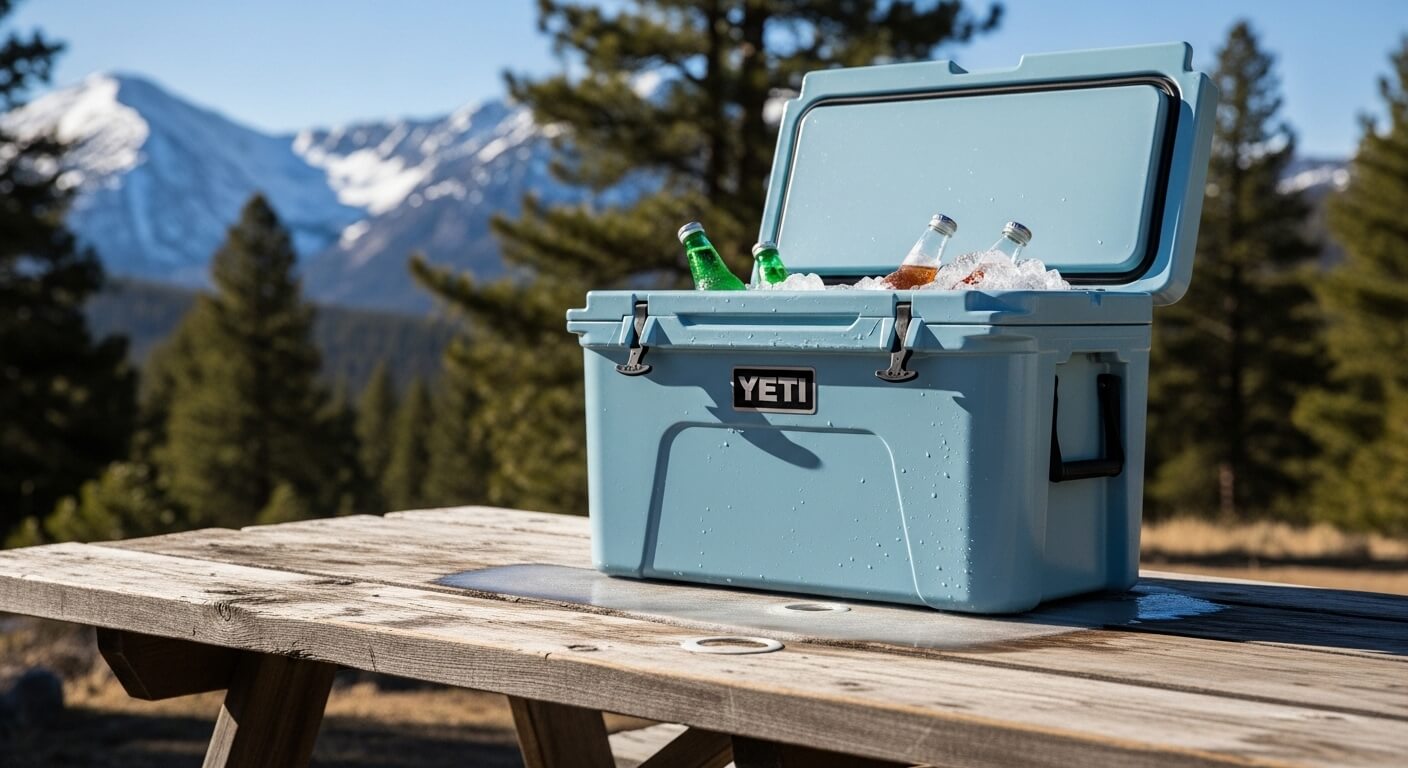
What you value most in a cooler will ultimately determine whether you choose the Yeti Tundra 45 QT or the RTIC 45 QT. Durability, ice retention, and usefulness for camping, fishing, tailgating, or lengthy road journeys are features of both models, which are designed to function well in harsh outdoor conditions.
The RTIC 45 is unique in that it offers superior cooler features at a more affordable cost. It can keep ice frozen for four to five days because of its freezer-grade gasket and strong insulation, which makes it appropriate for most weekend getaways and quick outings.
Long-lasting durability is guaranteed by its sturdy hinge system and heavy-duty polyethene shell, and its slightly bigger internal space allows it to accommodate more cans or bottles than some of its rivals. The RTIC 45 is a great option for people looking for high performance without spending a lot of money, but the primary drawbacks are the lack of built-in wheels and somewhat less sophisticated technology.
In contrast, the Yeti Tundra 45 has a solid reputation as a brand and provides excellent performance. Under ideal circumstances, its rotomolded design, ColdLock™ gasket, and PermaFrost™ insulation allow for ice retention of up to 10 days. High-quality hardware, such as NeverFail™ hinges and T-Rex™ locks, improves lifetime and use. Despite being more expensive, the Tundra’s small size makes it simpler to fit into cars or boats.
In conclusion, if value and reliable performance are important to you, go with the RTIC 45. If you want optimum ice retention, high-end construction, and brand dependability, go with the Yeti Tundra 45. Your ultimate decision should take into account your spending limit, the length of your vacation, and your particular outdoor requirements because both coolers work incredibly well.