
The plug-in car cooler and the conventional ice cooler are two well-liked choices for keeping food and beverages cold while traveling. They both accomplish the same goal, but they do so in very different ways. The length of the trip, convenience, and individual preferences all play a role in the decision. You can choose the greatest cooling option for your daily commutes, road vacations, and camping excursions by being aware of their peculiarities.
A plug-in car chiller functions similarly to a small refrigerator. It uses a portable power source or the 12-volt socket in your car to actively cool or even chill things without using ice. While more expensive models use compressor technology for more potent, refrigerator-like performance, some models use thermoelectric cooling, which effectively maintains chilly temperatures. For extended journeys, RV excursions, or overlanding where constant cooling is required, plug-in coolers are ideal.
Conversely, a conventional ice cooler uses ice and insulation to keep the temperature down. It can be carried anywhere, including beaches, picnics, campgrounds, and tailgating activities, and it doesn’t require electricity. Ice may be kept frozen for several days in contemporary coolers with sophisticated insulation, providing dependable cold storage without the need for cords or outlets.
The argument between ice coolers and plug-in car coolers frequently boils down to priorities. Convenience and reliable temperature control are provided by plug-in types, but they are more expensive and require power. Although they rely on ice and require regular refills, ice coolers are reasonably priced, robust, and adaptable.
In order to assist you in selecting the choice that best suits your travel preferences, this comparison will examine the main distinctions, benefits, and drawbacks of both types. Knowing these cooling techniques can help you keep your beverages precisely chilled wherever your trip takes you, whether you’re traveling by car or camping in the outdoors.
Important Distinctions Between Ice and Plug-in Coolers
Although both plug-in and conventional ice coolers are made to keep your food and beverages cold, they differ greatly in terms of technology, usability, and convenience. Knowing these important distinctions makes it easier to choose the choice that best suits your travel requirements.
- Method of Cooling: A plug-in vehicle chiller can be powered by a portable battery bank, a wall outlet, or the 12V socket in your car. Like a tiny refrigerator, it uses compressor or thermoelectric devices to actively cool its contents. This implies that without ice, it may sustain steady temperatures for hours. A conventional ice cooler, on the other hand, uses insulation and ice or ice packs to absorb heat and maintain cold contents. The quality of the insulation and how frequently it is opened affect cooling efficiency.
- Power Source: Since plug-in coolers need a consistent power source, they are best suited for electric cars, RVs, or campgrounds. But once unplugged, they cease to cool. Conventional coolers are dependable anywhere, from isolated campsites to beaches or tailgate parties, because they don’t require electricity.
- Upkeep and Practicality: With plug-in coolers, you can keep your food dry and ready to eat without having to buy or refill ice. In contrast, ice coolers need to be occasionally drained of melted water and refilled with ice. But they are easy to use and can be used anyplace.
- Portability and Cost: Because of their own cooling systems, plug-in automobile coolers are more costly and frequently heavier. Conventional coolers are more affordable, lighter, and portable.
In summary, conventional ice coolers offer simplicity, portability, and independence from power sources, while plug-in coolers offer modern convenience and reliable cooling. Each serves a different purpose depending on your expedition.
Pros and Cons of Plug-in Car Coolers
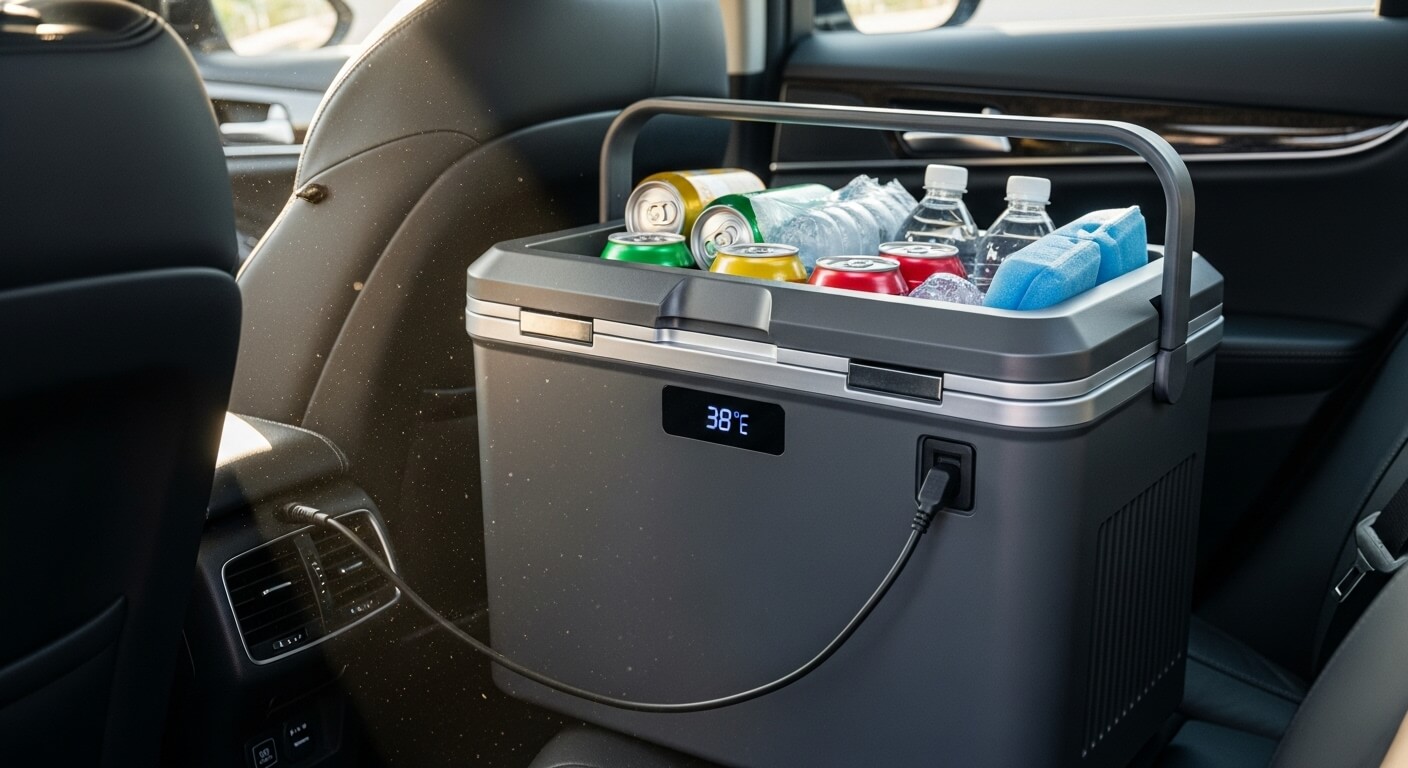
You don’t need ice to keep your food and beverages cold for long thanks to a plug-in car cooler. It works similarly to a little refrigerator and offers reliable temperature control for lengthy travels. It can be powered by a portable battery, a wall outlet, or a 12V outlet in a car.
Pros of Plug-in Car Coolers
- Constant Cooling: In contrast to conventional ice coolers, plug-in models keep a constant temperature, guaranteeing that your drinks stay cold and perishable food stays fresh all the way. This is particularly helpful for lengthy drives or multi-day excursions.
- No Need for Ice: Ice keeps your belongings dry and keeps water from melting, so there’s no need to buy or replenish it.
- Versatility: A wide range of foods and beverages can be cooled and warmed by several plug-in coolers. Cutting-edge compressor versions can challenge mini-fridges by reaching lower temperatures.
- Perfect for Automobiles: Plug-in coolers are handy for lengthy commutes, road trips, and RV travel because they are small and frequently made to suit automobile cup holders or trunks.
Cons of Plug-in Car Coolers
- Reliance on Power: Plug-in coolers have limited use since they need a constant power source. Cooling stops when the car is off if there is no electricity.
- Increased Cost: Because of their electronic cooling mechanism, these coolers are typically more costly than conventional ice coolers.
- Weight and Bulk: Compared to portable ice coolers, certain plug-in models are heavier and bulkier, which makes them less practical for short excursions.
Traditional Ice Cooler: Pros And Cons
The basic way to keep food and beverages cold is with a traditional ice cooler. It doesn’t require energy and can be used practically anywhere with insulated walls and ice or ice packs. These coolers are essential for tailgating, camping, picnics, and beach excursions since they are dependable, reasonably priced, and adaptable.
Pros Of Traditional Ice Cooler
No Need for Power: Ice coolers may be used anywhere—in the car, at a camping, or on a remote beach—because they run just on insulation and ice. Outlets and electricity are not necessary.
- Affordable and Widely Available: Conventional ice coolers are more affordable than plug-in car coolers, and they come in a variety of sizes, from little personal units to enormous family-sized models.
- Lightweight and portable: With integrated handles, shoulder straps, or even wheels, several models are made to be easily transported. There is no need to worry about power cords or battery life when carrying or storing them.
- Simple and Sturdy: Ice coolers are designed to endure outdoor use. They are appropriate for lengthy treks or harsh terrain because they are frequently constructed of sturdy plastic with reinforced lids.
Cons Of Traditional Ice Coolers
- Limited Ice Retention: Even top-notch models typically hold ice for one to three days, which might not be enough for long excursions.
- Melting Ice Mess: When ice melts, water may collect at the bottom of the cooler, necessitating careful packing or draining.
- Reduced Temperature Regulation: Traditional models, in contrast to plug-in coolers, are unable to maintain precise temperatures, and contents may warm more quickly if the cooler is regularly opened or exposed to excessive heat.
To put it briefly, conventional ice coolers are affordable, dependable, and adaptable, which makes them perfect for quick excursions or off-grid adventures. They are very portable and easy to use, but in order to keep the contents cold, they need ice and constant observation.
Performance Comparison: Igloo Polar 120 Qt Hard Chest Cooler (Traditional Ice Cooler) vs. Ivation Electric Cooler & Warmer (Plug-In Car Cooler)
When assessing performance, cooling efficiency, ice or temperature retention, portability, and use-case fit are major points of contention between plug-in car coolers and conventional ice coolers.
Temperature Control and Cooling Efficiency
Thermoelectric or compressor-based active cooling technologies are used in plug-in car coolers such as the Ivation Electric Cooler & Warmer. These make access easier and customizable by enabling the cooler to maintain predetermined temperatures even in the absence of fresh ice. Experts discovered, for instance, that “portable electric coolers… can keep food and drinks chilled and even frozen, with no ice required.” Nevertheless, some models don’t function well while disconnected or in extremely hot conditions:
Ice Retention and Temperature
When packed and utilized correctly, traditional ice coolers typically provide good retention. Conversely, plug-in car coolers rely on electricity yet offer the benefit of temperature control. According to reviews, electric models are good for day trips or driving, but they might not be as durable off the grid. Reddit
Use and Portability
In vehicle-based configurations, such as road trips, RVs, and extended drives, plug-in car coolers perform exceptionally well. They are convenient because they may be plugged into either AC or 12V. Conventional ice coolers work well in movable, adaptable settings, such as campgrounds, picnics, and beach excursions, especially in places without power.
Conclusion

Your travel preferences, the duration of your journey, and your convenience requirements will all play a major role in your decision between a plug-in car cooler and a conventional ice cooler. Although they work well in different settings, both solutions keep food and beverages cool.
For extended travels, RV excursions, and vehicle-based travel, a plug-in car chiller is ideal. When plugged in, its active cooling system keeps drinks cold and perishables fresh for hours or even days by maintaining constant temperatures without the need for ice. This makes it perfect for long commutes, road trips, and family outings. Compared to conventional coolers, the primary trade-offs are power reliance, increased cost, and somewhat heavier construction.
In contrast, a conventional ice cooler uses ice packs and insulation to keep the temperature chilly. Because it doesn’t require electricity, it may be used for tailgates, picnics, beaches, and isolated camping. These coolers are inexpensive, portable, and easy to use, but the ice must be refilled. When there are no power sources or when travelling briefly, they shine.
The decision ultimately boils down to how and where you want to utilize the cooler. While conventional ice coolers provide dependability and flexibility off-grid, plug-in models provide convenience and accurate temperature control in powered areas. You may choose the ideal cooler to keep your food fresh, your drinks cold, and your adventures delightful if you know what you need.