
Selecting the newest model or the most fashionable design is not the only thing to consider when choosing an air conditioner. Maintaining comfort, lowering energy costs, and extending the life of your system all depend on choosing the right size air conditioner. Buying an excessive or undersized unit is a common mistake made by homeowners, which can result in subpar cooling, increased electricity expenses, and needless wear and tear.
British Thermal Units (BTUs), which are commonly used to quantify cooling capability, are used to rate air conditioners. A unit with insufficient BTUs will have trouble efficiently cooling your area and will run continuously without reaching the ideal temperature. A unit with too many BTUs, on the other hand, may cool the space too rapidly, resulting in brief cycling, increased humidity, and energy waste. These problems can be avoided, and general comfort can be increased by knowing how to determine the appropriate AC size for your space or house.
The key procedures for figuring out the right AC size will be covered in this book, along with formulae, BTU recommendations, and variables that affect your cooling requirements. You’ll discover how factors like sunlight exposure, insulation quality, ceiling height, room dimensions, and even the number of people affect the size of the unit needed. A useful BTU chart will offer suggested capabilities based on room square footage for individuals who prefer a rapid reference.
The right size calculation guarantees your air conditioner runs effectively and efficiently, regardless of whether you’re looking for a window, portable, or central air conditioning system. You may make an informed choice, steer clear of expensive blunders, and take pleasure in a cool, cozy home throughout the year by following these measures.
What Does AC Size Mean? (BTUs Explained)
The phrase “AC size” is frequently used while looking for an air conditioner, but what does it actually mean? The cooling capacity of an air conditioner, expressed in British Thermal Units (BTUs), determines its size. The quantity of heat needed to change the temperature of one pound of water by one degree Fahrenheit is measured in BTUs. Practically speaking, an air conditioner with a higher BTU rating is more powerful and can cool a larger space.
A big living room or open-plan space might require a 12,000–18,000 BTU system, but a small bedroom might only need a 5,000–6,000 BTU unit. Selecting the correct BTU rating is essential since an undersized unit will have trouble effectively cooling the area, while an oversized unit would cool too quickly, resulting in repeated short cycles that waste energy and impair humidity control.
Tonnage is another often-used term that describes the cooling capability of bigger air conditioners, especially central systems. 12,000 BTUs per hour is equivalent to one ton of cooling. Comparing window units, portable air conditioners, and central air systems is made easier when you are aware of this conversion.
It’s also critical to understand that square footage is not the only factor used to determine BTU requirements. The amount of cooling electricity needed depends on a number of other parameters, including space utilization, sunshine exposure, insulation quality, and ceiling height. Understanding BTUs enables homeowners to choose an air conditioner that provides comfort and efficiency, preventing wasteful energy expenditures and guaranteeing the system runs at peak performance all year long.
You can choose an air conditioner that keeps your house cool without overtaxing your system or your cash by being aware of what AC size means and how BTUs operate.
Why Getting the Right Size AC Is Important
Maintaining comfort, effectiveness, and energy savings in your house requires choosing the right size air conditioner. A poorly sized air conditioner can cause a number of issues that impact both cost and performance.
Although it could seem like a quick remedy, a larger unit can cause problems in the long run. The system frequently cycles through brief cycles because it cools the space too quickly. Because of this, the room feels clammy even though the temperature is lower since the air conditioner cannot operate long enough to adequately dehumidify the air. Additionally, short cycling shortens the unit’s lifespan and may require expensive repairs due to increased wear and tear on the compressor and other parts.
An undersized air conditioner, on the other hand, finds it difficult to keep the temperature at the correct level. It uses more energy and raises electricity costs because it runs constantly. The room may continue to feel warm even after hours of operation, which can be annoying and uncomfortable. In severe situations, as during heat waves or in rooms with high levels of solar exposure or inadequate insulation, an undersized system might never completely chill the area.
Conversely, balanced cooling is provided by appropriately sized air conditioners, which provide even temperature distribution, efficient humidity control, and quieter operation. They function effectively, using less energy and prolonging the system’s life.
In conclusion, selecting the appropriate size air conditioner has a direct impact on your comfort, energy expenses, and system longevity; it is not only a technical consideration. Knowing how to determine the right size guarantees that your air conditioner operates properly and efficiently, delivering dependable cooling without placing undue strain on your equipment or your finances.
Step-by-Step: How to Calculate the Right AC Size
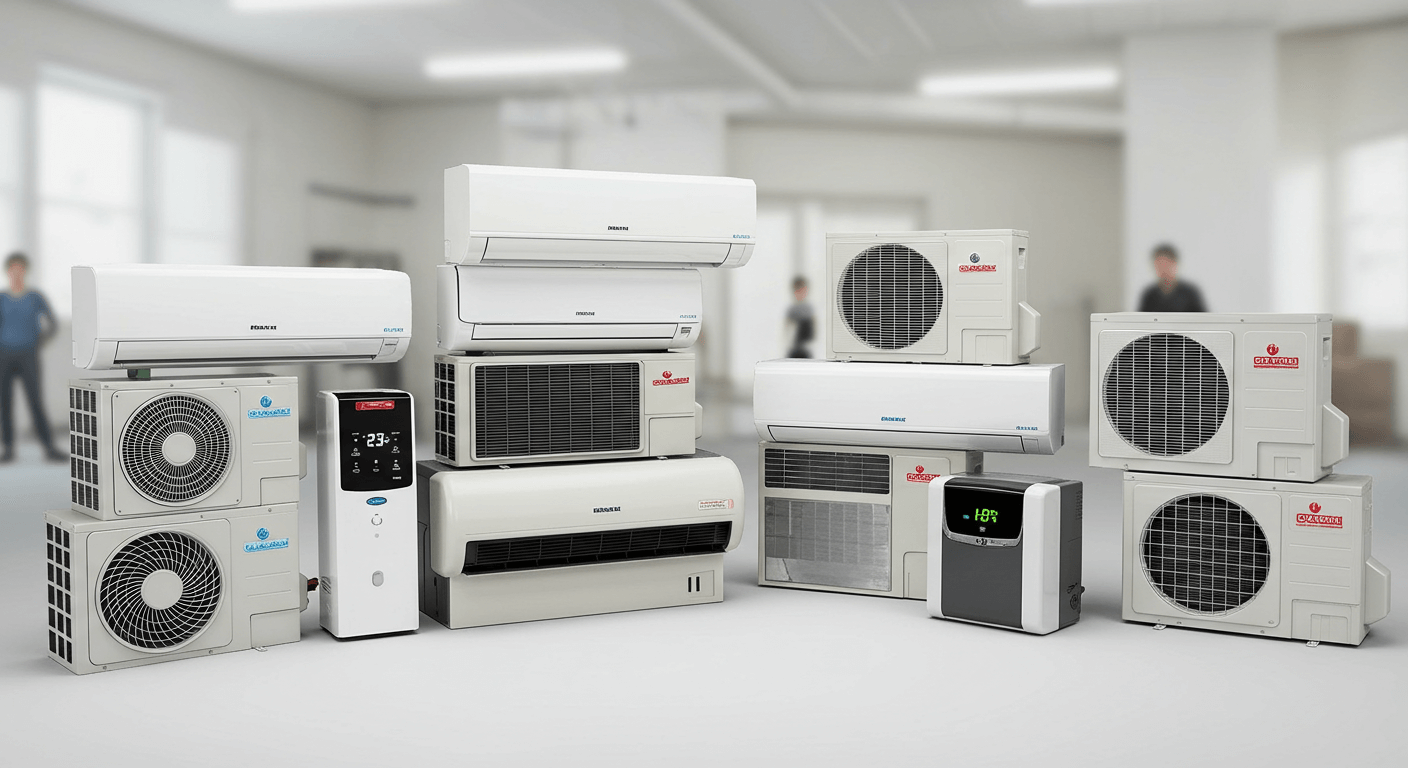
The best cooling, energy efficiency, and comfort are guaranteed when the right air conditioner size is calculated. The most popular approach makes use of BTU requirements and room square footage. Here’s a detailed guide to help you choose the right size air conditioner for your room.
Step 1: Measure the Room
The first step is to measure the room’s width and length. To determine the room’s square footage, multiply these figures. A room that is 15 feet long and 12 feet broad, for instance, has 180 square feet of square footage.
Step 2: Determine Base BTU Needs
Generally speaking, 20 BTUs are required for every square foot of living space. According to the earlier example, a space that is 180 square feet would need about 3,600 BTUs (180 × 20). This is a starting point for choosing an appropriate air conditioner.
Step 3: Adjust for Room Factors
Your BTU requirements may be impacted by further factors:
- Elevated ceilings: Raise the BTU requirements by roughly 10% to 15%.
- Exposure to sunlight: Spaces with plenty of windows or direct sunlight may require 10% more energy to cool.
- Occupancy: For every extra person that is frequently present in the room, add about 600 BTUs.
- Electronics and appliances: If there are heat-producing appliances in the space, think about raising the BTUs a little.
Step 4: Compare to Standard AC Sizes
Standard BTU ranges, such 5,000, 8,000, or 12,000 BTUs, are used to sell air conditioners. To match your modified computation, round up to the closest available size.
Step 5: Take into Account Expert Advice
A manual J load estimate from an HVAC specialist guarantees accurate sizing and optimal performance for larger homes or intricate layouts.
These tips will help you choose an air conditioner that consistently cools without wasting energy or sacrificing comfort. Your unit will operate well and maintain the perfect indoor temperature if it is sized properly.
Factors That Affect AC Size Needs Beyond Room Size
The main determinant of air conditioner size is room square footage, but a number of other factors can also have a big impact on your cooling requirements. Taking these things into account guarantees that your air conditioner runs well and consistently provides comfort.
1. Height of the ceiling
The amount of air that requires cooling rises with higher ceilings. Taller ceilings may necessitate additional BTUs to maintain the target temperature because standard estimates assume an 8-foot ceiling.
2. Quality of Windows and Insulation
The AC has to work harder in rooms with single-pane windows or inadequate insulation since these spaces lose cool air more quickly. Energy-efficient windows and improved insulation help lower cooling demands, but in the absence of these upgrades, a somewhat higher-capacity unit might be required.
3. Exposure to Sunlight
Rooms that face south or west and are exposed to direct sunlight all day long typically warm up faster. More BTUs are needed to ensure comfort due to this additional heat load, particularly in the summer.
4. The number of occupants
Because everyone produces heat, areas that are used frequently can require more cooling capacity. Add roughly 600 BTUs per person over the first two as a general rule.
5. Appliances that Produce Heat
Room temperature can be impacted by electronics, kitchen appliances, and other heat-producing devices. Significant heat sources in a room can necessitate a slightly larger AC unit to make up for them.
6. Regional Temperature and Climate
Even for a room of the same size, hotter climes may need more cooling power than cooler ones.
You may choose an air conditioner that will keep your room pleasant in everyday situations by taking these aspects into consideration, in addition to square footage. As a result, even on the warmest days, optimal indoor temperatures are maintained, frequent brief cycling is avoided, and effective operation is guaranteed.
When to Seek Expert Assistance
While using square footage and BTU criteria to determine the appropriate air conditioner size is effective for the majority of rooms, there are some circumstances in which expert advice is advised. HVAC specialists are able to do accurate calculations and guarantee that your cooling system is the right size for comfort and long-term efficiency.
The Manual J load calculation is a crucial technique used by experts that takes into account factors including window orientation, insulation quality, ceiling height, and heat-generating appliances in addition to room size. This computation gives you a precise idea of how much cooling capacity the whole house needs, which is especially helpful for large multi-room layouts or central air systems.
If your house has intricate architectural details like vaulted ceilings, open floor layouts, or numerous levels, professional assistance is particularly helpful. These elements raise the possibility of undersized or oversized systems and can reduce the accuracy of traditional BTU estimations.
A professional can also suggest changes if you live in an area with high temperatures so that your air conditioner can keep you comfortable throughout the hottest months without wasting energy. Additionally, they can offer guidance on energy-efficient models that save utility bills over time.
Lastly, you can get advice on best practices for installation from a certified HVAC specialist. If put incorrectly, even a properly sized unit may work poorly, resulting in decreased cooling effectiveness and possible system damage. Experts make sure that the location of the unit, vents, and ductwork is all optimized for optimal performance.
Larger residences, intricate layouts, or high-demand climates greatly benefit from expert help. By speaking with a professional, you can ensure that your air conditioner is properly sized, installed, and running, resulting in dependable cooling and years of energy savings.
Conclusion
For long-term savings, comfort, and efficiency, selecting the appropriate air conditioner size is crucial. While an oversized unit may short-cycle, fail to dehumidify efficiently, and wear out prematurely, a unit that is too small will have trouble cooling your room, operate continuously, and increase energy expenditures. Your air conditioner will operate at its best if you are aware of BTUs, room size, and other contributing factors.
The right cooling capacity is determined by a number of criteria, including occupancy, sunshine exposure, insulation, ceiling height, and heat-generating appliances, although square footage is the starting point. For basic rooms, using a BTU sizing chart might make the task easier, but larger homes or complex layouts might benefit from expert advice. HVAC professionals are capable of doing a Manual J load calculation, offering exact suggestions that take into consideration all factors and guarantee optimal efficiency.
Additionally, take into account the sort of air conditioner, noise levels, energy efficiency ratings, and maintenance needs when choosing your unit. Selecting a model that strikes a mix between cost, performance, and convenience ensures steady comfort while using less energy.
In the end, choosing the appropriate AC size is a practical step toward a home that is cooler, cozier, and uses less energy rather than just being a technical exercise. You can benefit from dependable cooling, reduced utility costs, and a longer-lasting air conditioning system by taking the time to measure precisely, take influencing factors into account, and make informed decisions.