
Have you ever puzzled why, even when operating at maximum capacity, your portable cooler seems to lose its efficiency on some days? The humidity may be the solution rather than the gadget itself. Many people concentrate on fan speed, BTU ratings, or water tank capacity when it comes to portable cooling, but they forget to consider one important aspect: the influence of air moisture. The performance of cooling equipment, particularly those that use evaporation to provide a chill, is directly impacted by humidity.
The purpose of portable cooling systems is to provide respite in locations where conventional air conditioning would not be feasible or accessible. Its capacity to effectively cool your room depends not only on its design but also on the surrounding environment, whether you’re using a portable air conditioner, a personal evaporative cooler, or a small fan-based device. Excessive humidity can drastically alter how these coolers work, frequently impairing their overall efficiency and leaving you feeling irritated.
The science is simple: when the air is dry, moisture that is introduced through evaporation cools the air by removing heat. However, evaporation slows down or completely stops in humid situations when the air is already saturated with moisture, which impairs the efficiency of cooling systems that rely on evaporation. However, in humid areas, devices such as portable air conditioners work better since they are designed to remove moisture from the air.
If you want to enhance the performance of an existing device or choose the best one for your area, it is essential to comprehend the connection between humidity and cooling effectiveness. Understanding how to maximize portable cooling in humid environments may make a huge difference, from cutting down on power waste to improving indoor comfort.
This tutorial will explain how different kinds of portable coolers respond to varying humidity levels, why some systems perform better in dry than humid conditions, and provide practical advice on how to make the most of your equipment in any weather. Whether you live in a desert town or a coastal city, this article can help you make better choices for a more comfortable and cool lifestyle.
The Role of Humidity in Cooling Efficiency
The effectiveness of portable cooling equipment is significantly influenced by humidity. Performance is directly impacted by the amount of moisture in the air, regardless of whether you’re using a portable air conditioner, a tiny USB air cooler, or a compact evaporative cooler. Knowing how cooling systems interact with air and water vapor is crucial to comprehending why.
The quantity of water vapor in the air is referred to as humidity. Evaporative cooling is much less effective when the air is already saturated, which is usually about 60% relative humidity or above. This is due to the fact that evaporative coolers use the evaporation of water to reduce the temperature. Water rapidly evaporates in dry air, removing heat from the surrounding atmosphere. However, the air’s ability to absorb moisture is limited in humid conditions, which slows down or even stops the cooling process.
Portable air conditioners, on the other hand, remove heated air from the space, cool it using refrigeration coils, and then release the moisture and heat outdoors through an exhaust hose. In humid or coastal climates, these devices are more effective since they actively remove humidity from the air. The cooling process is more effective the drier the air gets.
The human body’s perception of temperature is also influenced by humidity. Sweat doesn’t evaporate as readily with high humidity, which makes the air appear warmer and stickier than it is. Therefore, if humidity isn’t controlled, the atmosphere may still feel uncomfortable even with a fan or chiller operating.
Adapting the cooling technique to the local climate is crucial for best results. Air conditioners work best in humid conditions, whereas evaporative coolers work best in dry, arid areas. Ignoring this link can result in frustration, poor outcomes, and wasted energy.
Selecting the appropriate equipment and making efficient use of it are made easier when one is aware of how humidity affects cooling efficiency. Understanding how your particular environment interacts with the cooling technique you’re utilizing is crucial.
Evaporative Coolers vs. Air Conditioners in Humid Climates
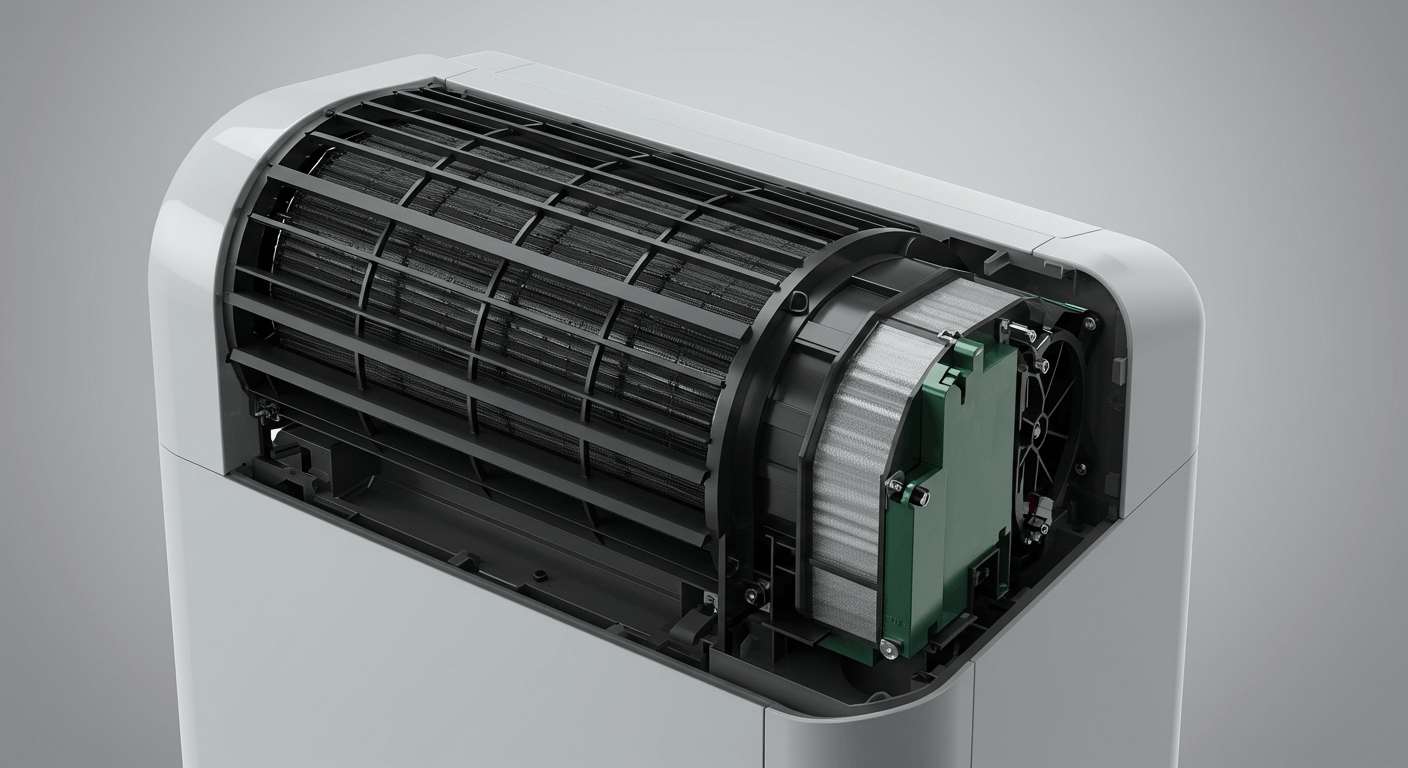
Humidity is a crucial consideration when deciding between an air conditioner and an evaporative cooler. Although both devices are made to cool indoor areas, they operate very differently, and the amount of moisture in the air can have a significant impact on how effective they are.
Swamp coolers, sometimes referred to as evaporative coolers, draw warm air through a pad saturated with water using a fan. Heat is absorbed by the evaporating water, creating cooler air that is subsequently pumped throughout the space. This technique is most effective in arid regions with low relative humidity. However, the air is already saturated with moisture in high-humidity places, which slows down the evaporation process. The cooling impact is therefore negligible or nonexistent. Indeed, using an evaporative cooler in a humid environment can exacerbate the dampness and discomfort of the area.
In contrast, portable air conditioners draw heat from the air using a closed-loop system that uses refrigerant. They are perfect for humid regions because they also eliminate moisture as part of the cooling process. The majority of models have an integrated dehumidifier feature that uses a reservoir or drain line to gather or release moisture. By lessening the sticky, heavy feeling in the air, this not only decreases the room temperature but also enhances comfort levels overall.
Air conditioners are typically a better option for people who live in coastal areas, the Southeast United States, or tropical climates. Residents in arid or high-altitude regions with dry air, on the other hand, will benefit more from evaporative cooling. To put it briefly, evaporative coolers are environmentally benign and energy-efficient, but only under certain circumstances. A portable air conditioner will provide more dependable and efficient cooling if you’re dealing with heavy humidity. Knowing this distinction guarantees that you receive the finest performance possible given your surroundings and helps you prevent disappointment.
Signs Your Portable Cooler Is Struggling Due to Humidity
Although portable coolers are useful for maintaining a pleasant temperature indoors, they are not always effective, particularly in humid environments. Humidity may be the cause if your cooler isn’t producing the cool, refreshing air you were hoping for. You can troubleshoot more efficiently and prevent energy waste if you are aware of the symptoms that your portable cooler is having problems because of high humidity.
- Warm or Weak Air Production: The fact that the air leaving the unit feels warm or merely somewhat cool is one of the most obvious symptoms. Water evaporation is how evaporative coolers reduce air temperature. High humidity causes this evaporation to slow down or halt completely, which means the chiller ends up expelling soggy, uninspiring air.
- Excess Moisture in the Room: An evaporative cooler combined with high humidity frequently causes excess moisture to build up in your area. The air may get heavy or sticky, windows may fog, and furnishings may feel moist. It’s obvious that your cooler isn’t working properly if it’s running but the room seems more humid.
- Minimal Temperature Drop: When you run the cooler for a long time and notice little to no difference in the room temperature, that’s another warning sign. In dry weather, portable coolers should nevertheless reduce the temperature by a few degrees even though they are not as strong as conventional air conditioners. In most cases, a lack of cooling progress indicates that performance is being affected by humidity.
- Increased Discomfort Despite Use: Humidity is probably to blame if the room seems stuffy, clammy, or humid even when the cooler is running. By adding more moisture to already saturated air, evaporative coolers can exacerbate discomfort in humid settings by making it more difficult for perspiration to evaporate and cool your body.
- Unusual Odors or Musty Smell: Bacterial development can occasionally result from high humidity levels and trapped moisture inside the cooler, giving rise to musty or disagreeable smells. It might be time to check the unit and see whether humidity is causing a buildup of moisture if you detect strange odors.
Early detection of these signs can help avoid indoor discomfort, wasteful energy usage, and ineffective cooling. A portable air conditioner can be a better option if you live in a humid region.
Tips to Maximize Portable Cooling in Humid Conditions
Although it can be difficult to use a portable cooler in humid environments, there are a few tips that can help you maintain your room’s comfort and enhance chilling effectiveness. Although high humidity frequently decreases the efficiency of evaporative coolers, improved outcomes are achievable with the correct changes. Here are some useful pointers to improve the efficiency of your portable air conditioner in high-moisture conditions.
1. Use a Dehumidifier Alongside Your Cooler
Using a dehumidifier in conjunction with your portable cooler can significantly improve evaporation because humidity inhibits it. By decreasing the amount of moisture in the air, a dehumidifier makes the atmosphere drier, which improves the efficiency of evaporative coolers. Both overall comfort and cooling outcomes may be enhanced by this combination.
2. Improve Airflow in the Room
Fresher, drier air is brought in, and wet air is moved out with the aid of adequate ventilation. To generate a cross-breeze, open doors or windows on opposing sides of the space. Evaporation can be accelerated, and humid air can be kept from standing still around the cooler by using more fans to move the air around.
3. Run Evaporative Coolers Only When Humidity Is Low
Dry weather is ideal for evaporative coolers. They become far less effective on days when the relative humidity is more than 60%. To monitor indoor humidity and modify usage appropriately, consult local weather forecasts or make use of a hygrometer.
4. Keep the Room Insulated and Shaded
Cooling becomes more challenging when heat is transferred through walls and windows. During the hottest hours of the day, draw the shades or drapes and cover any openings or drafts that could allow warm air to enter. Your portable cooler will operate more efficiently in a well-insulated, shaded space since cooled air will stay there longer.
5. Maintain Your Cooler Regularly
To maintain ideal airflow, clean and replace filters often. Particularly in humid conditions, stagnant water or clogged pads can harbor mold and lower cooling performance. To keep your cooler operating effectively, perform routine maintenance according to the manufacturer’s instructions.
6. Consider Upgrading to a Portable Air Conditioner
An evaporative cooler might not be the greatest option if the humidity is consistently high. In humid climates, portable air conditioners work significantly better since they eliminate moisture while cooling. Purchasing the appropriate gadget for your setting can increase comfort and save energy.
By following these suggestions, portable cooling performance can be optimized even in difficult humid environments. Comfort and energy savings are greatly impacted by proper setup and device maintenance.
Conclusion
A key factor in influencing how well portable cooling systems work is humidity. Making informed choices when choosing or utilizing these systems is facilitated by knowing how air moisture affects various cooler types. Portable air conditioners are better equipped to withstand excessive humidity because they remove moisture as they chill, whereas evaporative coolers require dry conditions to function effectively.
High humidity is probably the reason why your portable cooler seems less effective or if your room gets stuffy and wet. Early detection of these symptoms can help you choose the ideal cooling solution for your space, save energy, and lessen frustration.
Practical measures like utilizing a dehumidifier, increasing airflow, and properly maintaining your device are essential to maximizing cooling effectiveness in humid environments. Purchasing a portable air conditioner with dehumidifying capabilities will offer more dependable comfort in regions that are frequently humid.
No matter the weather, you can stay cool and comfortable by adapting your cooling technique to the local humidity level and adhering to performance-enhancing advice. Please feel free to browse our related topics or leave a comment below if this tutorial was useful.