
In hot, muggy summers, air conditioning is a saviour. It improves everyone’s quality of sleep at night and keeps offices cozy and homes cool. However, even while air conditioning reduces heat, many people experience an unwanted side effect: a scratchy, irritated throat. You might have even wondered, “Did the AC cause this discomfort?” when you woke up in the morning.
There is scientific evidence supporting the link between air conditioning and sore throats, so it’s not simply an old legend. Although the air conditioner itself doesn’t “infect” your throat, it might produce circumstances that increase the likelihood of irritation. You can stay comfortable and healthy during the summer by being aware of how this occurs, who is most at risk, and what you can do about it.
Can Air Conditioning Cause a Sore Throat?
Although air conditioning keeps rooms cool and comfortable, many people have a sore throat as an unanticipated side effect. It’s an often asked question: Can air conditioning really irritate the throat? Yes, to put it succinctly.
Cooling and dehumidifying the air is how air conditioners operate. This lowers humidity and heat, but it can also make the interior air overly dry. Lack of moisture in the air causes the throat and nasal passages to dry out, which can cause irritation, scratchiness, or even a chronic cough. A dry, painful throat is particularly common among persons who sleep with the air conditioner running all night.
Indoor air quality is another factor. Dust, pollen, and even mold spores can travel through an air conditioning system if its filters or ducts are unclean. Inhaling these irritants can cause inflammation in the throat and allergy symptoms. Discomfort may also result from abrupt temperature changes, such as going from hot outdoor air to cold interior air.
Children, older folks, office workers, and allergy sufferers are among the populations that are particularly sensitive. Nonetheless, the issue is typically avoidable. The throat can be protected by changing air filters on a regular basis, maintaining an optimal humidity level (40–60%), and drinking enough of water throughout the day. Additionally, a moderate thermostat setting lessens annoyance.
Simple at-home treatments like steam inhalation, honey with tea, or warm saltwater gargles can offer prompt relief if a sore throat does occur. Medical treatment may be necessary for severe or persistent symptoms, particularly if they are accompanied by fever or swollen glands.
Conclusion: Although air conditioning is safe in and of itself, the dry air, allergens, and abrupt temperature changes it produces might irritate the throat. You may have cool comfort without the uncomfortable side effects if your air conditioner is maintained properly and the humidity levels in your home are balanced.
Why Air Conditioning May Lead to a Sore Throat
Although air conditioning provides a pleasant diversion from hot and muggy conditions, it can also irritate the throat. Many people are curious as to why prolonged exposure to air conditioning frequently results in a scratchy or painful throat. The way air conditioning systems alter interior air holds the key to the solution.
Dry air is a major contributing factor. As they cool, air conditioners eliminate humidity, leaving the air less hydrating than what the body requires. The respiratory tract lining becomes more sensitive when the humidity falls too low because the throat and nasal passages become dry. Frequently, this dryness causes discomfort, hoarseness, or a persistent cough.
The bad quality of the air is another factor. Dust, pollen, pet dander, and even mold can accumulate in air conditioner filters and ducts if they are not properly maintained. These particles travel through the air while the system is operating, hurting the throat and producing symptoms similar to an allergy.
Unexpected temperature changes are also a factor. Rapidly transitioning from hot outdoor air to cold inside air can strain the sinuses and throat, occasionally resulting in moderate irritation. Particularly at risk are those who sleep with the air conditioner running all night or spend a lot of time in air-conditioned offices.
The good news is that sore throats caused by air conditioners can be avoided. The neck can be protected by routinely cleaning or replacing filters, restoring moisture with a humidifier, and maintaining a moderate temperature setting. Maintaining proper hydration is similarly crucial since water relieves discomfort and avoids dryness.
Although the dry air, allergens, and temperature changes caused by air conditioning don’t directly cause illness, they can induce sore throats. You can get cool comfort without the unpleasant side effects if you use the system wisely and take care of it.
Who Is Most at Risk?
Some populations are more susceptible to air conditioning-induced throat discomfort than others.
- People who already have allergies or asthma are more vulnerable to dust, pollen, or mold, which exacerbates triggers from air conditioners.
- People who sleep with air conditioning on all night: Extended exposure to cool, dry air might cause throat irritation.
- Office workers: Exposure to chilly, recycled air for more than eight hours a day might irritate the throat and make you feel exhausted.
- Elderly people and children are more vulnerable to airway sensitivity and dehydration.
It’s important to pay more attention to how your air conditioning habits may impact your throat if you fall into any of these categories.
Symptoms to Watch For
If your sore throat seems linked to air conditioning, you may notice some of these common symptoms:
- Dry, scratchy, or raw throat
- Constant need to clear your throat
- Dry cough
- Hoarseness in the voice
- Stuffy or runny nose
- Postnasal drip
- Increased sensitivity to allergens
When exposure is decreased or humidity is restored, these symptoms typically go away. On the other hand, ongoing discomfort might be a sign of an illness or allergy.
How to Prevent Air Conditioning-Related Sore Throats
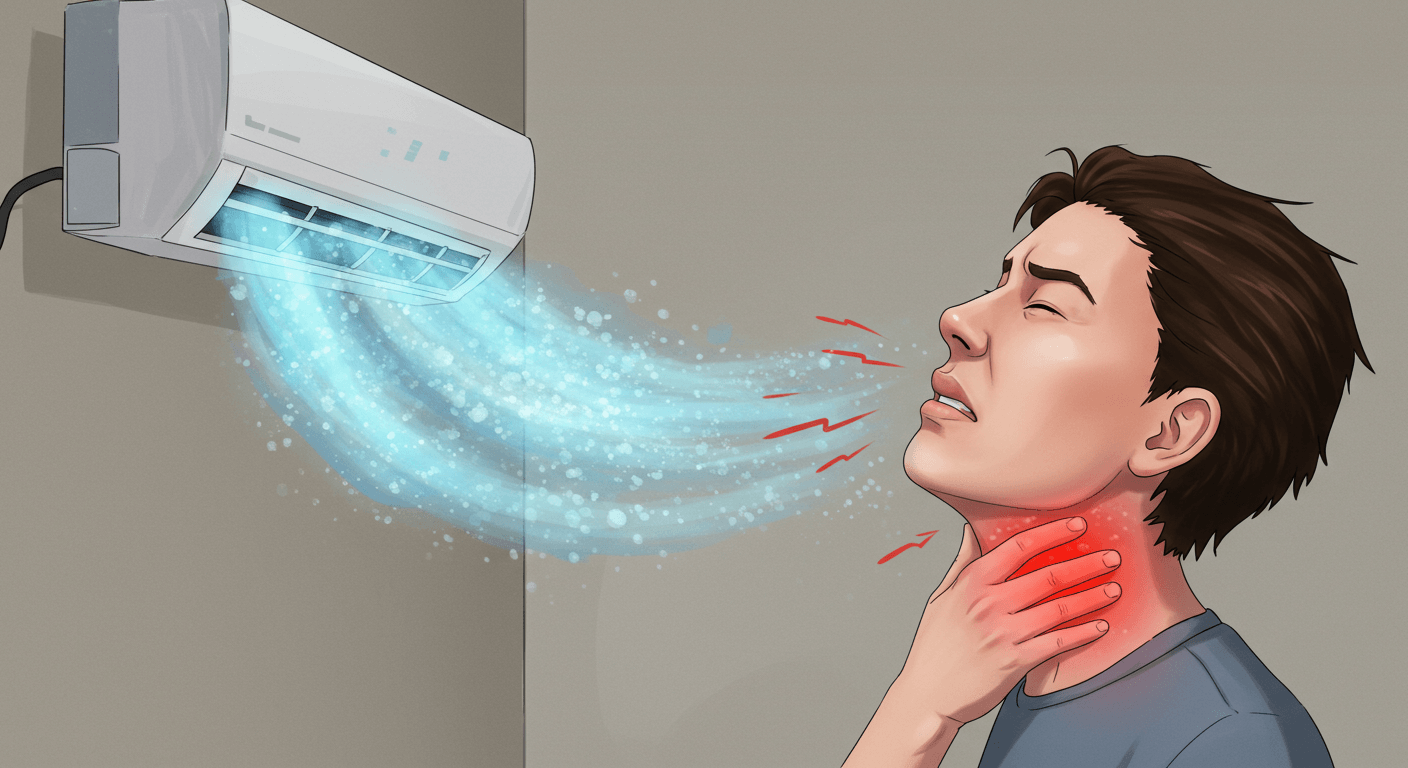
During hot and muggy seasons, air conditioning makes life more comfortable, but it can also cause a sore throat, which is an uncomfortable side effect for many individuals. Common causes of throat irritation while the air conditioner is operating include dry air, poor indoor air quality, and abrupt temperature fluctuations. The good news is that you can avoid the uncomfortable scratching by adopting easy practices and maintaining your equipment properly. Here’s how to avoid air conditioning-induced sore throats.
- Maintain Clean Air Filters: One of the main causes of throat inflammation is dirty air filters. Dust, pollen, and pet dander spread throughout the house when filters become clogged, irritating the throat and causing allergy symptoms. Cleaner air and a lower chance of irritation are ensured by changing or cleaning the filters every one to two months during periods of high AC use.
- Preserve Adequate Humidity Levels: As they chill, air conditioners remove moisture from the air, which frequently leaves interior rooms excessively dry. The throat and nasal passages might become dry and more prone to discomfort when there is low humidity present. Restoring equilibrium can be accomplished with the help of a humidifier. To maintain a pleasant throat, try to keep the humidity level indoors between 40% and 60%.
- Keep Yourself Hydrated: The body loses moisture in a chilly, dry atmosphere even when the humidity is regulated. Regular water consumption keeps the airways and throat lubricated. Warm broths and herbal teas can also reduce irritation and stop the worsening of dryness.
- Avoid Overcooling: When switching from outdoor heat to inside coolness, a thermostat set too low causes the air to become drier and raises the risk of temperature shock. Maintaining your air conditioner between 72 and 76°F lowers the incidence of sore throats and increases energy efficiency.
- Boost Airflow: Stale indoor air can exacerbate inflammation of the throat. To maintain air circulation and avoid irritating accumulation, open windows periodically, turn on ceiling fans, or use an air conditioner with a fresh air input.
- Schedule Regular AC Maintenance: Ducts, coils, and filters are kept clear of dust and mold by professional servicing at least once a year. A well-maintained air conditioning system reduces the likelihood of throat irritation and enhances interior air quality.
- Adjust Nighttime Use: Having the air conditioner on all night can cause throat dryness. Think about setting a higher temperature at night, utilizing a timer, or using a humidifier in addition to the air conditioner while you sleep.
Home Remedies if You Already Have a Sore Throat
Speaking, eating, and even swallowing might be difficult when you have a sore throat. The majority of sore throats may be treated with easy, natural solutions, while many are brought on by infections, allergies, or environmental causes like dry air from air conditioners. Try these tried-and-true home remedies to reduce irritation and aid in healing instead of grabbing for medicine right away.
- Warm Saltwater Gargle: A warm saltwater gargle is one of the most traditional and efficient ways to treat a sore throat. Warm water relieves discomfort, and salt can assist in reducing swelling and releasing mucus. Gargle for 30 seconds after mixing half a teaspoon of salt with a glass of warm water, then do this multiple times throughout the day.
- Honey for Natural Relief: Honey is a potent throat soother due to its antibacterial and anti-inflammatory qualities. To relieve discomfort, apply a tablespoon of raw honey to the throat. It amplifies the effect and adds more hydration when added to warm tea or hot water with lemon.
- Warm liquids and herbal teas: Drinking enough water is crucial while managing a sore throat. In addition to relieving discomfort, warm teas made with licorice root, ginger, or chamomile can help lower inflammation. Warm water and broths can help maintain a pleasant and moist throat. Steer clear of alcoholic and caffeinated drinks, as these can cause dehydration.
- Steam Inhalation: Dry air, particularly in warm or air-conditioned spaces, exacerbates sore throats. Dryness in the throat can be relieved by taking a warm shower or inhaling steam from a bowl of hot water. A few drops of eucalyptus oil added could help to further expand airways.
- Throat Lozenges and Natural Sprays: Natural throat drops and sprays, as well as over-the-counter lozenges, can offer short-term moisture and discomfort relief. For extra calming benefits, look for substances like honey, slippery elm, or menthol.
- Rest and Hydration: When you get enough sleep and drink enough water, your body heals the best. While fluids keep the throat from drying up, sleep aids the immune system in warding off infections. Throughout the day, try to stay hydrated and take breaks when necessary.
- Make Your Environment More Humid: By keeping the air at a healthy moisture content, a humidifier can lessen throat irritation and hasten healing. This is especially crucial if dry indoor air from heating or air conditioning systems is causing your sore throat.
When to Consult a Physician
With minor changes and self-care, the majority of air conditioning-related sore throats go well.
- However, if your sore throat persists for more than a week, you might need to see a doctor.
- The pain is strong or interferes with swallowing.
- You have white spots in your throat, enlarged lymph nodes, or a fever.
- The symptoms include wheezing or shortness of breath.
These symptoms could indicate strep throat, a bacterial infection, or another illness that needs medical attention.
Conclusion

The dry air, allergens, and abrupt temperature changes that air conditioners produce can cause sore throats, although air conditioning itself is safe. Fortunately, you can enjoy cool indoor air without the scratchy pain if you have clean filters, appropriate humidity, moderate thermostat settings, and adequate hydration.
Although an air conditioning sore throat is typically a minor problem, taking proactive measures to prevent it can help you stay cool and healthy. You may take action to enhance indoor air quality and safeguard your respiratory health throughout the year by being aware of the connection between using an air conditioner and irritation of the throat.