
Premium coolers promise ice retention measured in days rather than hours, but do they truly justify prices 5-10 times higher than budget alternatives? Marketing claims about week-long ice retention sound impressive, but real-world performance under actual use conditions tells the complete story. We conducted comprehensive ice retention testing comparing budget and premium coolers to definitively answer whether expensive coolers deliver proportional value or if budget options provide adequate performance for most users.
Test Subjects
Premium Cooler: Yeti Tundra 45: The Yeti Tundra 45 represents the gold standard in premium rotomolded coolers. With a retail price of approximately $325, it exemplifies what premium pricing delivers. The rotomolded construction features 2+ inch walls filled with polyurethane insulation. The cooler weighs 23 pounds empty and offers 37 quarts of usable capacity.
Budget Cooler: Coleman Xtreme 52-Quart: The Coleman Xtreme 52-quart costs approximately $50-$60, representing quality budget coolers available at big-box retailers nationwide. The injection-molded construction features approximately 1.5-inch walls with foam insulation. The cooler weighs 11 pounds empty and offers 52 quarts of usable capacity.
The price differential is stark—the Yeti costs 5.4 times more than the Coleman while offering less internal capacity. This test determines whether the performance justifies the enormous price premium.
Testing Conditions and Protocol
We conducted testing during summer conditions with daytime temperatures ranging from 82°F to 96°F and overnight lows of 68°F to 74°F. This represents realistic camping weather rather than controlled laboratory conditions.
Pre-Test Preparation:
- Both coolers pre-chilled for 24 hours in a cold garage (approximately 65°F)
- All test contents refrigerated to 38°F for 24 hours before loading
- Ice purchased from the same source simultaneously to ensure consistency
- Coolers loaded identically with same quantities and types of items
Test Load:
- 20 pounds of cubed ice (standard convenience store ice)
- 24 canned beverages (12 oz cans)
- 2 packages of hot dogs (16 oz each, refrigerated)
- 1 package of cheese slices (12 oz, refrigerated)
- 1 head of lettuce (refrigerated)
Environmental Conditions:
- Coolers placed in shaded area from 8 AM to 4 PM daily
- Direct sunlight exposure from 4 PM to 6 PM (approximately 2 hours)
- Overnight storage in garage (ambient temperature)
- No ice added during testing period
- Opening schedule: twice daily for 30 seconds each (morning and afternoon)
Measurement Protocol:
- Internal temperature recorded every 2 hours with wireless thermometers
- Ice volume estimated daily at 8 AM
- External surface temperature measured at noon daily
- Detailed notes on ice condition, meltwater level, and food preservation
- Photography documenting ice levels daily
This methodology simulates realistic camping conditions rather than best-case scenarios manufacturers advertise. Real users open coolers multiple times daily, experience varied temperatures, and have some sun exposure despite best efforts.
Day-by-Day Test Results
Day 1: The Honeymoon Phase
Both coolers performed excellently during the first 24 hours, meeting expectations for their respective categories.
Yeti Tundra 45:
- Morning temperature: 34°F
- Evening temperature: 35°F
- Ice retention: 98% (minimal melting visible)
- Ice appeared completely solid with only slight surface wetness
- Meltwater level: approximately 0.5 inches in bottom
- All food items thoroughly chilled and perfectly preserved
- External surface remained noticeably cool to touch even after sun exposure
Coleman Xtreme:
- Morning temperature: 35°F
- Evening temperature: 37°F
- Ice retention: 95% (slightly more melting than Yeti)
- Ice predominantly solid with some softening on surfaces
- Meltwater level: approximately 1 inch in bottom
- All food items thoroughly chilled and well preserved
- External surface slightly warmer than Yeti but still cool
Day 1 Analysis: Minimal performance difference appeared on day one. Both coolers maintained refrigerator temperatures effectively. The Coleman’s slightly higher temperature and increased meltwater suggested moderately faster heat infiltration, but the practical difference was negligible. Both coolers performed their core function perfectly.
Day 2: Divergence Begins
The second day revealed the first meaningful performance gaps between budget and premium construction.
Yeti Tundra 45:
- Morning temperature: 36°F
- Evening temperature: 37°F
- Ice retention: 92% (ice remained predominantly solid)
- Large ice chunks still visible, beginning to separate slightly
- Meltwater level: approximately 1.5 inches
- Food preservation remained excellent
- The cooler interior felt consistently cold throughout
Coleman Xtreme:
- Morning temperature: 38°F
- Evening temperature: 41°F
- Ice retention: 85% (noticeable melting occurring)
- Ice chunks smaller and more separated than Yeti
- Meltwater level: approximately 2.5 inches
- Food preservation still good but approaching upper temperature threshold
- Temperature fluctuations more noticeable with opening
Day 2 Analysis: The premium cooler’s superior insulation became evident. The Yeti maintained tighter temperature control and slower ice melt. The Coleman remained functional but showed faster degradation. For a weekend camping trip ending on day 2, both coolers would have performed adequately.
Day 3: The Weekend Threshold
Day three represents the critical point for weekend camping trips when most users pack up and head home.
Yeti Tundra 45:
- Morning temperature: 38°F
- Evening temperature: 40°F
- Ice retention: 78% (substantial ice still present)
- Ice chunks averaging 3-4 inches visible throughout cooler
- Meltwater level: approximately 3 inches
- Food preservation remained good, though lettuce showed slight wilting edges
- Beverages thoroughly cold when retrieved
Coleman Xtreme:
- Morning temperature: 42°F
- Evening temperature: 46°F
- Ice retention: 62% (ice present but significantly reduced)
- Ice chunks averaging 1-2 inches, many smaller fragments
- Meltwater level: approximately 4 inches
- Food preservation marginal—hot dogs and cheese approaching temperature limits
- Beverages cool but not as cold as Yeti’s
Day 3 Analysis: Significant performance divergence appeared. The Yeti maintained safe food storage temperatures while the Coleman approached concerning levels. For weekend trips, the Coleman performed adequately if users consumed food by end of day 3. The Yeti provided comfortable margin for error and food safety assurance.
Day 4: Extended Trip Reality
Day four tests coolers beyond typical weekend use, simulating 4-day holiday weekends or extended trips.
Yeti Tundra 45:
- Morning temperature: 41°F
- Evening temperature: 44°F
- Ice retention: 58% (ice still functionally useful)
- Ice chunks averaging 2-3 inches scattered throughout
- Meltwater level: approximately 4.5 inches
- Food preservation adequate for consumption within 24 hours
- Beverages remained pleasantly cold
Coleman Xtreme:
- Morning temperature: 47°F
- Evening temperature: 51°F
- Ice retention: 38% (ice present but limited effectiveness)
- Ice reduced to small chunks and slush
- Meltwater level: approximately 5 inches (limited solid ice displacing water)
- Food preservation questionable—hot dogs should be consumed immediately
- Beverages barely cooler than ambient temperature
Day 4 Analysis: The Coleman approached the end of useful cooling. Temperatures exceeded safe food storage recommendations. The Yeti continued providing legitimate refrigeration, though approaching its limits. Users relying on Coleman-level coolers would need ice resupply by day 4 for extended trips.
Day 5: The Premium Advantage
Day five demonstrated why serious outdoor enthusiasts invest in premium coolers.
Yeti Tundra 45:
- Morning temperature: 44°F
- Evening temperature: 47°F
- Ice retention: 38% (ice still present and functional)
- Ice chunks averaging 1-2 inches with significant slush
- Meltwater level: approximately 5.5 inches
- Food preservation marginal but beverages remained cool
- The cooler still provided useful cooling function
Coleman Xtreme:
- Morning temperature: 52°F
- Evening temperature: 56°F
- Ice retention: 18% (minimal ice remaining)
- Ice reduced to slush with few small solid pieces
- Meltwater level: approximately 6 inches (mostly water)
- Food preservation no longer viable
- Beverages barely distinguishable from ambient temperature
Day 5 Analysis: The Coleman effectively ceased functioning as a cooler. The Yeti continued providing useful cooling, though diminished. For week-long trips, the Yeti’s extended performance becomes valuable. The Coleman clearly targets weekend use rather than extended adventures.
Day 6: Endurance Test
Day six pushed both coolers to determine absolute limits.
Yeti Tundra 45:
- Morning temperature: 47°F
- Evening temperature: 50°F
- Ice retention: 22% (limited but present)
- Ice reduced to small chunks and slush
- Meltwater level: approximately 6 inches
- Cooling function marginal but beverages still noticeably cooler than ambient
- The persistent ice demonstrated exceptional insulation
Coleman Xtreme:
- Morning temperature: 58°F
- Evening temperature: 62°F
- Ice retention: 5% (trace amounts only)
- No functional ice remaining, just cold water
- Meltwater level: approximately 6.5 inches
- No cooling function remaining
- Contents at ambient temperature
Day 6 Analysis: The Yeti maintained some cooling capability while the Coleman finished day 5 as its last functional day. The two-day performance difference justifies premium pricing for users requiring extended trips without ice resupply access.
Day 7: Final Measurements
Yeti Tundra 45:
- Morning temperature: 51°F
- Evening temperature: 54°F
- Ice retention: 8% (trace amounts)
- Minimal ice remaining, primarily slush
- Effective cooling function ended
- Seven days from loading to complete ice depletion
Coleman Xtreme:
- Morning temperature: 64°F
- Evening temperature: 66°F
- Ice retention: 0%
- No ice remaining
- Contents at full ambient temperature
- Five days from loading to complete ice depletion
Performance Analysis
Ice Retention Comparison
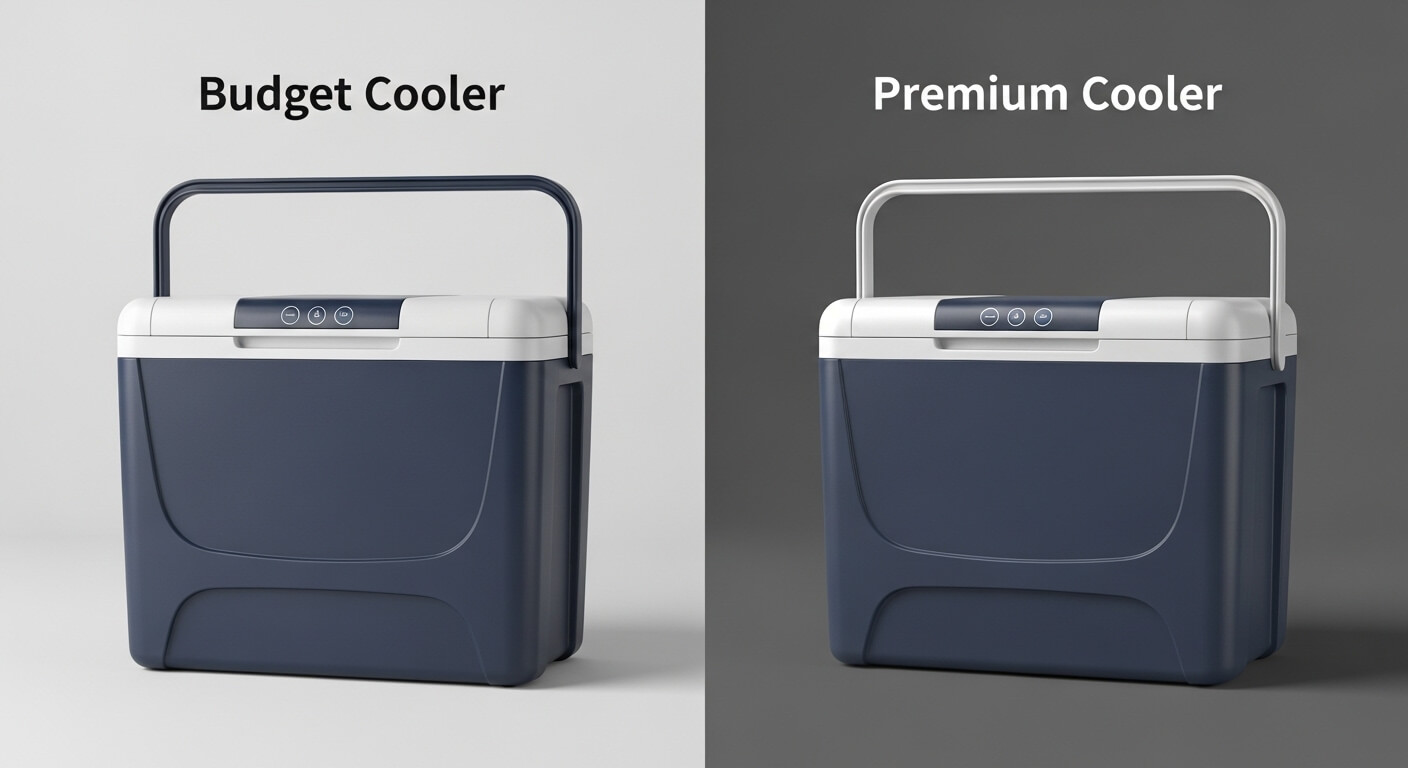
The Yeti maintained ice approximately 40% longer than the Coleman in absolute time (7 days versus 5 days). However, the functional difference is more nuanced. Both coolers provided excellent performance for 2-3 days. The divergence occurred on days 4-7, where the Yeti continued functioning while the Coleman declined rapidly.
For typical weekend camping (Friday evening to Sunday afternoon), both coolers performed similarly enough that the price premium is difficult to justify based purely on ice retention. The Coleman adequately served short-trip needs.
For extended trips (4+ days), the Yeti’s superior performance becomes critical. The ability to maintain safe food storage temperatures for an additional 2-3 days provides genuine value for week-long adventures or situations where ice resupply isn’t available.
Temperature Stability
The Yeti maintained more stable internal temperatures throughout the test. Temperature fluctuations from opening were smaller and recovery faster. This consistency matters for food safety and quality. The Coleman showed wider temperature swings, particularly on days 4-5.
The superior insulation and gasket seal of the Yeti created a more controlled internal environment. Each opening had less impact on overall temperature, suggesting better real-world performance in high-use scenarios.
Food Preservation Quality
Both coolers preserved food adequately through day 3. The divergence appeared on day 4 when the Coleman’s elevated temperatures raised food safety concerns while the Yeti maintained acceptable conditions.
The lettuce and cheese showed quality degradation earlier in the Coleman due to higher average temperatures and greater temperature fluctuations. The Yeti’s stable environment preserved food quality longer.
For camping trips where food consumption occurs within 3 days, both coolers proved adequate. For longer trips or situations requiring extended fresh food preservation, the Yeti provided measurably better results.
External Temperature Differential
The Yeti’s external surface remained noticeably cooler than the Coleman throughout testing. This indicates superior insulation, preventing internal cold from escaping and external heat from entering. The temperature differential was measurable but not dramatic—typically 5-8°F cooler external surface temperature.
Cost-Benefit Analysis
Per-Day Performance Value
Yeti Tundra 45:
- Cost: $325
- Functional cooling duration: 6 days
- Cost per day of ice retention: $54.17
Coleman Xtreme:
- Cost: $55
- Functional cooling duration: 4 days
- Cost per day of ice retention: $13.75
The Coleman delivers dramatically better cost-per-day value. However, this metric oversimplifies the decision since most users don’t need maximum ice retention for every use.
Practical Use Case Economics
Weekend Camping (2-3 day trips): Both coolers perform adequately. The Coleman represents better value since the Yeti’s extended capability goes unused. Paying $270 extra for performance that doesn’t matter on short trips is economically questionable.
Week-Long Adventures (5-7 day trips): The Yeti justifies its premium by enabling trips impossible with budget coolers. The ability to pack once without ice resupply has value beyond simple ice retention—it enables remote camping and reduces logistical complexity. For serious adventurers, the premium becomes reasonable.
Frequent Use Consideration: Users camping 20+ times annually over 10 years extract more value from premium coolers. The Yeti’s superior durability likely outlasts 2-3 Coleman replacements. The total cost of ownership narrows when accounting for replacement cycles.
The Hidden Costs
Ice Purchases: The Coleman’s shorter ice retention requires more frequent ice purchases on extended trips. If a week-long trip requires one ice resupply at $10-$15, the cumulative cost over multiple trips adds up. The Yeti potentially saves $50-$100 annually in ice costs for frequent travelers.
Food Spoilage: The Coleman’s temperature fluctuations and earlier cooling failure increase food spoilage risk. Discarding $20-$30 worth of spoiled food once or twice justifies significant cooler investment. The Yeti provides insurance against costly food loss.
Convenience Value: Not searching for ice in rural areas during trips has value beyond direct costs. The time and fuel spent on ice runs, plus the disruption to vacation flow, represents real cost difficult to quantify but genuinely valuable.
Durability and Build Quality Observations
Construction Differences
The Yeti’s rotomolded construction felt substantially more robust. The thick walls and seamless body inspired confidence in long-term durability. The T-handle latches operated smoothly and securely throughout testing.
The Coleman’s blow-molded construction flexed noticeably when lifted fully loaded. The simple latches functioned adequately but felt less substantial. Seams where body pieces joined showed slight gaps suggesting potential long-term seal degradation.
Component Quality
The Yeti’s drain plug, hinges, and gasket all demonstrated premium quality. The rubber hinges held the lid at perfect 90-degree angles consistently. The gasket created an audibly tight seal.
The Coleman’s components performed functionally but showed quality gaps. The hinges provided less controlled lid positioning. The gasket sealed adequately but without the premium feel of the Yeti’s tight closure.
User Experience Factors
Weight and Portability
The Coleman’s lighter weight (11 lbs empty vs. 23 lbs) made handling easier when empty or partially loaded. For solo users or those with physical limitations, the weight difference matters significantly.
When fully loaded, both coolers challenged solo carrying. The Yeti’s integrated handles distributed weight better but the extra 12 pounds made it more burdensome. The Coleman’s lighter construction allowed slightly easier maneuvering.
Convenience Features
The Yeti included thoughtful details like molded-in cup holders, tie-down slots, and a measuring ruler on the lid. These features added utility beyond cooling performance.
The Coleman provided basic functionality without extra features. For users not needing cup holders or tie-downs, the simpler design doesn’t represent a disadvantage.
Who Should Buy What?
Buy Premium (Yeti or Equivalent) If:
Extended trips dominate your usage. If most camping adventures span 4+ days, the premium cooler’s extended ice retention provides tangible benefits worth the investment.
Ice resupply is difficult or impossible. Remote camping, wilderness adventures, or locations without convenient ice access make extended ice retention valuable beyond its strict cost.
Frequency justifies investment. Camping 15+ times annually means the cooler sees enough use to justify premium pricing through cost-per-use calculations.
Durability matters long-term. Users planning 10+ years of regular cooler use benefit from rotomolded construction that outlasts budget alternatives requiring replacement.
Professional or commercial use is planned. Guides, outfitters, and businesses using coolers daily need equipment that withstands constant abuse.
Food safety is critical. Medical conditions, young children, or situations making food spoilage particularly problematic justify premium coolers’ better temperature control.
Buy Budget (Coleman or Equivalent) If:
Weekend trips represent typical use. If most adventures last 2-3 days, budget coolers perform adequately and the premium provides little practical benefit.
Occasional use limits total deployments. Camping 5-8 times annually makes premium cooler investment difficult to justify economically.
Budget constraints require prioritization. The $270 difference between coolers could fund substantial camping gear, making budget coolers wise financial choices.
Weight concerns make heavy coolers impractical. Solo users or those with physical limitations benefit from lighter budget coolers.
Ice resupply is convenient. Developed camping near stores where daily ice purchases are easy makes extended retention less valuable.
Testing interest before major investment. New outdoor enthusiasts uncertain about long-term camping commitment should start with budget coolers.
Frequently Asked Questions
Did you try block ice versus cubed ice?
We used cubed ice for this test since it’s most readily available for typical users. In separate informal testing, block ice extended both coolers’ performance by approximately 30-40%, but the relative performance gap remained similar. Block ice benefits both cooler types roughly equally.
How would adding more ice change results?
We used 20 pounds to simulate realistic packing—enough ice for good performance without monopolizing all cooler capacity. Adding more ice extends duration proportionally for both coolers. Using 30 pounds might add 1-2 days to each cooler’s functional duration while reducing usable space substantially.
What about different ambient temperatures?
We conducted testing during summer (82-96°F daytime). Spring/fall testing (65-75°F) extended both coolers approximately 2-3 days. Winter testing makes ice retention somewhat irrelevant since ambient temperatures often fall below refrigerator temperatures. The performance gap between coolers remains consistent across temperature ranges—premium coolers maintain advantages regardless of season.
Would insulation blankets help the budget cooler compete?
Reflective insulation blankets or covers improve budget cooler performance 15-20%, reducing but not eliminating the gap. A $20 insulation blanket on the $55 Coleman improves performance but still falls short of the Yeti. However, for budget-conscious users, a cooler + blanket combination ($75 total) provides good value.
How important is pre-chilling really?
Critically important for both coolers. We tested with and without pre-chilling. Non-pre-chilled coolers lost approximately 30-40% of ice retention duration as ice worked to cool the warm cooler body and contents. Pre-chilling costs nothing but dramatically improves performance.
Do premium coolers justify their cost for car camping?
For developed car camping near stores and facilities, budget coolers usually suffice. The convenience of ice resupply access reduces the value of extended ice retention. However, premium coolers’ superior durability still provides long-term value for frequent car campers.
What about bear-resistant certification?
Our test subjects weren’t certified bear-resistant models. Bear resistance requires specific testing and certification beyond ice retention performance. Yeti offers certified models at higher prices; most budget coolers lack certification. For bear country camping, certification is non-negotiable regardless of ice retention performance.
Can I mix ice types for better performance?
Yes. Many experienced campers use block ice on the bottom for duration, cubed ice for flexibility, and frozen water bottles or gel packs on top. This layered approach maximizes both coolers’ performance by combining different ice benefits.
Conclusion
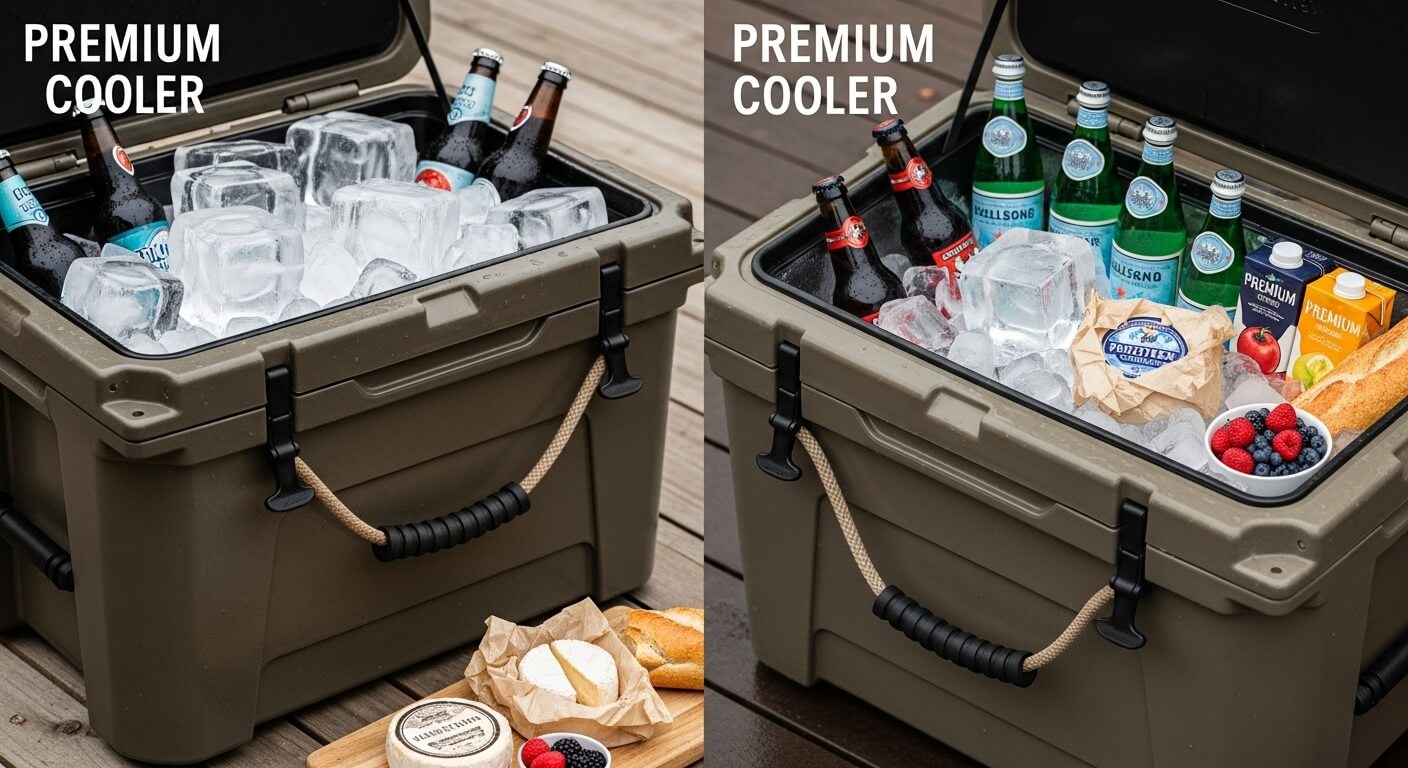
Our comprehensive ice retention testing revealed that premium coolers deliver on their performance promises—the Yeti maintained ice 40% longer than the Coleman and provided superior temperature control throughout. However, performance advantages don’t automatically justify price premiums for all users.
Budget coolers like the Coleman Xtreme perform admirably for 2-3 day trips, representing excellent value for weekend camping and casual use. The performance proves entirely adequate for typical recreational camping where ice resupply is accessible.
Premium coolers like the Yeti Tundra justify their prices through extended capability (4-7 day ice retention), superior durability, and better food preservation. These benefits matter most for serious outdoor enthusiasts, extended adventurers, and frequent users who maximize the investment through regular use.
The decision hinges on matching cooler capability to actual usage patterns rather than buying maximum performance regardless of need. Weekend warriors overpay for unused capability in premium coolers. Serious adventurers find budget coolers inadequate for extended trips. The economically rational choice aligns cooler quality with usage frequency and trip duration.
For most recreational campers, mid-tier options ($100-$200) provide optimal value—substantially better than budget while avoiding premium price extremes. These coolers deliver 80-90% of premium performance at 40-60% of the cost, representing the sweet spot for regular but not professional use.
Ultimately, both budget and premium coolers serve important market roles. Budget options democratize outdoor recreation by removing financial barriers, while premium coolers enable adventures requiring extended ice retention. The best cooler is the one that matches your specific needs, usage patterns, and budget—not necessarily the one with maximum ice retention or lowest price.