
When you enter your RV on a sweltering summer day and discover that the air conditioner is running but not cooling the area, there are few things more annoying than that. For many RV owners, air conditioning is more than just a luxury; it’s a necessity for safety and comfort while traveling long distances or parking in a sunny area. An enjoyable vacation can soon devolve into an uncomfortable and stressful situation when your RV air conditioner is unable to provide cool air.
The first step in fixing your RV air conditioner problem is figuring out why it isn’t cooling down properly. RV AC units function differently from residential systems, and they may find it difficult to keep up because they frequently operate in harsher environments like intense sunshine, little ventilation, and high humidity. Dirty filters, obstructed vents, refrigerant leaks, or even an undersized unit that is unable to meet the needs of the interior of your RV are common reasons.
Fortunately, the majority of the time, there are simple answers. Simple maintenance procedures like cleaning filters, caulking leaks, or enhancing airflow can solve a lot of problems. In other situations, if the issue is caused by electrical malfunctions or refrigerant problems, expert repairs can be required.
This tutorial will explain the most frequent causes of your RV air conditioner’s failure to keep you cool and offer helpful troubleshooting tips to get you back to feeling comfortable. Additionally, you will learn how to avoid future AC issues with routine maintenance and how to choose when to seek professional assistance. No matter where you travel, you can make sure your RV remains cool and cozy by being proactive.
Why Your RV Air Conditioner May Not Be Cooling
The issue usually boils down to a few basic problems when your RV air conditioner is operating but not keeping the area cool. You may restore comfort in your RV and save time, money, and stress by knowing what to look for.
A filthy or clogged air filter is one of the most common culprits. Dust and dirt accumulate in the filter over time, obstructing circulation and making the air conditioner work harder to produce cool air. Regularly cleaning or replacing filters is one of the easiest methods to keep them operating efficiently.
Vents and ducts that are obstructed or leaking are another offender. While the AC runs constantly, some parts of the RV may stay hot if cool air cannot flow through them correctly. The performance of cooling systems can be significantly improved by checking for obstructions or plugging leaks.
Warm air may also be blown by the unit due to refrigerant problems. The AC won’t provide the necessary cool air because of a low refrigerant level or a leak that hinders the system’s ability to efficiently absorb and release heat. Professional servicing is usually necessary for this kind of issue.
Sometimes the problem is environmental rather than mechanical. Even a running air conditioner faces difficulties when an RV is parked in direct sunlight, particularly during the hottest months of the year. Your unit might not be able to withstand harsh conditions if it is too small for the size of your RV.
Last but not least, electrical issues like a bad power source or bad wiring can disrupt operation and result in an ineffective air conditioner or an unplanned shutdown. You can take the appropriate action to restore cooling power and stop further malfunctions by determining the underlying cause.
Quick Troubleshooting Tips for a Warm RV AC

A few easy troubleshooting techniques will help you determine whether your RV air conditioner needs professional repair or if it’s just a simple fix. Cooling may frequently be restored without expensive servicing by taking care of minor problems early.
- Check the thermostat’s settings first. Although it may seem apparent, occasionally the thermostat is inadvertently set to “fan” rather than “cool,” or the temperature is set too high to activate the compressor. The issue might be resolved right away if you reset it to the proper cooling mode.
- Check the air filters after that. Airflow is restricted, and cooling effectiveness is decreased by a filthy filter. If the filters are worn out, replace them or remove and clean them with warm, soapy water. Just doing one easy action can significantly increase airflow.
- Check for obstructions in the ducts and vents. Make sure no furniture is blocking any vents and that they are all open and unblocked. A duct leak might be the cause and may need to be sealed if you observe poor airflow in specific places.
- Remember to take a glance outside. Dirt, leaves, or insects might clog the external unit’s condenser coils. Efficiency can be restored by gently cleaning them with compressed air or a coil cleaner.
- Verify the power source if your air conditioner is still having problems. The system’s functionality may be restricted by low voltage or erratic campground hookups. Utilizing a voltage monitor or surge protector helps safeguard the device and guarantees that it gets enough power.
- Lastly, listen for odd sounds. Internal mechanical problems, like a failed motor or fan, are frequently indicated by grinding, buzzing, or rattling noises. An RV technician is the ideal person to handle these issues.
Maintenance Tips to Keep Your RV AC Running Efficiently
The secret to keeping your RV air conditioner operating at its peak efficiency is routine maintenance. You may prolong the life of your unit, avoid expensive malfunctions, and guarantee cool comfort on every journey by taking a few precautionary measures.
- When using the air filters frequently, start by cleaning them at least once a month. A clogged filter makes the air conditioner work harder, which lowers cooling effectiveness and raises energy usage. Disposable filters should be changed on a regular basis, however washable filters can be cleaned with water and mild soap.
- Next, develop the practice of regularly checking and cleaning the condenser coils. Dust, leaves, and other material can readily accumulate on these coils, which are found on the exterior unit. It is more difficult for your RV to stay cool when the coil is dusty since it hinders the normal release of heat. Restoring efficiency can be accomplished with a mild brushing or coil cleanser.
- The unit’s internal evaporator coils should not be disregarded. Buildup from dust and moisture can affect cooling. Maintaining temperature regulation and airflow is facilitated by thorough cleaning.
- Examining the insulation and seals surrounding your RV air conditioner is another crucial step. The system may have to operate longer if there are gaps or crevices that let warm air in and cool air leave. By sealing these places, you can make sure your air conditioner operates more efficiently.
- Make sure the ducts and vents are clear. Make sure that no furniture or possessions are obstructing the airflow and vacuum the dust from the vents. The RV’s cool air is more uniformly distributed when there is good circulation.
- Last but not least, plan for expert maintenance at least once a year. A qualified RV technician can test electrical components, check refrigerant levels, and identify issues before they become costly repairs.
When to Replace vs. Repair Your RV Air Conditioner
Deciding whether to replace the air conditioner entirely or fix it is one of the most difficult decisions RV owners must make. By being aware of the warning signs, one can avoid unpleasant road trips throughout the summer and save money.
- First, think about how old your RV air conditioner is. When properly maintained, most RV air conditioners survive eight to ten years. It might be less expensive to replace it rather than keep fixing it if yours is close to or outside of this range and breaks down regularly.
- Issue frequency is another element. A tiny electrical fix, a clogged drain, or filthy filter are examples of occasional little issues that are typically worth fixing. However, those expenses might mount up quickly if your system needs frequent servicing calls. A new unit offers superior value after a while.
- Efficiency in energy use is also crucial. The electrical system of your RV may be strained by older AC models’ higher power consumption, which can also raise campsite utility bills. In addition to cooling more efficiently, a newer model may save money over time by using less electricity.
- Keep an eye on cooling performance. After checking refrigerant levels, cleaning filters, and sealing gaps, if your RV air conditioner still has trouble maintaining a pleasant temperature, it may be an indication of more serious technical issues. Warm air coming from the vents or poor ventilation could be signs that an upgrade is necessary.
- Lastly, weigh the expenses of repairs against those of replacements. When a major repair, like replacing a compressor, costs half or more of a new unit, it’s usually better to replace it.
In summary, replacement is the best option for older, inefficient, or severely damaged devices, whereas repair makes sense for minor, reasonably priced improvements. You can make the best choice for your RV lifestyle by weighing cost, performance, and long-term dependability.
Conclusion
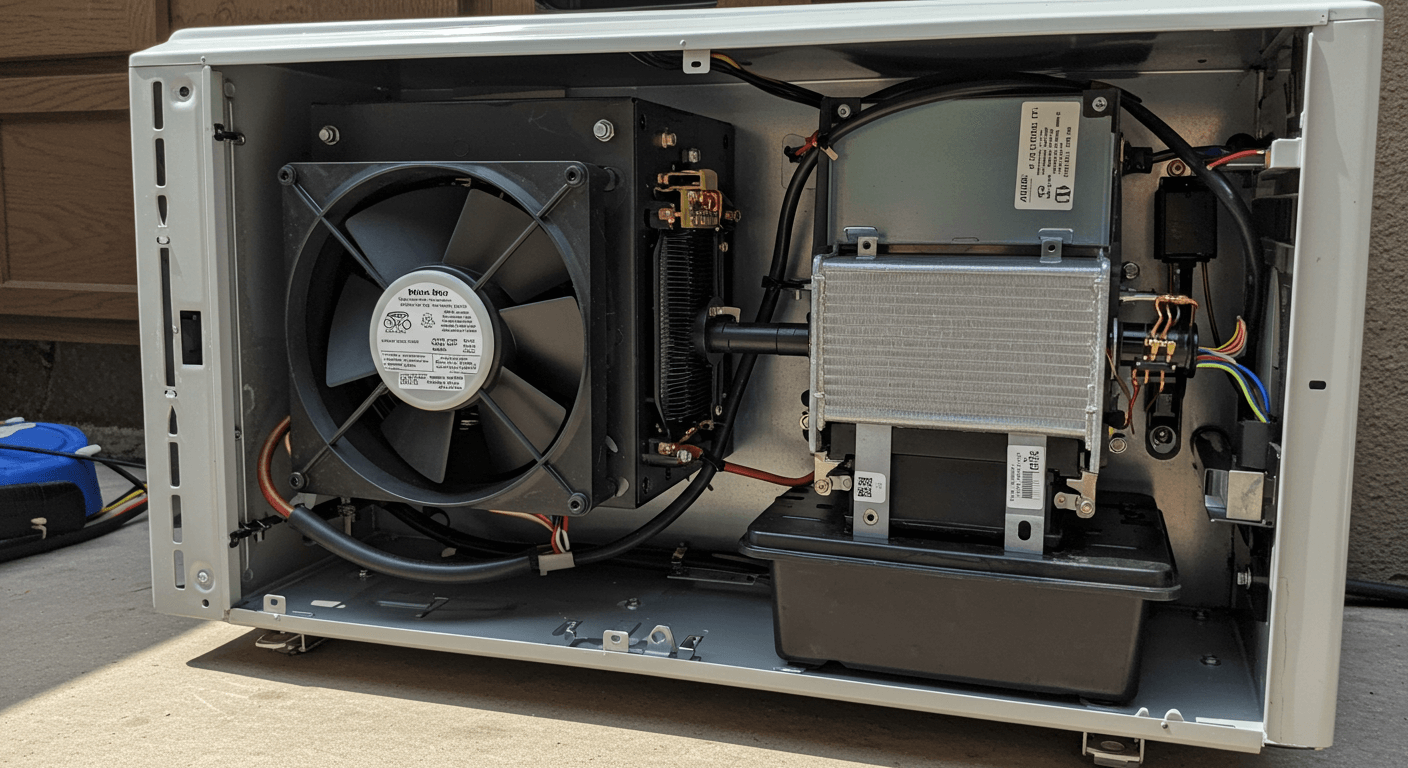
Having a dependable air conditioner is crucial for pleasant RV travel, particularly in the sweltering summer months. It might be stressful when your air conditioner stops working correctly, but most problems have easy fixes. Many issues can be fixed with regular maintenance and easy troubleshooting techniques, such as cleaning filters, monitoring refrigerant levels, sealing leaks, and checking the thermostat.
But there may come a time when repairs are no longer feasible. It’s usually wiser to replace your equipment if it’s outdated, inefficient, or experiencing expensive malfunctions. A new RV air conditioner can conserve energy and lower long-term costs in addition to improving cooling effectiveness.
Understanding when to replace and when to repair is crucial. You may make a choice that maintains your RV’s pleasantness without going over budget by weighing the age, effectiveness, and repair expenses of your current unit.
Ultimately, resolving air conditioner issues quickly guarantees a more seamless and pleasurable journey. Your RV will remain cool with proper maintenance or a prompt upgrade, freeing you from the summer heat to concentrate on the activities that lie ahead.