
Kitchens may become some of the hottest spaces in the house throughout the summer. The temperature can rise quickly when cooking on the stove, baking in the oven, or even using small appliances, which makes meal preparation tiresome and uncomfortable. In addition to being inconvenient, high kitchen temperatures can have an impact on food safety, energy use, and general home comfort.
It might be difficult to cook indoors while it’s hot outside, particularly in houses without air conditioning or good ventilation. Even short cooking sessions can create a stuffy, humid atmosphere that makes the kitchen’s appliances and chef work harder. For this reason, understanding how to keep a kitchen cool in the summer is crucial for energy economy, comfort, and safety.
Thankfully, there are plenty of easy, doable ways to enhance ventilation and lower heat in the kitchen without undergoing significant remodelling. Homeowners can employ strategies that have a discernible impact, ranging from modifying cooking schedules to utilizing tiny appliances, and from improving ventilation to integrating intelligent cooling equipment. In addition to assisting with temperature control, these solutions can increase energy efficiency, lower electricity costs, and enhance the pleasure of cooking on hot summer days.
From short-term fixes to longer-term enhancements, this tutorial will examine ten easy ways to cool a kitchen throughout the heat. These suggestions are intended to offer workable solutions that suit any lifestyle, whether you are struggling with poor ventilation, excessive humidity, or just desire a more comfortable cooking space. You may make summer cooking less stressful and more pleasant by implementing these tips to create a cooler, more pleasant kitchen area.
Why Kitchens Overheat in Summer
Heat accumulation in kitchens is a natural occurrence, and it can get worse in the summer. The heat produced by appliances is one of the primary culprits. Significant heat is released into the space by stoves, ovens, microwaves, and even tiny gadgets like toasters. Long cooking sessions can quickly raise the temperature, making it uncomfortable to operate in the kitchen.
Another factor is inadequate ventilation. Cooking smells, humidity, and hot air are trapped in kitchens without windows, exhaust fans, or air circulation equipment. Heat builds up when there is no route to escape, making the space hot and uncomfortable. If ventilation is restricted or obstructed, even kitchens with ceiling fans may have trouble distributing heat.
Indoor heat is also influenced by outdoor temperatures. The temperature rises when sunlight streams through windows and doors, especially in kitchens that are exposed to direct sunlight during the day. It may feel significantly hotter than the rest of the house due to heat from adjacent rooms or poorly insulated walls, which can exacerbate the issue.
In addition to being uncomfortable, this extreme heat can have an impact on safety and energy efficiency. Excessive humidity can affect the freshness and storage of food, while higher temperatures may reduce the effectiveness of air conditioning in other locations. Additionally, cooking in an overheated setting might make meal preparation less enjoyable and increase weariness.
The first step in putting good cooling techniques into practice is understanding why kitchens overheat. Homeowners may significantly improve the comfort of their kitchen, even on the hottest summer days, by addressing equipment heat, increasing airflow, and minimising direct sunlight.
10 Simple Ideas to Cool a Kitchen in the Summer
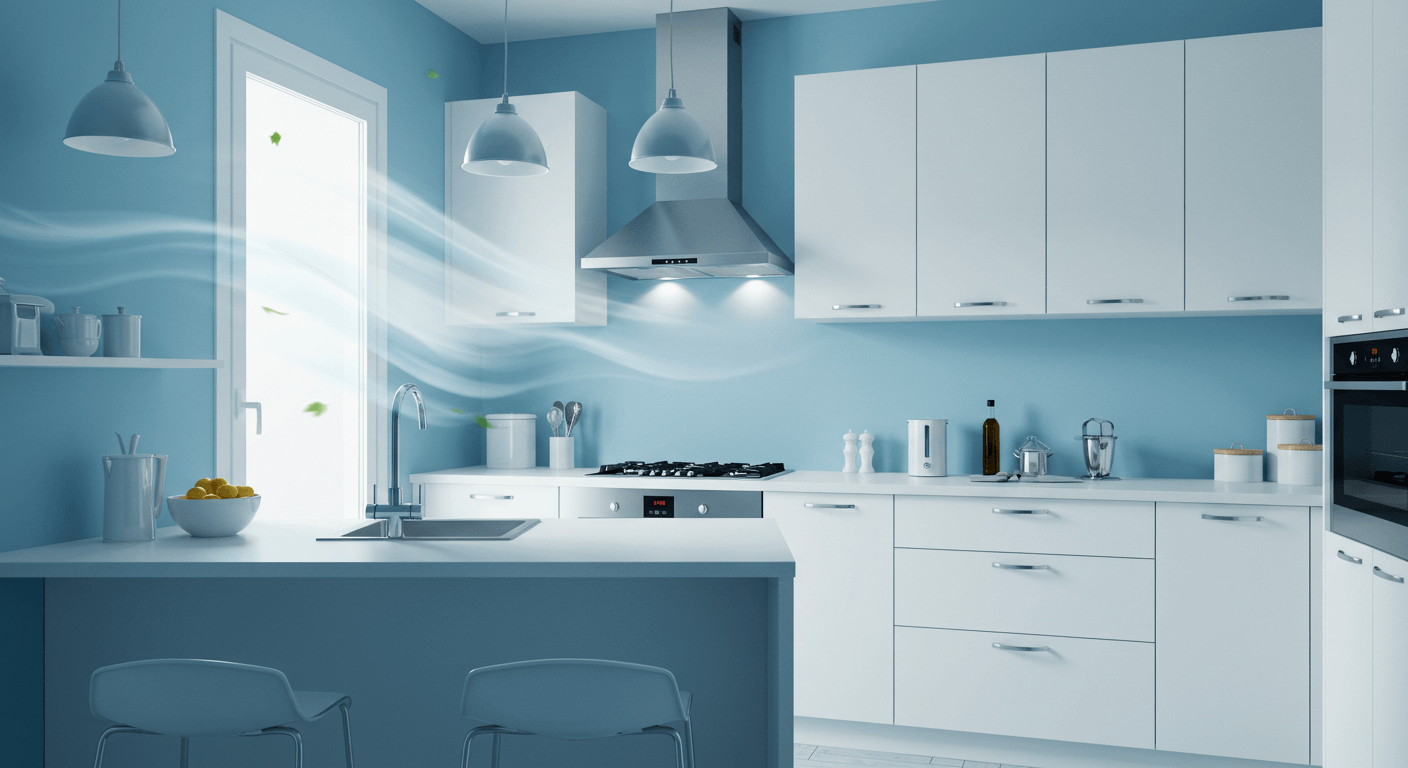
In the summer, keeping a kitchen cool doesn’t have to be difficult. Comfort, energy use, and cooking efficiency can all be significantly improved by putting basic ideas into practice.
1. Use Fans for Better Air Circulation
To drive hot air out and cool air in, place portable, oscillating, or ceiling fans next to windows and openings. In addition to keeping the kitchen more comfortable, proper ventilation lowers heat accumulation.
2. Cook During Cooler Hours
When it’s cooler outside, schedule your meals for the early morning or late evening. The amount of time the kitchen spends heating up during the day can also be reduced by batch cooking in a single session.
3. Switch to Small Appliances
Compared to conventional ovens, microwaves, toaster ovens, slow cookers, and air fryers produce less heat. By using them, you may save electricity and drastically lower the kitchen temperature.
4. Improve Ventilation with Range Hoods
Heat, smoke, and odours are eliminated via range hoods and exhaust fans. Maintaining clean filters guarantees optimal performance and contributes to a cooler atmosphere.
5. Try No-Cook Meals
Smoothies, salads, sandwiches, and other cold foods prevent the kitchen from overheating while offering a variety of energizing meal options.
6. Keep Blinds and Curtains Closed
By using thermal or blackout curtains to exclude direct sunlight, you may minimize heat gain and keep the space from overheating.
7. Use Portable Air Conditioners
During instances of extreme heat, spot-cooling in the kitchen with a portable air conditioner can rapidly reduce temperatures.
8. Stay Hydrated and Dress Comfortably
Cooking in warmer weather is made more comfortable by wearing light clothing and drinking lots of water.
9. Reduce Appliance Usage
To prevent adding heat to the kitchen, run laundry machines, dishwashers, and other heat-generating appliances at night or during colder times.
10. Add Indoor Plants
Through natural transpiration, several plants, such as ferns, snake plants, and aloe vera, enhance air quality and somewhat lower the heat. During the summer, a hot, stuffy kitchen can be made more pleasant and pleasurable by putting even a few of these suggestions into practice.
Additional Tips for Energy Efficiency
In addition to being more comfortable, keeping a kitchen cold throughout the summer can also help cut down on energy use and utility costs. Choosing energy-efficient appliances is one smart move. Compared to older models, modern stoves, ovens, and freezers produce less heat and use less electricity. Selecting gadgets with an Energy Star rating guarantees effectiveness and functionality.
Limiting the usage of appliances that generate heat during peak hours is another piece of advice. Coffee makers, washing machines, and dishwashers should all be operated in the early morning or late evening to avoid needless heat accumulation and to ease the burden on the electrical system. For some meals, ovens can be replaced with small appliances like slow cookers or microwaves, which use less energy and produce less heat.
Enhancing the kitchen’s ventilation and insulation also helps to save energy. While exhaust fans or range hoods effectively remove heat, sealing gaps around windows and doors keeps cold air from escaping. By reducing solar heat gain, thermal or blackout curtains can lessen the need for supplemental cooling.
Additionally, think about adopting smart kitchen practices. Cooking time and heat generation can be decreased by utilizing lids on stovetops, pre-chilling items, and covering pots while cooking. Without using more energy, even small changes like switching to LED lightbulbs from incandescent ones or shutting off lights when not in use can help keep the kitchen cooler.
Homeowners can save money and enjoy a cooler kitchen by combining energy-efficient appliances, better ventilation, and clever cooking techniques. These minor yet significant changes improve the whole kitchen atmosphere while making summer cooking more affordable, sustainable, and comfortable.
Conclusion
The summer heat can make kitchens uncomfortable, making it dangerous and exhausting to prepare meals. However, it is possible to maintain a cool, cozy, and energy-efficient kitchen with easy-to-implement measures. There are many strategies to lower indoor heat, such as cooking during cooler hours, switching to tiny equipment, or using fans and portable air conditioners. Simple lifestyle changes like drinking enough of water, dressing comfortably, and cooking meals without cooking can have a big impact.
Other important considerations are sunlight management and ventilation. Using range hoods correctly, keeping windows open whenever possible, and using blinds or curtains to prevent direct sunlight all contribute to better circulation and a cooler atmosphere. Further improving comfort and lowering electricity use are the addition of energy-efficient equipment, caulking gaps around windows and doors, and implementing clever cooking techniques.
Putting these suggestions into practice promotes energy conservation, food safety, and individual comfort in addition to making the kitchen a more enjoyable place to be. Homeowners can have a cooler area that makes cooking more pleasurable and less stressful during the sweltering summer months by combining several tactics.
It is possible to keep a kitchen cool during the summer without spending a lot of money on renovations if you combine long-term enhancements with useful advice. With the help of these ideas, anyone can turn a stuffy, hot kitchen into a cozy, functional area that will improve cooking all season long.