
For any farm or cattle enterprise, keeping animals comfortable in hot weather is of utmost importance. The health, productivity, and general well-being of animals can all be greatly impacted by heat stress. Excessive heat can result in decreased feed intake, decreased milk output, slower weight increase, and potentially major health issues for dairy cows, poultry, pigs, and horses. Barn fans are frequently seen as a necessary tool for cooling animals, and many farmers and animal caretakers search for workable ways to preserve a secure and cozy barn environment.
By moving air around, barn fans serve to enhance ventilation and lessen heat accumulation. By lowering the humidity levels in the barn and promoting heat dissipation from the animals’ bodies, proper ventilation helps the animals stay cooler. Fans reduce the chance of respiratory difficulties and other concerns related to stagnant air in addition to cooling. But it’s crucial to realize that not all heat-related problems can be resolved by fans alone. The number of animals, barn size, ambient climate, and appropriate placement all affect how effective they are.
Farmers are also curious in the distinctions between portable units, wall-mounted fans, and ceiling fans, as well as which model is most suited for various barn configurations. Barn fans can be made much more efficient by combining them with other cooling techniques like misters, shade structures, and easily accessible water.
The operation of barn fans, as well as their advantages, drawbacks, and professional advice for optimizing their cooling capacity, will all be covered in this book. You may make wise choices about how to keep animals happy, safe, and productive on hot days by being aware of these concerns. Even in difficult weather conditions, this helps maintain maximum animal performance and guarantees a healthier barn environment.
How Barn Fans Work
The purpose of barn fans is to provide ventilation and airflow, making the animals’ surroundings more pleasant and cool. Barn fans, in contrast to air conditioners, circulate air to improve heat dissipation and reduce humidity rather than immediately lowering the temperature. These fans contribute to a more secure and safe barn environment by removing warm air from the animals and introducing fresh air.
A barn fan’s basic operation is straightforward. The blades are propelled by a motor to force air throughout the barn, creating a constant breeze. Animals are effectively cooled by this wind, which speeds up the evaporation of moisture from their skin and respiratory surfaces. Additionally, the breeze keeps heated air pockets from forming, which can happen in barns with little ventilation.
Different barn fan types have different uses. While wall-mounted fans can target particular places where animals like to cluster, ceiling fans are good at moving air over wide regions. Depending on the number of animals or modifications to the barn’s layout, portable fans offer flexibility and can be moved around. For optimum performance, choosing the appropriate fan size and type is essential.
The fans’ speed and positioning also affect how effective they are. In order to prevent drafts or severe turbulence, fans should be positioned to provide a constant air flow across the animals. Maintaining constant airflow while consuming the least amount of energy is possible when fans are operated at the proper speed.
Although barn fans are a useful way to keep air flowing and lessen heat stress, their efficiency is increased when used in conjunction with other cooling techniques. For optimal comfort, fans can be used in conjunction with misting systems, shade, and easily accessible water.
Barn fans are a crucial part of an all-encompassing animal cooling plan since farm managers can greatly minimize heat stress, enhance animal welfare, and sustain productivity during hot weather by knowing how they operate and properly implementing them.
Benefits of Using Barn Fans

During hot weather, barn fans provide a number of important advantages that keep livestock cool, healthy, and productive. Better ventilation and airflow are among the main benefits. Heat and humidity can be trapped in stagnant barn air, making conditions uncomfortable and occasionally hazardous for animals. Fans move air around the barn, preventing heat accumulation and creating a more stable atmosphere. In addition to keeping animals cooler, this airflow reduces respiratory problems brought on by inadequate ventilation.
Another significant advantage is the reduction of heat stress. Reduced feed intake, slower weight gain in cattle, decreased milk output in dairy cows, and heightened susceptibility to disease are all consequences of heat stress. Barn fans aid in preserving typical animal behavior, appetite, and output by keeping them cooler. For instance, cows that are exposed to extreme temperatures tend to consume less, which has a direct effect on milk production. Animals can remain comfortable and give their best work in barns with adequate ventilation.
Additionally, barn lovers support the welfare of animals in general. Animals that are more at ease are less stressed, which boosts immunity and lowers the chance of heat-related diseases. Fans also aid in maintaining drier conditions by encouraging airflow and evaporation, which lessens moisture buildup and the development of mold and germs in the barn. As a result, the environment for cattle is cleaner and healthier.
Another benefit is energy efficiency. Barn fans provide efficient circulation while using a lot less energy than traditional cooling techniques like air conditioning. Fans that are properly maintained can operate continually in hot weather for relatively little money, which makes them a useful and affordable option for farmers.
Barn fans are most effective when used in conjunction with other tactics including shade, water access, and misting systems. Farm owners can provide their animals with safer, healthier, and more productive habitats all year long by being aware of and taking advantage of these advantages.
Limitations of Barn Fans
Although barn fans are a great way to increase ventilation and lessen heat stress, farmers should be aware of their limitations. One significant drawback is that fans don’t reduce the barn’s inside warmth. Rather, they depend on airflow to keep animals feeling colder. Fans by themselves might not be enough to relieve excessive heat, particularly in barns with inadequate insulation or ventilation.
Coverage and placement are further restrictions. To guarantee that all animals receive air, fans must be placed carefully. Some animals may be left in stagnant, heated air pockets due to unequal cooling caused by improper placement. Additionally, because fans may find it difficult to distribute air evenly among closely spaced animals, overcrowding might lessen the efficiency of ventilation.
Additionally, fans need electricity to run, which could raise energy expenses if they are used for extended periods of time during the hottest summer months. Another factor to take into account is maintenance; dust, debris, or motor problems can shorten the lifespan and performance of fans. To guarantee that fans continue to operate efficiently, routine cleaning and inspection are necessary.
Fan efficiency might also be limited by environmental conditions. High humidity lessens airflow’s natural cooling impact, which makes it less useful in humid or tropical areas. To protect animals from heat stress in these situations, fans must be used in conjunction with additional cooling techniques, such as misting systems, shade structures, or evaporative cooling.
Lastly, good barn design cannot be replaced with fans. Optimizing cooling efficiency requires careful barn architecture, insulation, and ventilation. Fans work best when used as part of a larger animal comfort plan rather than as a stand-alone remedy.
By being aware of these restrictions, farm owners can utilize barn fans wisely and keep their animals safe, comfortable, and productive—even in the face of intense heat. To get the most out of barn fans while addressing their inherent limitations, proper planning, location, and maintenance are crucial.
Tips for Using Barn Fans Effectively
It takes more than just installing and turning on barn fans to use them efficiently. Their cooling effects and animal comfort can be greatly increased with proper placement, upkeep, and operational techniques.
Think about fan placement first. A steady flow of air over the animals and throughout the barn should be produced by the placement of the fans. While wall-mounted fans can target certain areas where animals congregate, ceiling fans are best suited for expansive, open areas. Fans should not be placed too close to animals because they can cause discomfort or worry due to powerful drafts. Instead, strive for a consistent breeze that encourages airflow without being too strong.
Fan speed and size are also important. Larger fans are more suitable for barns with high ceilings or large numbers of livestock since they move more air. By modifying fan speed according to barn occupancy and weather, enough ventilation is guaranteed without wasting energy. Fans can last longer and produce less noise if they are used at their ideal speeds.
Maintenance must be done on a regular basis. Debris and dust can build up on motors and blades, decreasing airflow and efficiency. To avoid problems, clean fans on a regular basis and check wiring, belts, and motors. During warmer seasons, well-maintained fans offer dependable cooling since they operate consistently and last longer.
For best results, use fans in conjunction with other cooling techniques. Particularly in periods of intense heat, shade, easy access to water, and misting systems can improve the cooling that fans deliver. Using a variety of cooling techniques strategically keeps animals comfortable and productive.
Lastly, keep an eye on how the animals behave. Additional cooling techniques may be required if animals show signs of restlessness, panting, or crowding in colder regions. Adapt fan positioning, speed, or complementary techniques as necessary.
Farm owners may prevent animals from heat stress, maximize the efficiency of barn fans, and keep their barns safer, healthier, and more productive during hot weather by heeding these suggestions.
Conclusion
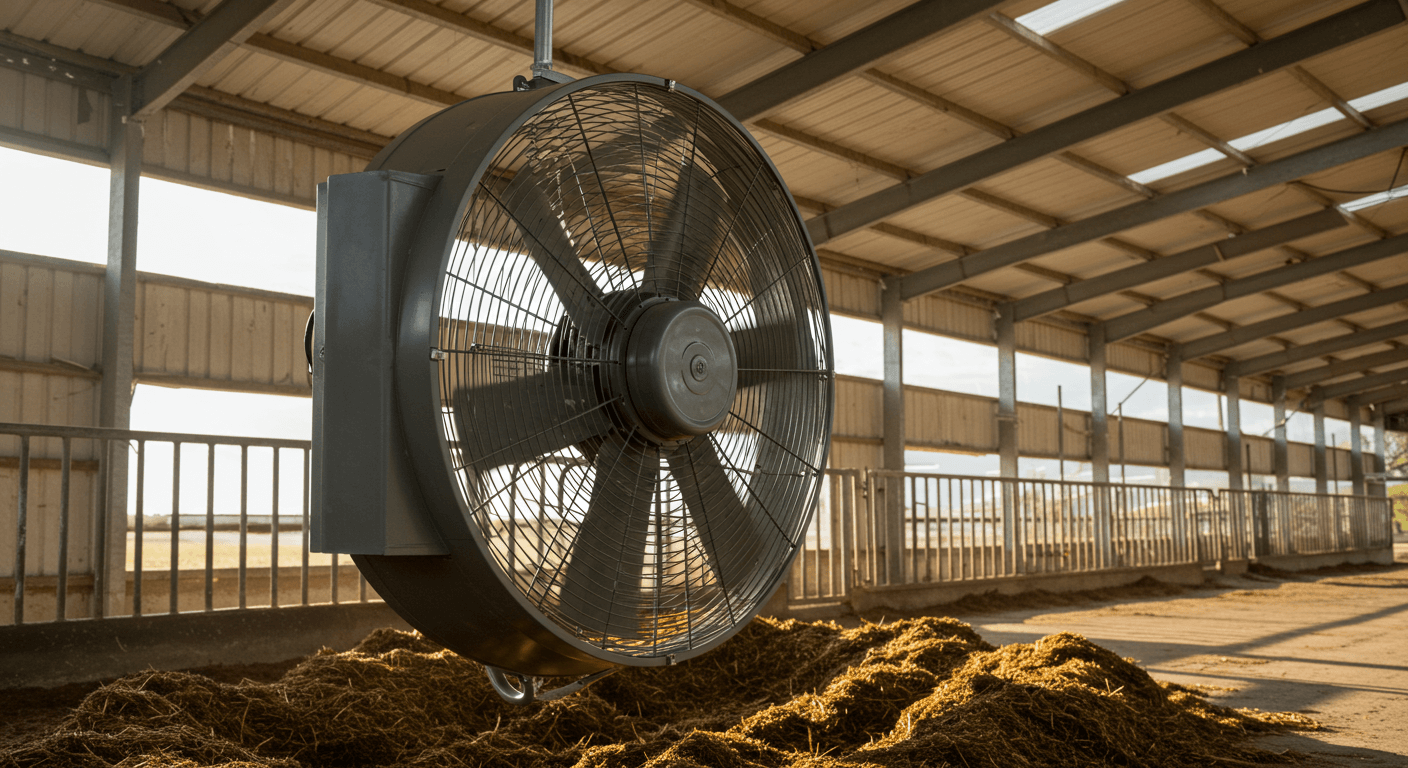
During hot weather, barn fans are a useful and efficient way to keep animals cool, lessen heat stress, and preserve productivity. These fans aid in circulating fresh air throughout the barn, preventing heat pockets, and promoting evaporation-based natural cooling by enhancing ventilation and airflow. Fans are an essential tool for farm owners managing livestock in warm areas because they improve animal comfort and welfare even when they do not directly lower ambient temperatures.
Barn fans are useful for more than just controlling the temperature. A cleaner and healthier atmosphere is created when there is adequate ventilation, which also helps to prevent respiratory problems, moisture buildup, and the growth of mold and bacteria. Fans can also enhance animal performance, behaviour, and feed intake, all of which contribute to increased output and farm profitability. Another benefit is energy efficiency; when utilized properly, barn fans provide efficient cooling while using less electricity than air conditioners.
But it’s critical to acknowledge their limitations. Fans’ efficacy is dependent on their placement, upkeep, and barn design, and they cannot be enough on their own in very hot or muggy situations. Maximum cooling and animal comfort are ensured by combining fans with misting systems, shade structures, and plenty of water access. Their performance is further improved by routinely observing how the animals behave and modifying the fan’s position and speed.
Barn fans can greatly lessen heat stress and enhance animal welfare when utilized wisely, according to expert comments and case studies. Farm owners may give their animals a safer, healthier, and more productive environment by including fans in a thorough cooling strategy.
In the end, barn fans are a dependable and reasonably priced way to control barn temperature. Agricultural owners may safeguard their animals, preserve agricultural efficiency, and guarantee steady productivity even on the hottest summer days by knowing how to operate them properly.