
Particularly popular in places where typical air conditioning may be expensive or unavailable, evaporative cooling is an environmentally responsible and energy-efficient way to reduce indoor temperatures. For many homes and businesses, this natural cooling method is a wise choice since it uses the force of water evaporation to lower the temperature. However, the ambient climate, more especially, the air’s humidity levels, has a significant impact on how well evaporative cooling works.
Before choosing evaporative cooling as the best cooling option for your space, it is important to understand how it functions in various settings. Evaporative cooling systems, which add moisture to the air while cooling it, can offer significant comfort in arid locations with low humidity levels. These systems are very effective and economical for hot, dry areas because of their dual effect, which produces a soothing climate.
On the other hand, evaporative coolers encounter considerable difficulties in humid regions where the air already contains a high amount of moisture. High humidity restricts the amount of water that can evaporate, which lowers these systems’ cooling capacity because evaporation needs dry air to absorb moisture. Because of this, evaporative coolers might not provide as much cooling power in areas with humid weather, and depending just on this technique could make residents feel uncomfortable and sticky.
This article explains the science underlying evaporative cooling and its applications by examining how it functions differently in dry vs wet settings. We’ll explore why evaporative cooling works best in dry environments and struggles in humid ones. You’ll also find alternate methods that work well in humid settings and learn how to maximize cooling efficiency in both sorts of climates.
Selecting the appropriate cooling system is crucial for preserving comfort, cutting down on energy costs, and lessening the impact on the environment. You may choose the best option for your needs by being aware of the benefits and drawbacks of evaporative cooling in different regions. This book will offer helpful tips to help you stay cool the smart way, regardless of whether you live in a humid coastal region or a dry desert.
Evaporative Cooling in Dry Climates
Evaporative cooling functions best in dry regions, which are defined by high temperatures and low humidity levels. Because there is little moisture in the air in these areas, water evaporates effectively and swiftly. By absorbing heat from the surrounding air, this quick evaporation process lowers the temperature and produces refreshing, natural cooling.
Evaporative coolers, often known as swamp coolers, work well in dry air conditions because they can store more water vapor by moistening the air while cooling it. This improves indoor comfort, particularly in the sweltering summer months. Evaporative coolers utilize only water and a fan to circulate air, making them an environmentally friendly and energy-efficient alternative to conventional air conditioners that use chemical refrigerants and a lot of electricity.
Examples of areas with arid climates and extensive use of evaporative cooling include the Middle East, portions of Australia, and the southwestern United States. Due to the extreme heat and little humidity in these regions, evaporative coolers can effectively reduce temperatures by up to 20 degrees Fahrenheit or more without incurring the significant running expenses associated with conventional air conditioning systems.
In dry climates, evaporative cooling also has the benefit of adding moisture, which can enhance indoor air quality and lessen dryness-related problems, including respiratory discomfort and irritated skin. As a result, evaporative coolers serve as both a natural humidifier and a cooling solution. Dry regions are easier to maintain because there is less chance of mold and mineral accumulation than in humid regions. The system maintains long-term performance and efficiency through routine cleaning and water changes.
All things considered, evaporative cooling is a very efficient, reasonably priced, and environmentally responsible cooling choice for areas with a dry climate. It provides cold, fresh air by utilizing the natural process of evaporation, which is ideal for anyone trying to keep comfortable in hot, dry weather.
Evaporative Cooling in Humid Climates
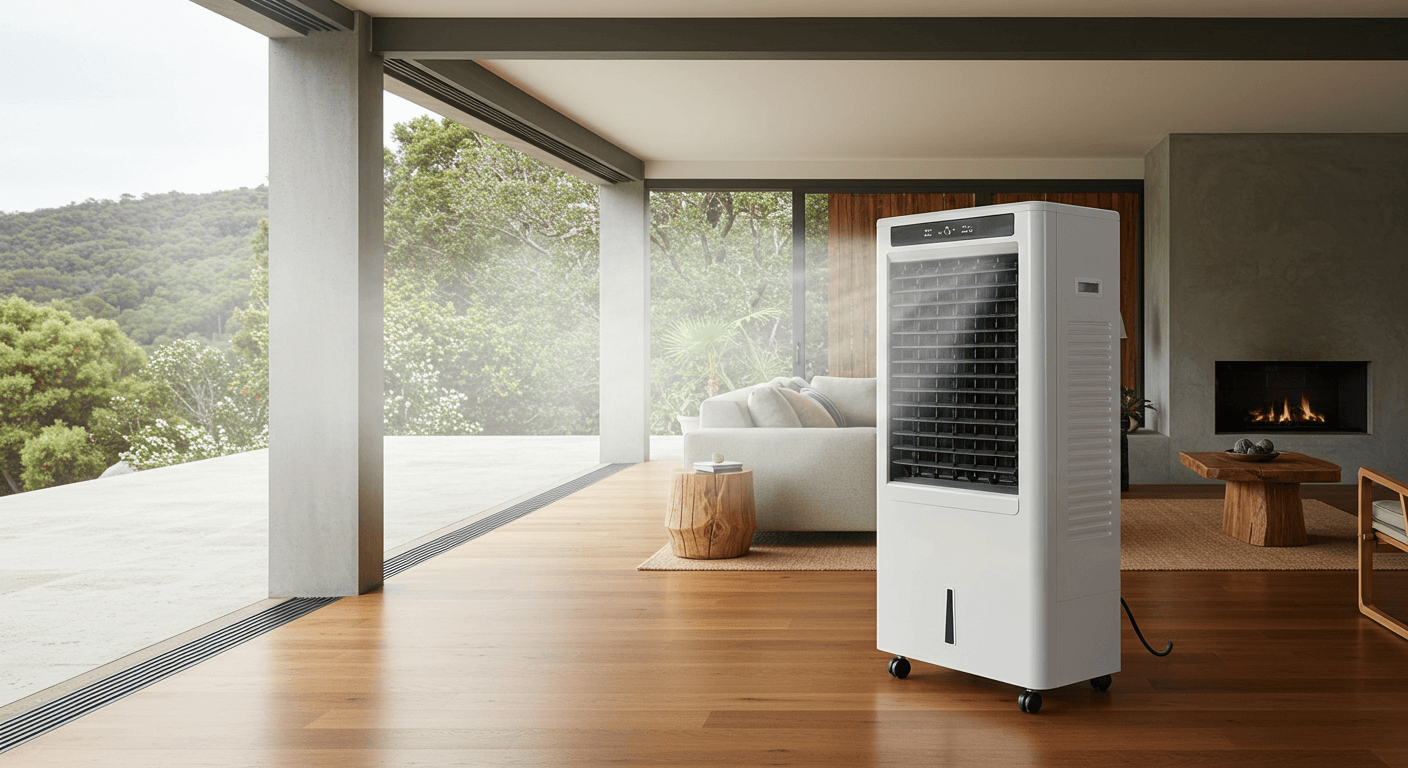
Evaporative cooling systems operate substantially differently in humid climes than in arid ones. High humidity limits the air’s capacity to absorb more water vapor through evaporation because it is already saturated with moisture. The high moisture content in humid areas greatly diminishes the effectiveness of evaporative cooling, which lowers temperatures by allowing water to evaporate into dry air.
Evaporative coolers frequently fail to deliver the same degree of cooling comfort seen in arid climates in high-humidity locations, such as coastal areas, tropical zones, and portions of the southeastern United States. Evaporation slows down, and less heat is taken up from the air when the air is unable to absorb much more moisture. Because of this, the air that passes through the cooler could seem moist instead of chilly, making the people within feel clingy and uneasy.
Furthermore, evaporative cooling devices may develop mold, mildew, and mineral accumulation due to the higher moisture content in humid climates. If not properly cared for, this may result in more frequent maintenance requirements and might shorten the system’s lifespan. Additionally, users could experience a damp, heavier air quality instead of the cool, crisp breeze that evaporative coolers create in arid conditions.
Some contemporary evaporative cooling systems make an effort to overcome these difficulties by integrating cutting-edge technology like multi-stage cooling and dehumidification features, or by mixing evaporative cooling with conventional air conditioning. Nevertheless, compared to standalone evaporative coolers, these hybrid solutions are typically more costly and sophisticated.
It’s usually a good idea to look into other cooling techniques, such as refrigerated air conditioning systems, that are better suited to controlling both temperature and moisture in homes and businesses located in humid regions. Relying solely on evaporative cooling in humid places may not result in the intended comfort or energy savings, even though it can still offer some respite during times of reduced humidity.
Knowing these restrictions guarantees maximum comfort in any environment and assists customers in making well-informed selections regarding their cooling alternatives.
Evaporative Cooling Performance Comparison: Humid vs. Dry Climates
The efficacy of evaporative cooling differs greatly between dry and wet climates, mostly because of variations in the moisture content of the air. You can determine whether evaporative cooling is the best option for your environment by being aware of these distinctions.
Evaporative coolers work incredibly well in arid areas. Because of the low humidity, water evaporates quickly, absorbing heat from the air and successfully lowering indoor temperatures. This procedure offers a cool, energy-efficient cooling solution by reducing temperatures by up to 15 to 20 degrees Fahrenheit.
Furthermore, by adding moisture to dry air, evaporative cooling can lessen discomfort caused by dryness and increase comfort. Compared to conventional air conditioners, these systems consume far less energy because they only require water and a fan. This results in cheaper electricity costs and a smaller environmental impact.
On the other hand, humid regions make evaporative cooling extremely difficult. High humidity limits the amount of evaporation that can happen because the air is already saturated with moisture. As a result, cooling power and heat absorption are decreased. The air may feel heavy and moist rather than cold and fresh, which can be uncomfortable. In these areas, evaporative coolers frequently fail to produce significant temperature decreases, which reduces their effectiveness in comparison to refrigerated air conditioning systems. Because users may operate the system longer in an effort to chill the room, energy savings may also be reduced.
Climates also affect durability and maintenance. Excessive moisture in humid environments can encourage the growth of mold and minerals inside the cooler, requiring more frequent maintenance and perhaps reducing the unit’s lifespan. Dry regions typically require less frequent and simpler maintenance, which prolongs the system’s useful life.
Because of their low initial and ongoing expenditures, evaporative coolers are a wise investment in arid areas. The decreased performance, however, can result in extra costs or the requirement for different cooling options in humid conditions.
The decision to employ evaporative cooling should ultimately take the local climate into account. These systems provide strong, reasonably priced cooling with additional humidity benefits in arid locations. However, different cooling solutions might be more comfortable and effective in humid areas.
Tips for Maximizing Evaporative Cooling in Different Climates
Climate circumstances affect how well evaporative cooling systems work, but they can offer effective and reasonably priced heat relief. Getting the most out of an evaporative cooler can be achieved by adhering to a few useful guidelines, regardless of whether the climate is humid or dry.
Maximizing Evaporative Cooling in Dry Climates
Evaporative cooling is naturally preferred in arid conditions, but it may be made more efficient with a few easy measures. First, make sure the room is well ventilated by leaving windows or vents open to let dry, fresh air enter. This constant flow of air promotes evaporation and keeps damp air from building up indoors. Because dirty or clogged cooling pads impair airflow and cooling performance, clean and replace them on a regular basis. By increasing the temperature differential, using cold water in the system can help enhance cooling efficacy. Furthermore, placing the cooler close to an open door or window maximizes the intake of dry outdoor air, which increases evaporation even further. Lastly, to prevent mineral buildup, do regular maintenance like cleaning the water reservoir and checking the water levels.
Maximizing Evaporative Cooling in Humid Climates
Evaporative cooling has inherent limitations in humid climates, although it can still be enhanced with the right modifications. Comfort can be improved by using the cooler in the morning and evening, when the humidity is at its lowest. Fans and evaporative cooling work together to move air around and lessen the sticky feeling that comes with damp settings. Hybrid systems that provide evaporative cooling during periods of high humidity with a dehumidifier or chilled cooling may be advantageous for certain users.
In humid regions, routine upkeep is essential to avoiding the growth of mold and minerals. By reducing mineral deposits on cooling pads, using filtered or softened water increases system longevity and effectiveness. Avoid completely sealing the room, which collects moisture, but make sure there is adequate ventilation by opening windows or vents a little.
General Tips for All Climates
Evaporative coolers need to be kept clean and well-maintained regardless of the climate. Pads should be routinely inspected and replaced as needed. To avoid accumulation and odors, keep an eye on the water’s levels and quality. The best airflow and cooling power are ensured when the cooler is sized appropriately for the size of the room.
Users can increase comfort, boost energy efficiency, and prolong the life of their cooling system by customizing the use of evaporative cooling to their local environment and adhering to these guidelines.
Alternative Cooling Solutions for Humid Climates
Evaporative cooling may not always offer the comfort and effectiveness required to counteract high temperatures for people who live in humid locations. The efficiency of evaporative coolers is diminished when humidity levels are high since the air already contains a considerable amount of moisture. Thankfully, there are a number of other cooling options that are more appropriate for managing heat and moisture in these settings.
Refrigerated Air Conditioning
In humid areas, conventional refrigerated air conditioners continue to be the most widely used and efficient choice. By eliminating heat and moisture from the air, these systems reduce humidity and temperature. Even on the wettest days, refrigerated air conditioners keep the interior comfortable by moving cool, dry air around. Even though they usually consume more energy than evaporative coolers, contemporary models are becoming more energy-efficient and include features like variable speed compressors and programmable thermostats to use less electricity.
Heat Pumps
Heat pumps work well in humid climates and provide a flexible cooling and heating solution. These devices assist in lowering indoor humidity while transferring heat from the inside to the exterior. For year-round climate control, heat pumps can be an affordable and energy-efficient option.
Dehumidifiers Combined with Cooling Systems
By reducing moisture levels, a dehumidifier used in conjunction with an evaporative cooler or fan can increase indoor comfort. Eliminating surplus humidity improves the efficiency of the evaporative cooler and avoids the sticky, wet sensation that is frequently felt in humid environments.
Geothermal Cooling
Geothermal cooling, however less popular, cools indoor air by drawing on the earth’s constant subsurface temperature. Regardless of the humidity level outside, this system can consistently offer cooling and is incredibly energy-efficient. However, it is better suited for long-term investments because installation expenses are usually higher.
Choosing the best cooling solution for a humid region depends on a number of criteria, including desired comfort levels, energy efficiency choices, and budget. Even though evaporative coolers have numerous advantages, investigating these other choices can guarantee the best possible cooling efficiency and indoor air quality.
Conclusion

Although evaporative cooling is an eco-friendly and energy-efficient method of staying cool, its efficacy is highly dependent on the local climate. Low humidity levels enable evaporative coolers to function at their best in arid climates, delivering notable temperature decreases and introducing healthy moisture to the air. They are therefore a great option for arid areas looking for reasonably priced and environmentally friendly cooling solutions.
On the other hand, because of the high air moisture content, humid conditions make evaporative cooling difficult. Reduced evaporation lowers cooling capacity, and discomfort and maintenance problems may arise from the elevated humidity. Alternative cooling solutions like heat pumps, integrated dehumidifier systems, or refrigerated air conditioning frequently offer greater comfort and efficiency for people living in humid settings.
Customers can choose the optimal cooling solution for their needs by being aware of how evaporative cooling functions in dry versus wet climates. Selecting the appropriate system may minimize environmental effects, lower energy costs, and increase indoor comfort.
Before purchasing a cooling system, it is crucial to take local temperature conditions into account, regardless of whether you live in a humid or dry region. By keeping indoor spaces pleasant throughout the hottest seasons, this knowledge guarantees optimal performance and happiness with your cooling solution.