
Coolers have come a long way from being a simple insulated box filled with ice. Today, technology has revolutionized outdoor cooling with digital temperature-controlled coolers that promise precise cooling without the mess and hassle of ice. But are these high-tech alternatives really better than traditional coolers, or is the old-school approach still the smarter choice? In this comprehensive comparison, we’ll break down everything you need to know about digital and regular coolers to help you decide which one deserves your investment.
What is a Digital Temperature-Controlled Cooler?
Digital temperature-controlled coolers, also called electric coolers or portable refrigerators, use electrical power to actively cool their contents. Unlike traditional coolers that rely on ice, these devices use refrigeration technology to maintain precise temperatures, typically ranging from -4°F to 50°F.
There are three main types of digital coolers. Thermoelectric coolers use the Peltier effect to transfer heat and are the most affordable option, usually priced between $100-$300. Compressor coolers work like miniature refrigerators with actual cooling compressors, offering superior performance at $300-$1000+. Absorption coolers can run on propane or electricity, making them ideal for off-grid situations but less common for general use.
Most digital coolers can operate on multiple power sources, including 12V DC car outlets, 110V AC household power, and some even support battery packs or solar panels. This versatility makes them popular among RV travelers, overlanders, and serious outdoor enthusiasts.
What is a Regular Cooler?
Regular coolers are passive cooling devices that use insulation to slow heat transfer from the outside environment. They rely on ice or ice packs to keep contents cold, with performance depending on insulation quality, seal effectiveness, and how well you manage the ice-to-contents ratio.
Traditional coolers range from budget-friendly options under $30 to premium rotomolded models costing $300-$500. The best regular coolers can keep ice frozen for 5-10 days, while basic models might only last 1-2 days. The key difference is they require no power source and have no moving parts, making them completely reliable in any environment.
Quick Comparison Overview
| Feature | Digital Cooler | Regular Cooler |
| Initial Cost | $200-$1,000+ | $20-$500 |
| Power Required | Yes (12V/110V) | No |
| Temperature Control | Precise (digital display) | Approximate (ice dependent) |
| Cooling Duration | Unlimited with power | 1-10 days |
| Maintenance | Moderate (mechanical parts) | Low (cleaning only) |
| Weight (empty) | 15-40 lbs | 5-40 lbs |
| Ice Needed | None | Yes |
| Best For | Frequent use, RV/van life | Occasional use, camping |
Digital Temperature-Controlled Coolers: Deep Dive
Temperature Control Capabilities
The standout feature of digital coolers is precise temperature control. You can set exact temperatures using a digital display, typically in 1-degree increments. This is invaluable for storing medications, wine, or sensitive foods that require specific temperatures. Many models can also function as warmers, keeping food hot during transport.
Compressor-based models can reach freezing temperatures, allowing you to make ice or store frozen foods. Thermoelectric coolers typically cool 40-45°F below ambient temperature, meaning they struggle in extreme heat but work well in moderate conditions.
Power and Energy Consumption
Digital coolers need continuous power to maintain temperature. Compressor models are surprisingly efficient, typically drawing 0.7-2 amps per hour when running, which translates to about 30-50 watts. They cycle on and off like home refrigerators, so they’re not drawing power constantly.
For a 12V setup in a vehicle, most digital coolers can run for 10-40 hours on a standard car battery without draining it completely. Many users pair them with auxiliary batteries or solar panel setups for extended off-grid use. Operating costs are minimal, typically adding just $2-5 per month to your electricity bill for regular home use.
Cooling Performance and Convenience
Digital coolers excel at convenience. There’s no ice to buy, no melted water to drain, and your food stays dry. They typically take 30-60 minutes to reach target temperature from room temperature, faster if pre-cooled. Once at temperature, they maintain consistent cooling regardless of how often you open the lid.
The absence of ice also means 100% of interior space is usable for storage. A 40-liter digital cooler provides 40 liters of actual storage, while a similar-sized traditional cooler loses 30-40% of space to ice.
Cost Analysis
Digital coolers represent a significant upfront investment. Quality thermoelectric models start around $200, while reliable compressor units begin at $400 and can exceed $1,000 for premium brands like Dometic or ARB. However, operational costs are low, with electricity adding just a few dollars monthly.
If you buy ice twice weekly at $3 per bag for camping season (roughly 6 months), you’ll spend about $150 annually on ice alone. Over five years, that’s $750 in ice costs, making the digital cooler’s higher price more justifiable for frequent users.
Durability and Maintenance
Digital coolers contain mechanical components that can fail. Compressors typically last 5-10 years with proper care, while thermoelectric units have fewer moving parts and can last longer. Most reputable brands offer 2-3 year warranties. Maintenance involves keeping cooling fins clean and ensuring proper ventilation, but otherwise they’re relatively hands-off.
Regular Coolers: Complete Analysis
Ice Retention Performance
The best regular coolers from brands like YETI, RTIC, or Pelican can keep ice for 5-10 days using rotomolded construction, thick insulation, and excellent seals. Mid-range coolers typically maintain ice for 2-4 days, while budget options last 1-2 days.
Ice retention depends heavily on usage. Pre-cooling your cooler, using a 2:1 ice-to-contents ratio, minimizing lid openings, and keeping the cooler in shade all dramatically improve performance. Block ice lasts longer than cubed ice, and many experienced campers freeze water in milk jugs for maximum ice life.
Portability and Practical Considerations
Empty weight varies dramatically. A 50-quart budget cooler might weigh 10 pounds empty, while a rotomolded equivalent weighs 25-30 pounds. Add 30 pounds of ice and 40 pounds of food and drinks, and you’re carrying 75-100 pounds. This is where handles, wheels, and carrying methods become crucial.
The space trade-off is real. That 50-quart cooler only provides about 30-35 quarts of usable space once ice is added. You’re also dealing with melted ice water, which means soggy packaging and the need to drain water periodically.
Cost Analysis
Regular coolers range from $20 basic models to $500 premium options. A quality mid-range cooler costs $80-$150 and will serve most users well for years. There are no operating costs beyond ice, which varies by location but typically runs $2-4 per bag.
For occasional users (10-15 outings per year), ice costs might only total $30-$60 annually. Over five years, you’ve spent $150-$300 on ice plus your initial cooler cost. This makes traditional coolers more economical for casual outdoor enthusiasts.
Maintenance and Reliability
Regular coolers are incredibly reliable because there’s nothing to break. No electronics, no compressors, no power requirements. Maintenance involves cleaning with mild soap after use and storing with the lid propped open to prevent mildew. Drain plugs can wear out, and hinges may break on cheaper models, but these are easily replaced.
Quality coolers can last 15-20+ years, essentially becoming family heirlooms. The simplicity is their greatest strength, especially in remote areas where power isn’t available or when reliability is paramount.
Head-to-Head Comparison
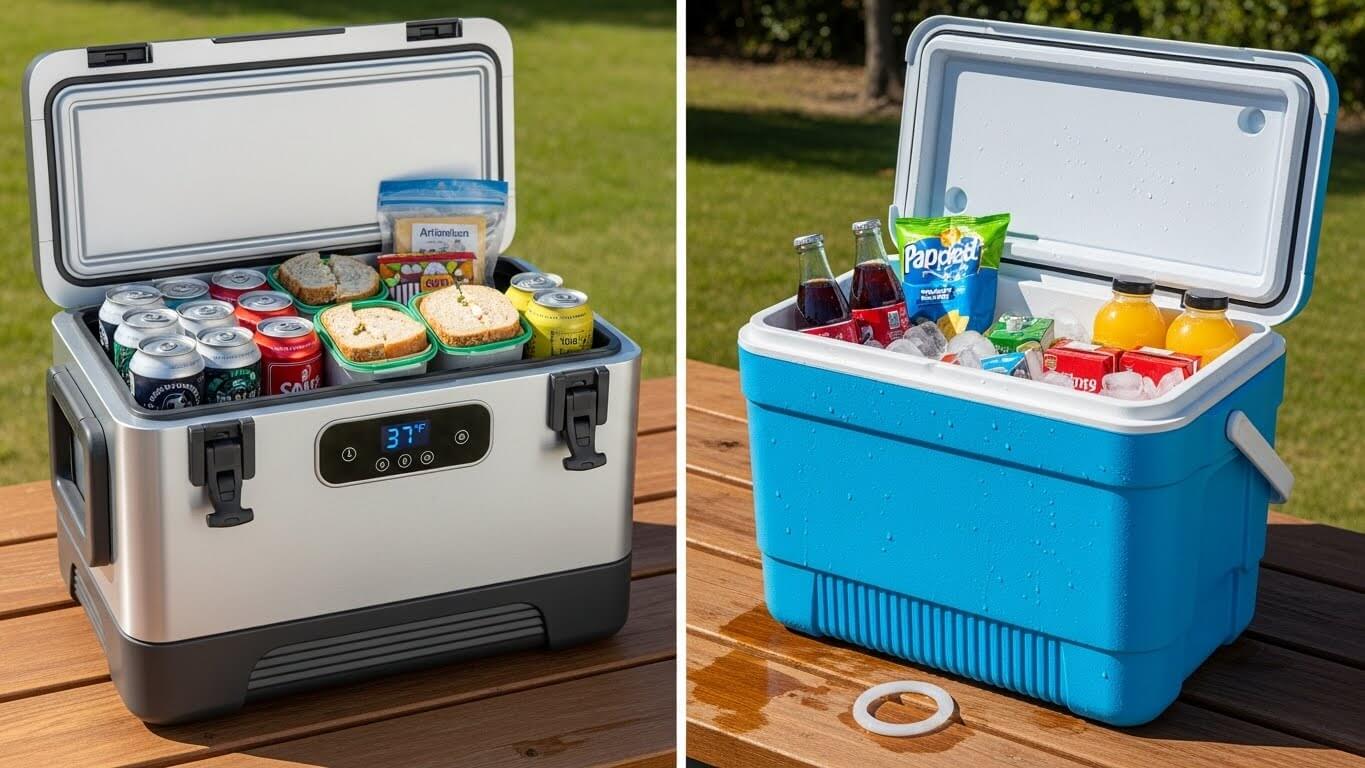
Temperature Control
Winner: Digital Coolers
There’s no competition here. Digital coolers offer precise temperature control that regular coolers simply cannot match. If you need specific temperatures for medications, wine, or sensitive foods, digital is the only viable option.
Convenience Factor
Winner: Digital Coolers (for frequent users)
No ice runs, no water drainage, no soggy food, and consistent temperature regardless of conditions. For people using coolers regularly or on extended trips, digital coolers eliminate major hassles. However, for a single afternoon at the beach, grabbing a regular cooler and a bag of ice is arguably more convenient.
Reliability and Simplicity
Winner: Regular Coolers
Regular coolers work anywhere, anytime, with zero dependencies. They don’t care about power sources, battery life, or mechanical failures. This makes them superior for true wilderness adventures, emergency preparedness, or situations where simplicity trumps features.
Portability
Winner: Regular Coolers
While digital coolers are lighter when comparing empty weights, regular coolers win on true portability because they’re completely independent. You can take them anywhere without worrying about power cords, battery packs, or charging. They’re also generally more rugged and abuse-resistant.
Long-Term Cost
Winner: Depends on Usage
For users taking 2-3 trips yearly, regular coolers are more economical. Ice costs stay low, and the initial investment is minimal. For frequent users (weekly use or extended trips), digital coolers break even in 3-5 years and save money thereafter while providing superior convenience.
Pros and Cons Summary
Digital Temperature-Controlled Coolers
Pros:
- Precise temperature control with digital displays
- No ice needed, no melted water mess
- 100% usable interior space
- Can freeze items or keep them warm
- Consistent cooling regardless of ambient temperature
- Low operating costs
- Multi-power source capability
Cons:
- High upfront cost ($200-$1,000+)
- Requires a power source continuously
- Contains mechanical parts that can fail
- Heavier than comparable regular coolers
- More complex to operate and maintain
- Limited off-grid capability without power solutions
Regular Coolers
Pros:
- Lower initial investment
- No power requirements
- Extremely reliable with no moving parts
- Works anywhere, anytime
- Wide variety of sizes and price points
- Simple to use and maintain
- Long lifespan (15-20+ years)
Cons:
- Requires a constant ice supply
- Ice takes up 30-40% of space
- Melted water creates a mess
- Ice retention varies with conditions
- No precise temperature control
- Food can get soggy
- Ongoing ice costs add up
Making Your Decision
Questions to Ask Yourself
How often will you use your cooler? If it’s weekly or more, digital makes sense. Monthly or less, stick with traditional. Do you have reliable power access? Vehicle camping and RV travel favor digital, while backcountry camping favors regular. What’s your budget? Under $300 total budget points to regular coolers unless you find a good thermoelectric model.
Do you need precise temperature control? Medical needs or sensitive foods require digital. General food and beverage cooling works fine with ice. How important is convenience versus simplicity? If you want a set-it-and-forget-it operation, go digital. If you value no-dependency reliability, choose regular.
Many serious outdoor enthusiasts own both types. They use digital coolers for extended trips and items requiring precise temperature control, while keeping a traditional cooler for quick outings, parties, or as backup. This strategy provides flexibility for different situations without putting all your eggs in one basket.
Some users also employ a two-cooler system on long trips: a digital cooler for daily-use items that gets opened frequently, and a traditional cooler packed with ice for long-term storage that stays sealed most of the time. This maximizes efficiency and ice retention.
Frequently Asked Questions
Do digital coolers work without electricity?
No, digital coolers require continuous power to maintain temperature. Once unplugged, they’re just insulated boxes and will gradually warm to ambient temperature. Some models include battery packs for temporary use, but most need connection to a power source.
Are digital coolers worth the extra cost?
For frequent users who camp regularly, travel extensively, or live in RVs and vans, the convenience and ice savings justify the cost within 3-5 years. For occasional users taking a few trips yearly, regular coolers offer better value.
Can you use ice in a digital cooler?
You can, but there’s no advantage to doing so. The point of digital coolers is to eliminate ice. Adding ice could potentially damage electronic components if water leaks. If your digital cooler loses power, ice won’t help much since they’re not designed for ice retention.
How long do digital coolers last?
Quality compressor coolers typically last 5-10 years with proper care. Thermoelectric models can last longer since they have fewer moving parts. Regular maintenance and protecting the unit from extreme conditions extend its lifespan. Most manufacturers offer 2-3 year warranties.
Which type is better for camping?
It depends on your camping style. Car camping with vehicle access makes digital coolers viable. Backcountry camping, where weight and power availability matter, favours traditional coolers. Weekend trips work well with regular coolers, while extended stays benefit from digital.
Conclusion
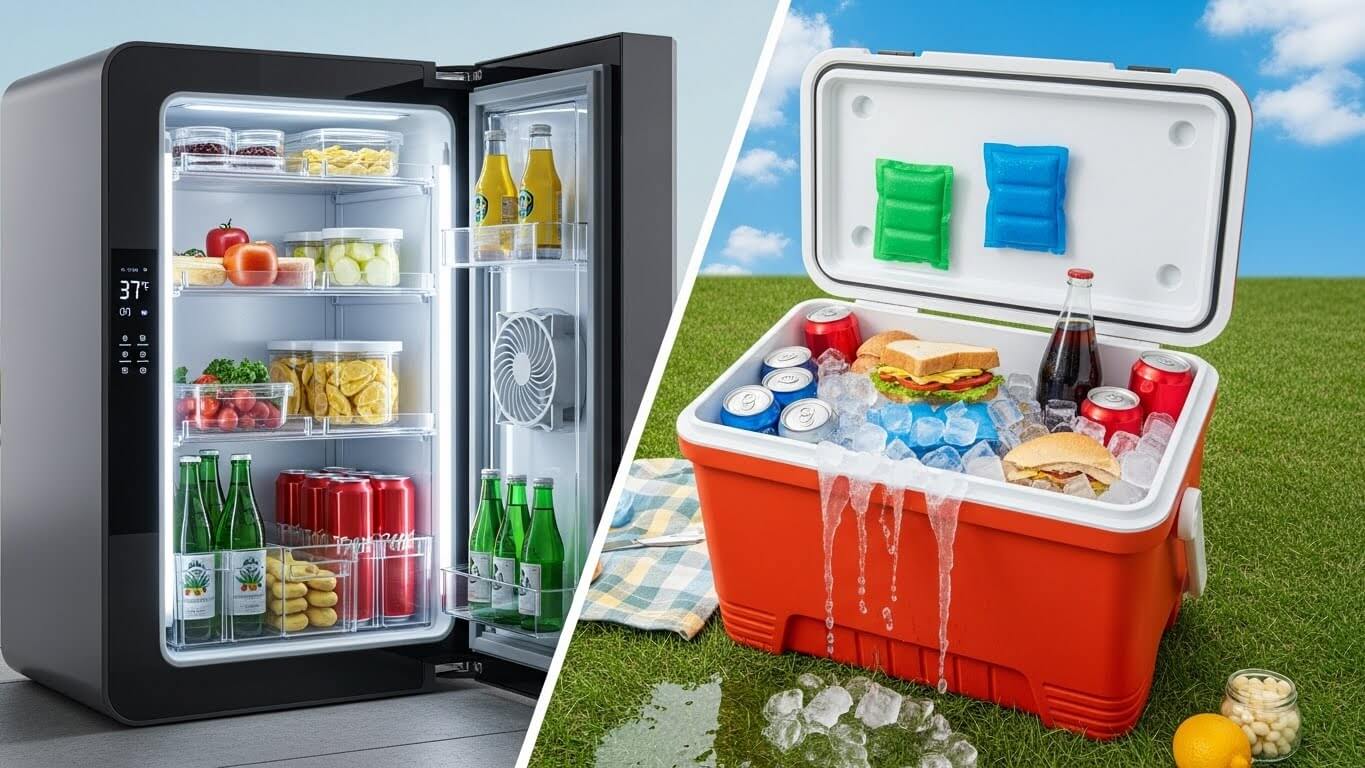
The choice between digital temperature-controlled coolers and regular coolers isn’t about which is objectively better; it’s about which better serves your specific needs. Digital coolers offer unmatched convenience, precise temperature control, and eliminate ice hassles, making them ideal for frequent users, RV travellers, and anyone needing reliable temperature-sensitive storage. Regular coolers provide simplicity, reliability, and lower costs that make them perfect for occasional users, budget-conscious adventurers, and situations where power-free operation is essential.
Consider your usage frequency, power availability, budget, and priorities. Frequent users will find digital coolers pay for themselves through convenience and ice savings. Occasional users will appreciate the simplicity and lower cost of traditional coolers. And remember, there’s no rule against owning both; many outdoor enthusiasts find that having options for different situations provides the ultimate flexibility.
Whatever you choose, both types will keep your food cold and your adventures enjoyable. Assess your needs honestly, choose accordingly, and get ready to enjoy perfectly chilled refreshments on your next outdoor adventure.